To George Truman Flinders, known to family and friends as “Judd,” life was a chessboard, with vision, planning, strategy and determination bringing a successful outcome.
Judd and Beth Engh were married in 1930, beginning a life well lived in harmony with one another.
Judd initially drove a delivery truck for the local Coca-Cola bottling company. The pay was meager, the hours were long, and the work was physically demanding, but he was grateful for the job.
The couple saved every penny possible. Such industriousness provided the funding to open their first restaurant in 1933: The Boat. It was a successful endeavor.
By 1935 they owned two more eateries, the Park ‘N Dine and Judd’s Drive In. Their businesses thrived.
Judd also worked for the Strong Automotive Group at their Hudson Dealership. He was consistently one of their top sales executives.
In the early 1940s, the couple purchased a small farm in Millcreek. Judd’s financial and promotional acuity, combined with lessons learned from running that farm, provided the confidence to take another calculated risk.
In 1949 they purchased a 900-acre dairy farm from Annie and Archie Carter. Located in the Snyderville Basin, the property provided ample opportunity for economic experimentation. Daily operation of the ranch was entrusted to the five Flinders children. Their work ethic and fortitude had been instilled by their parents’ example.
In the early 1950s, the ranch transitioned from dairy farming to beef cattle. It was a financial decision — raising beef cattle made more money. Before the decade ended, the family had developed 10 businesses to maximize their property’s potential: a motel, a restaurant, a gift shop, a square dancing venue, a “catchery,” hay rides, sleigh rides, the boarding of horses, summer grazing for cattle, and selling hay.
With their businesses, the Flinders Family Ranch had achieved regional fame. The next decade would bring national and international acclaim.
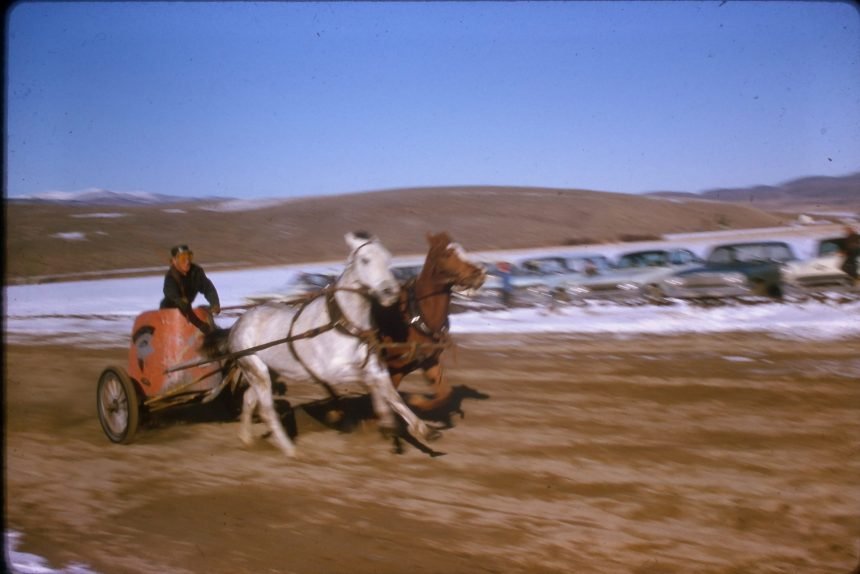
The 1960s found the family promoting winter sports. These included snowshoeing, dogsledding, snowmobiling and chariot racing. On race weekends, the Mountain Meadows Ranch Restaurant was jammed to capacity.
Judd grasped the economic potential of winter sports for his ranch. He created a goal to position the ranch as a multi-season, income-producing enterprise.
Regarding dogsled racing, the ranch hosted the largest events and purses in the country outside of Alaska. Teams traveled from Canada, Alaska, and the western U.S. to compete. Spectators typically exceeded 1,500 per event.
The snowshoe and snowmobile contests were equally renowned. Utah’s political, business, and entertainment elites were regular attendees. The price for admission was only $1.
Event experimentation continued. New ideas included hosting balloon festivals and national and international Boy Scout jamborees.
The U.S. Army took notice, as well. On July 14, 1968, they reserved the Flinders Ranch for parachute jumping training. Green Berets, 160 of them, descended from 1,000 feet with the Flinders Ranch as their landing destination. Over 400 spectators attended.
Judd harbored bigger plans. He wanted to build a Sun Valley-like skating facility cross-promoted with Park City’s evolving ski resorts.
The Summit County Planning Commission shared neither his vision nor enthusiasm. Thwarted on multiple occasions, Judd sold the ranch circa 1992. He needed a bigger chessboard, and so Nevada beckoned.
There, Judd purchased a 100,000-acre ranch in Elburz, a few miles east of Elko. He also opened a restaurant there. Earthly success continued until 1998, when Judd answered a higher call. He was 94. Beth joined him 68 days later. They were married 68 years. She was 89.
The authors are indebted to the surviving Flinders children — Leland, Melvin, and Elizabeth — and their families for sharing their memories of the Flinders Family Ranch.
The Park City Museum is hosting a lecture, “The Flinders Family Ranch — Park City’s First Multi-Season Business,” given by Stuart Stanek and David Nicholas on February 11 from 5 to 6 p.m. at the Museum’s Education and Collections Center located at 2079 Sidewinder Drive.
David Nicholas and Stuart Stanek are Park City Museum researchers.