
Four council members said they want city staff to study, among other things, ways “to hold federal law enforcement accountable.”
SAN ANTONIO — When 180 residents signed up to speak to San Antonio City Council about local ICE operations in a lengthy January meeting, the vast majority of them condemning the federal agency’s actions, frustration was largely channeled through the lens of what has been unfolding in Minneapolis in recent weeks.
Less than a third that number registered to address council two weeks later, at a public session gathering on Wednesday evening that was scheduled independently of any official business members would be voting on. Like the Jan. 22 meeting, most weren’t just there to discuss ICE; there was near-unanimous condemnation.
But with the quickly developing news that the federal government had bought a 640,000-square-foot east-side “mega warehouse” intended to be used as an ICE detention facility, the speakers on Wednesday appeared more forceful, urgent, and passionate in their comments to Mayor Gina Ortiz Jones and other city leaders.
Expletives were tossed. Multiple speakers called what was to come to the facility off Loop 410 and East Houston Street a “concentration camp.” Jones at one point had to warn speakers against personal attacks when one referenced a council member’s past DWI case.
“You want us to sit down, follow the law and comply with federal orders,” said one speaker, Jay Mazzella. “But the orders are unjust. ICE actions are unconstitutional and y’all are OK with them being in our city, hurting our people.”
At the Jan. 22 meeting, placed on the schedule to foster “transparent dialogue” about ICE in San Antonio after the Jan. 7 killing of Renee Good in Minneapolis, city staff underscored what is and isn’t within the city’s legal means when it comes to ICE activity. They pointed to Senate Bill 4, the crucial “anti-sanctuary” law passed by Texas legislators in 2017 requiring that local governments cooperate with federal agencies when it comes to enforcing federal immigration policy.
That means that, as San Antonio Police Chief William McManus said in January, while the department’s is “public safety alone, not immigration enforcement,” it must respond to ICE personnel’s requests for assistance. That happened twice in immigration-related operations in 2025.
City staff earlier this week told KENS 5 they weren’t aware of an imminent deal for Oakmont Industrial Group to sell the warehouse at 418 SE Loop 410 to the U.S. government; that purchase was finalized Tuesday for $66.1 million, according to county records. And they warned the city would be unable to put up zoning or permitting hurdles because the federal government was involved.
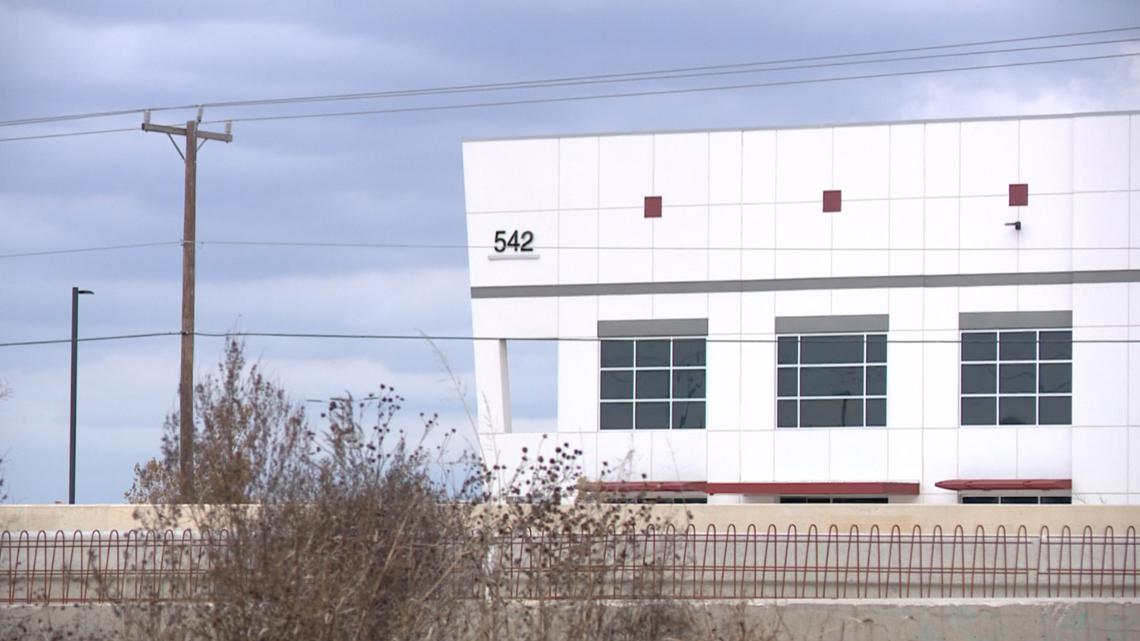
A contingent of progressive-leaning leaders are hoping to keep the public conversation going.
Council members Edward Mungia, Teri Castillo, Ric Galvan and Jalen McKee-Rodriguez on Thursday submitted a four-signature memo calling for a special meeting focused on “the evaluation of strategies to protect all San Antonians.”
“They’re wanting to see some answers and some action to the things that they’ve been asking for,” Mungia said.
Included in that memo was a list of studies the City Council quartet said they’d like city staff to undertake, including examining if it would be within the City of San Antonio’s power to install a “moratorium on the establishment for non-municipal detention facilities,” an action item that appears directed at ICE’s warehouse transaction.
“While I will continue to urge residents to organize and contact federal officials to stop this facility from becoming a detention center, we have an obligation to take every little step we can to protect the safety, well-being and dignity of our residents,” McKee-Rodriguez, whose district includes where the ICE detention center is slated to be established, said in a statement.

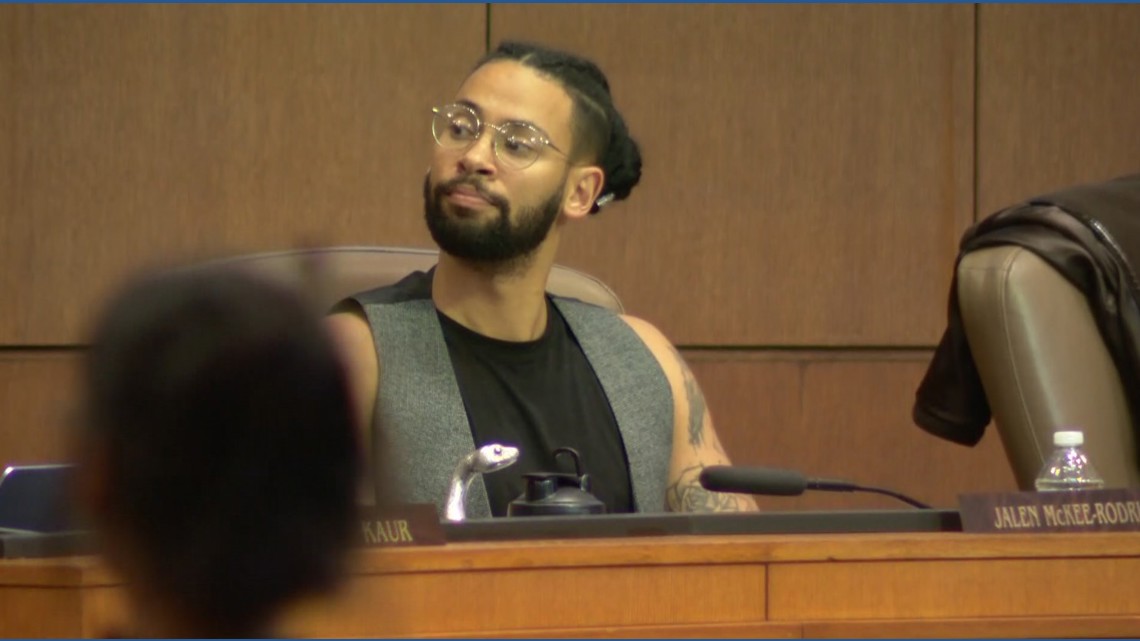
The council members also want staff to address whether “facilities and activities” following any applicable federal laws; whether federal lawmakers can craft a bill to prevent a detention facility in San Antonio; the “establishment of public signage information residents and business owners of their rights”; training city staff on their “rights and responsibilities” as it pertains to “the prevention of harm caused by immigration enforcement”; and pursuing a report on the contributions of migrants to the local economy.
“Lastly, we request staff evaluate opportunities to hold federal law enforcement accountable,” the memo concludes. “It is our intent that we evaluate every possible tool at our disposal and present, clearly and publicly, our path forward.”
The memo, directed to City Manager Erik Walsh, was also sent to Mayor Jones and other council members, City Clerk Debbie Racca-Sittre, and City Attorney Andy Segovia.
Before putting a formal special meeting on the calendar, Walsh appears to be putting it up to full council for a vote. According to the Feb. 12 A-Session agenda, City Council will vote on a resolution supporting the four council members’ united call for the studies and evaluations.
“The facility is moving through. We can’t stop that; it’s a prior transaction,” Mungia said. “We can’t put a bunch of red tape on them for permits because they don’t do permits. They don’t do certificates of occupancy, so we’re extremely limited. However, we’ve got to let people know what’s going on, what we’re doing, what we can do.”
‘People need to see action’
Even before the warehouse was bought for what ICE says will be a “very well-structured” detention facility, some council members started to publicly share what they would like to see happen in response to residents’ concerns about ICE.
At the Jan. 22 meeting, Mungia – after declaring that “ICE doesn’t belong here” – said he’d like to see the city post details about local ICE operations and requests to local law enforcement online. The suggestion was met with applause.
The first-term councilman for District 4 later told KENS 5 he felt that’s “the least we can do” for his constituents whom he says are fearful to go to work, even those with legal status. The City of Austin already does something similar, sharing information online about inquiries into a person’s immigration status and the tally of requests made to Austin PD by ICE in Texas’ capital city.
“I told some of my residents – and some of my residents may even be very much pro-ICE – I told them it doesn’t matter where you are, transparency is important for all of us,” Mungia said.
He referenced the lingering lack of clarity months after the November raid along San Pedro, in which 143 people were detained as part of an investigation that started with a single suspected drug dealer.

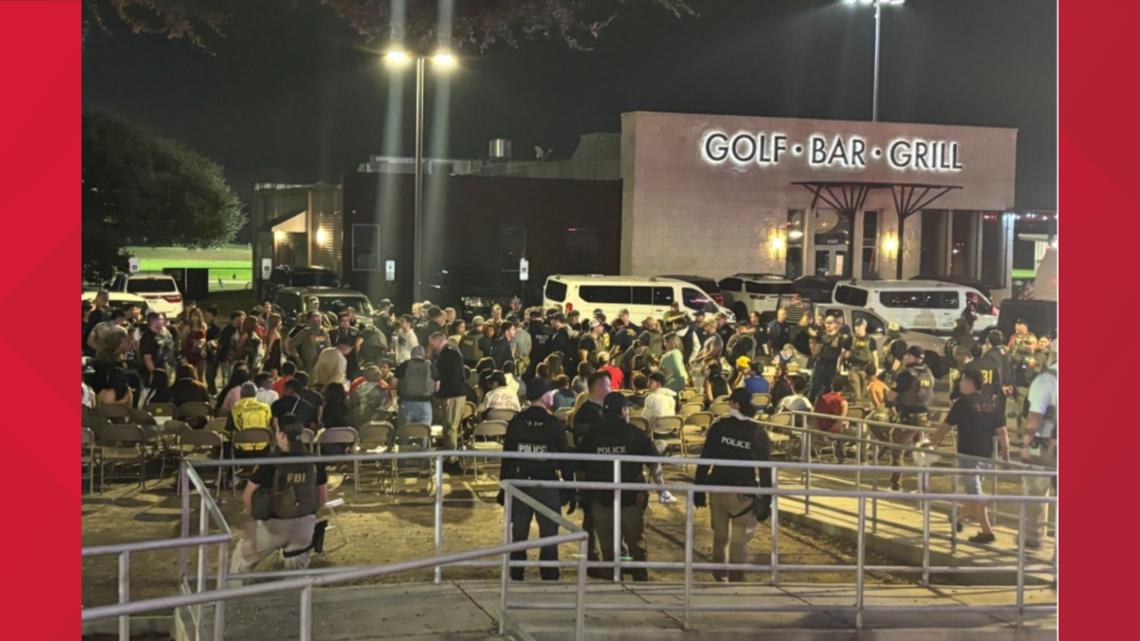
Federal authorities later said that 51 of the 143 were Tren de Aragua gang members. Local and state leaders tried pushing for answers about the dozens of others, one of whom is a Honduran man who was detained for weeks despite his attorney saying he has legal status.
In late January, District 7 Councilwoman Marina Alderete Gavito took to social media to urge residents to submit a report to police if they believe their rights have been violated by federal law enforcement. That call to action came from concerns Alderete Gavito had in the wake of reports that ICE agents were being told they didn’t need a judge’s warrant to enter homes.
“There’s a lot of talk,” Alderete Gavito said. “But I also feel that people need to see action too.”
City Attorney Andy Segovia said in the January meeting that residents have multiple options for sharing civil rights violations concerns, including his office, nonprofits and SAPD.
By centralizing all reports to SAPD, Alderete Gavito said it’s her hope the city will be able to examine that information and analyze the trends.
“SAPD has to track every single call,” the councilwoman said. “The city can then pull that data and we can see, is this happening two times or is this happening 2000 times? Then we’ll be able to have a clearer picture.”
District 1 Councilwoman Sukh Kaur, meanwhile, admitted city leaders may not have acted quicky enough after the San Pedro raid. She shared on social media she’s working with colleagues to establish an immigration defense fund. She also wants “Know Your Rights” training to be implemented for city staff.
“Hearing from my community so loudly has really pushed us to think more about what we can do. We do live in the State of Texas where we have SB 4 and we have to follow these rules. At the same time, our protesters should not be being tear-gassed at the detention center,” Kaur said, referring to actions Texas DPS took to disperse protesters outside an ICE detention facility in Dilley, Texas, last month. “That is a clear violation of their rights.”