From a segregated childhood to NASA engineer, Dr. Lonnie Johnson is now engineering solutions for the planet
ATLANTA — Engineer and entrepreneur Dr. Lonnie Johnson created the billion-dollar toy that became a staple of childhood summers—but that success was only the beginning.
From growing up in the segregated South to working for NASA and now tackling global environmental challenges, Johnson’s life proves that big ideas can change the world.
As a child, Johnson was always curious, often taking things apart to see how they worked. But growing up in Mobile, Alabama, his passion for science developed against the backdrop of segregation.
“I used to watch people on TV saying they didn’t want their kids going to school with those Black people,” Johnson recalled. “And then understanding, of course, they were talking about me and people who look like me.”
That reality didn’t slow him down. As a teenager in the late 1960s—just years after Alabama Governor George Wallace attempted to block school integration—Johnson built a robot and entered it into a science competition.
“There I was with my robot, winning first place,” he said.
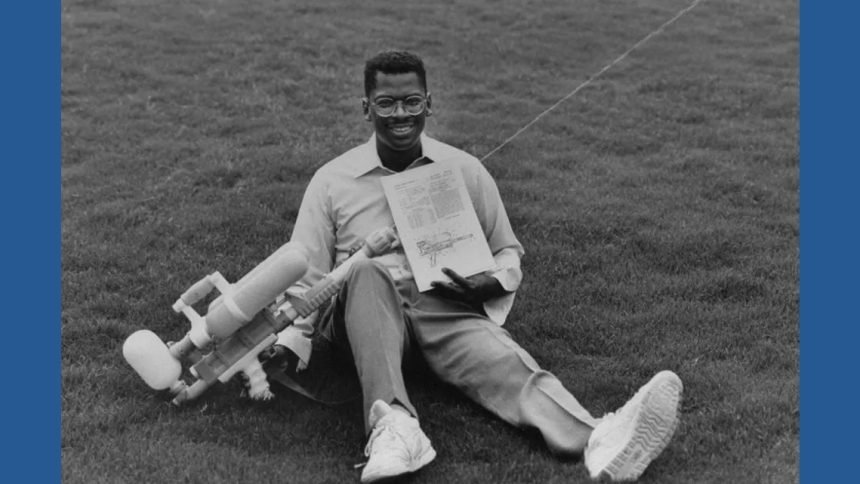
Johnson went on to work for both NASA and the U.S. Air Force, building a career rooted in innovation. The idea for the Super Soaker came unexpectedly while he was experimenting with a heat pump.
“I turned and shot a stream of water across the bathroom,” Johnson said. “It was this very skinny stream—kind of like what you see now with Super Soakers—and I thought, this would be a lot of fun.”
The toy, originally called the Power Drencher, was rebranded as the Super Soaker in 1991 after a copyright conflict. It went on to become one of the best-selling toys of all time.
Today, Johnson holds more than 100 patents, but his focus has shifted toward renewable energy, which he sees as the most urgent challenge of all. At JTEC on Atlanta’s West End, Johnson is developing technology that converts heat directly into electricity.
“It’d be one less thing for us to fight over,” Johnson said. “A lot of conflicts globally are because of conflicts over energy resources.”