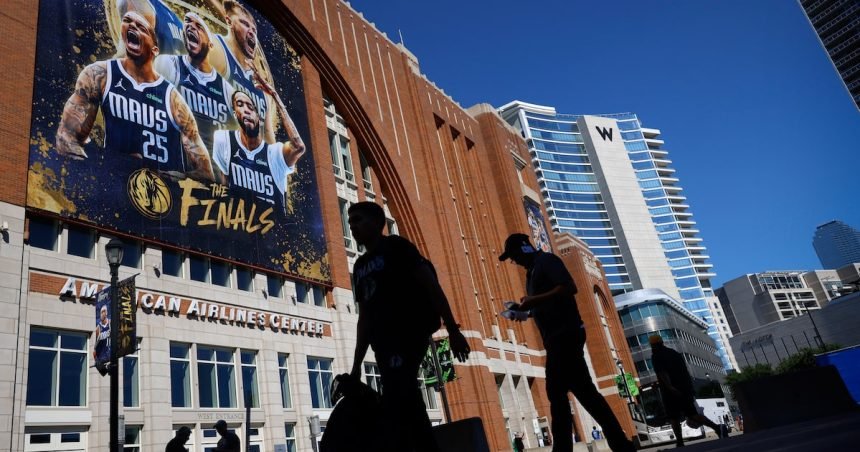
The question facing Dallas is not simply where the Dallas Mavericks will play in the future. The real question is what kind of city Dallas wants to be.
For decades, the Mavericks’ presence downtown has represented something larger than basketball. It has symbolized a city that understands the value of its core, the importance of accessibility, and the responsibility to grow in a way that includes everyone, especially southern Dallas, which has too often watched major investments move farther and farther away.
Keeping the Mavericks matters because downtown is the one place that belongs to all of Dallas. It is geographically central, transit-connected, and reachable for residents from South Dallas, Oak Cliff, Pleasant Grove, West Dallas, and beyond.
When the team plays downtown, the city comes together. When everything moves north, the city pulls apart.
There are some who endorse the narrative that success in Dallas must always migrate to North Dallas. That idea is not only flawed, but also harmful. Everything does not need to go north.
When major institutions relocate away from the city center, they take economic energy, jobs, foot traffic and visibility with them. Downtown businesses suffer, the communities in southern Dallas feel the loss most directly, and Dallas loses an opportunity to model balanced, inclusive growth. Reunion Arena and now American Airlines Center have been a powerful anchor, but the future of the Mavericks does not have to be defined by one building.
Even if the team does not remain at American Airlines Center, there is room both physically and strategically for the Mavericks to stay in downtown Dallas. Downtown has land, infrastructure and redevelopment potential that can support a modern, world-class arena while continuing to drive investment where it is most impactful.
Keeping the Mavericks downtown is not about nostalgia or resisting change. It is about making a smart business decision that aligns with our values as a city. Downtown is the economic heart of the region, and major investments belong at the center of our city, not pushed farther away from the communities that helped build it. Unfortunately, we already have a clear example of this with the Dallas Cowboys, who play in AT&T Stadium in Arlington, not in Dallas.
While the team proudly carries the Dallas name, the direct economic impact — game day revenue, surrounding development, hotel stays, restaurant traffic, and tax dollars — flows to Arlington. That means another city benefits from the investment, infrastructure and long-term growth opportunities tied to one of the most valuable sports franchises in the world.
Dallas should not allow history to repeat itself.
A new or reimagined downtown arena would be a catalyst for growth. It would drive private investment, support small and minority-owned businesses, create thousands of construction and permanent jobs, and strengthen Dallas’ tax base. These are not abstract benefits; they are real economic outcomes that ripple through neighborhoods, families and local corridors. When you place a major economic engine downtown, the entire city feels the impact.
Keeping the Mavericks downtown keeps opportunity within reach of southern Dallas. Location matters.
When one of the city’s most visible and profitable institutions moves farther north, access to jobs, entertainment and economic participation move with it. That sends a message, whether intended or not, about whom growth is for and who is expected to wait their turn, if there is a turn.
Sports franchises are not just entertainment brands; they are civic assets. Where they play reflects a city’s priorities. A downtown Mavericks presence signals that Dallas believes in shared prosperity rather than concentrated growth. It says we are committed to strengthening our core instead of hollowing it out. It tells long-standing communities, especially those south of the Trinity River, that they are part of Dallas’s future, not an afterthought.
Dallas does not need to validate its progress by continuing to move investment farther north. Real progress is reinvesting in the heart of the city and ensuring that growth connects communities rather than divides them.
As a former coach, former Dallas ISD trustee for District 5, and now a City Council member for District 4, I have seen firsthand what happens when you invest where you are.
When we invested in South Oak Cliff High School and in other schools in the district I served as trustee, we didn’t just build teams, we built pride, discipline, opportunity and champions. The return on that investment was measurable, meaningful, and lasting: South Oak Cliff High School moved from an “F”-rated campus to just one point shy of an “A” rating.
The South Oak Cliff football program made five UIL State Championship appearances and won three UIL state titles. None of this came easily. There were skeptics who doubted the value of investing in the South Oak Cliff community where I live and serve. But today, the results speak for themselves. South Oak Cliff football is proof that belief, commitment, and strategic investment work and it is now widely regarded as Dallas’s team when it comes to football. The same principle applies here. Keeping the Mavericks downtown is good business, smart economics, and the right moral choice.
The Mavericks belong downtown not only because of history, but also because of what Dallas can still become when we choose inclusive growth and invest together.
Maxie Johnson represents District 4 on the Dallas City Council.
Part of our series Saving Downtown. This essay discusses the implications of moving the Dallas Mavericks out of the central business district.
We welcome your thoughts in a letter to the editor. See the guidelines and submit your letter here.
If you have problems with the form, you can submit via email at letters@dallasnews.com