“This is something I don’t know that we’re necessarily saying we love the idea yet, but we just need to know what we’re up against and what is on the horizon for this new technology,” council member Paige Ellis said during a Feb. 12 briefing.
What’s happening
The city is currently in negotiations with a company seeking to bring its teleoperations to Austin in the coming months. The cars would be controlled via the cellular network and could face some local oversight—as opposed to AVs, which cities are prevented from regulating under Texas law.
City staff are actively working to establish basic operating standards for the new vehicles once they arrive, according to Lewis Leff, an assistant director with Austin Transportation and Public Works. Citing competitive issues and proprietary information, he said the company now considering an Austin rollout couldn’t be revealed as of mid-February.
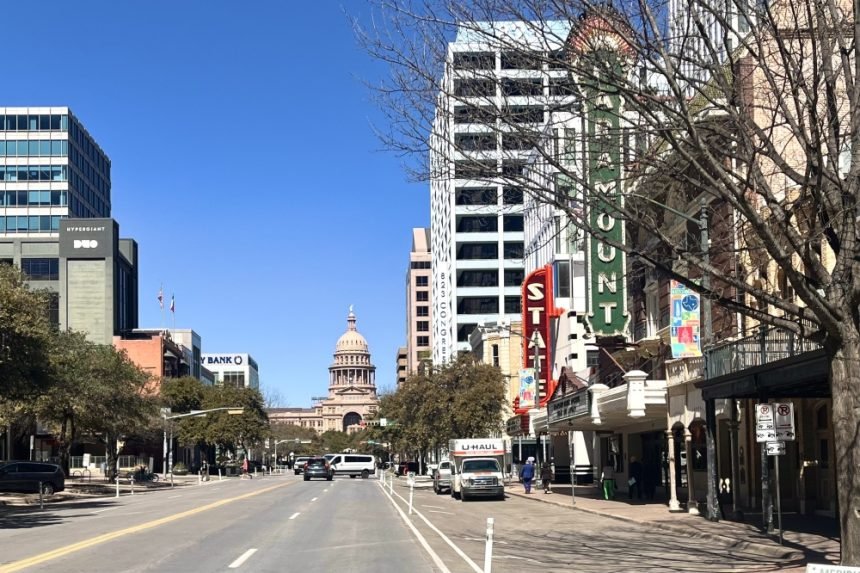
Teledriving could officially launch in town this spring or summer once an initial civic agreement with the business is finalized, likely with a smaller fleet in a small footprint like downtown. Staff are also planning to develop a new city ordinance for City Council consideration covering basic rules and guidelines for the technology, including licensing and required safety reporting.
“Austin has been and continues to be a destination for new mobility-related technologies,” Leff said.
Also of note
While less common than AVs, staff reported that teledriving vehicles already have a presence in Las Vegas. Rachel Castignoli, senior business process consultant with Austin Transportation and Public Works, said they’re mainly being used to move rental cars from customer to customer, rather than for ridesharing to move people around.
Las Vegas teledriving vehicles are capped at speeds of 26 miles per hour, and Leff and Castignoli said there have been some less serious documented crashes involving the cars so far. They also noted that, unlike AVs, teledriving cars can be ticketed, as a human rather than a software is behind the wheel.
Commenting on the safety of the vehicles, Ellis said Austin has frequently been a “guinea pig” for new technologies and that the city should ensure teledriving doesn’t end up harming pedestrians, cyclists and motorists once operations are underway. She also noted that AVs have proven relatively successful at avoiding risks like pedestrians on dark roadways or surprise moves by other vehicles thanks to added sensors, and that teledriving could incorporate similar assistance as well.
“I just can’t for the life of me put myself in the position of, ‘I’m on a computer in an office somewhere, and I’m expected to get a car from Point A to Point B.’ That’s just baffling to me. So hopefully there’s some technologies that have been implemented into these vehicles to help with that,” she said.