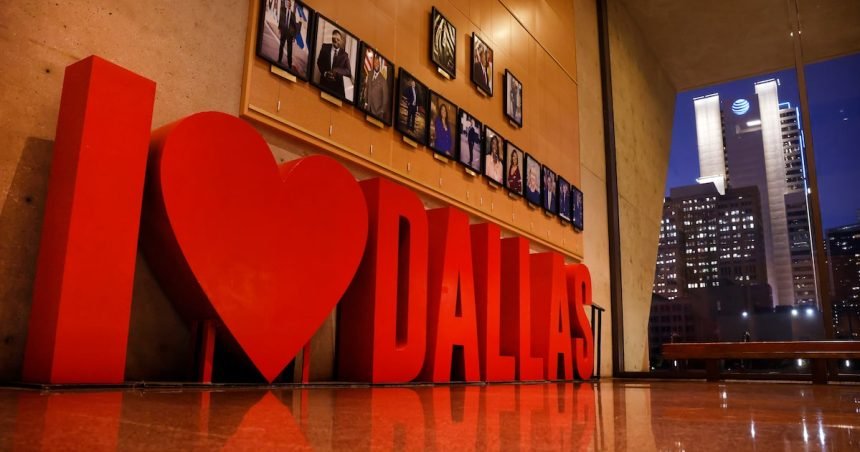
The same report, two different readings.
With a nine-figure repair estimate now public, the City Hall debate has grown louder. One side says it’s time to move. The other says restore the landmark.
The Dallas Morning News asked a relocation advocate and a City Hall supporter to lay out their arguments.
Related
Leave it
Developer Jack Matthews said Saturday the report bolsters his initial views — City Hall should be torn down.
That potentially would free the current site at 1500 Marilla St., which some have suggested as a prime spot for an arena, hotels and mixed-use projects tied to expansion of the convention center growth.
“It confirms what I was thinking in an even stronger way,” he said. “It’s more expensive than I thought.”
The question now, he said, is whether the city should build a new City Hall elsewhere or move government operations into an existing property, such as a downtown office tower, in or near the urban core.

Developer Jack Matthews.
Lynda M. Gonzalez / Staff Photographer
Matthews favors updating an older building. Spending money to update the current City Hall should not be considered.
“We have too many more important places to spend money than building a new City Hall,” he said.
Matthews, a major player in Dallas real estate, is involved in several projects downtown and in the nearby Cedars neighborhood.
Related
“My dog in this fight is – the better Dallas is, the better my developments are,” he said. “What’s good for the city is good for me.”
Matthews also pushed back against assertions from the building’s supporters that the estimates compiled by the Dallas Economic Development Corp. were not legitimate.
He said the firms involved are “at the very top end of reputation and ability to understand these things” and added that he does not believe any would “sell their soul” for the possibility of working on a future City Hall project.
Fix it
Melissa Kingston, who serves as City Plan Commissioner for District 14, which includes parts of downtown and Uptown, said Saturday the report was deliberately manipulated to justify demolition rather than preservation.
Kingston said the new projections have “jumped by tenfold,” which she said is a clear sign the figures are “designed to create a result that’s predetermined, and that is to tear down City Hall.”
She said the suggested renovations go far beyond necessary repairs, denounced the full report and accused staff of trying to sell a “wholesale redesign and rebuilding of the building” instead of an honest, focused repair plan.

Dallas City Plan Commission member Melissa Kingston.
Smiley N. Pool / Staff Photographer
Beyond the numbers, Kingston was deeply critical of the process and what she saw as a lack of transparency and accountability.
Kingston said the city should seek more citizen input.
She said city leaders are pushing a major decision “under the cloak of darkness” so that citizens and taxpayers “have no meaningful opportunity to question what they’re doing.”
Kingston criticized developers wanting to tear down City Hall and remake the area, questioning both their track record and their motives.
Related
“This isn’t about redeveloping downtown or making downtown the thriving city it needs to be for them,” Kingston said. “This is about furthering [developers’] economics.”
She said that’s the nature of real estate but doesn’t believe it’s the right approach for the city.
Kingston said “flopping a big arena down there” while destroying “the historic fabric of our city” would do the opposite of what developers promise. While “they’re in business,” she said, they also “stand to gain the economic dollars from this.”
Coming Monday
The City Council will make the final decision. Its Finance Committee is scheduled to take up the report Monday. The council’s Economic Development Committee will meet March 2 to take public comments. The full City Council will be briefed March 4.
What’s at stake
Dallas leaders are weighing the future of City Hall, a decision that pits civic legacy against long-term financial obligations. The arguments:
Stay and renovate
- Repairable, with phased spending
- Preserves I.M. Pei-designed landmark
- A defining symbol of Dallas’ identity
Move city operations
- Avoids years of major repairs
- Frees prime downtown land for redevelopment
- Lower upfront cost