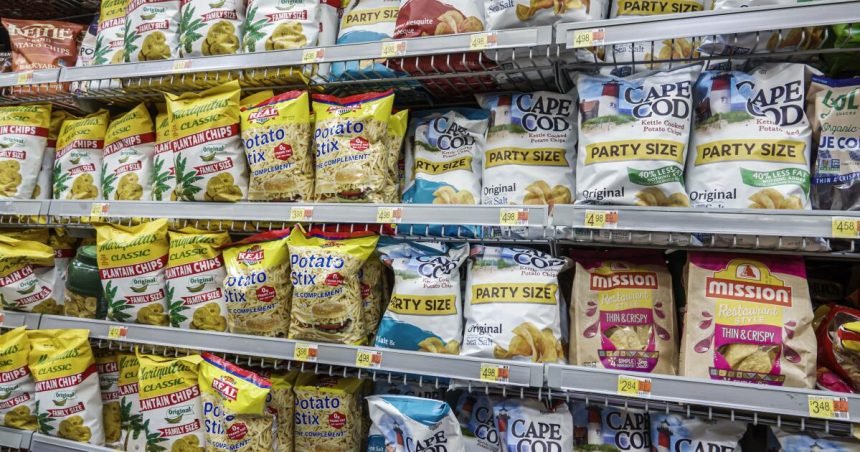
Making chips out of potatoes is starting to feel a little passé.
Snacks made from cassava, tempeh, mushrooms, chicken breast and whole eggs are now hitting the supermarket, reflecting Americans’ eagerness to eat protein- and fiber-rich whole foods — without giving up their convenient salty chips.
“I love chips and they’ve always been my weakness,” said Riddhima Kapoor, founder of Veggie Vice, as she hawked samples of freeze-dried sour-cream-and-onion-flavored broccoli chips and sea-salt zucchini chips at the recent Expo West natural foods show. “I wanted to not feel guilty about it.” She launched Veggie Vice in April at Sprouts Farmers Market and the company is now experimenting with bell pepper and eggplant snacks.
The potato remains the king of the snack aisle, of course, with $12 billion in annual U.S. potato chip sales, according to market-research firm Circana. But a group of upstart companies are capitalizing on consumers’ growing preference for protein- and fiber-rich snacks that have fewer and more natural ingredients.
Market data show there’s an incentive to take risks and find the next hit snack as spending migrates away from the center aisles of the supermarket and toward fresher, less-processed options. Potato chip sales dropped 1.2% in late February from a year earlier, while sales of tortilla chips, which are the second-biggest category, were flat, according to Circana. Nutritional snacks and trail mix rose 2.1% over the same period, Circana data show, while pork rinds increased 1%. Apple chip sales jumped 4.1%.
It’s a trend that’s being pushed by Health and Human Services Secretary Robert F. Kennedy Jr., whose Make America Healthy Again movement is urging people to eat more “real food” and avoid highly-processed products. Still, consumers’ ongoing demand for convenient foods leaves room for companies to pitch snacks with shorter ingredient lists that are seen as more natural — and they can often charge a premium for the products.
Earlier this month, the Campbell’s Co., which owns Snyder’s pretzels and Cape Cod potato chips, said net sales of its salty snacks dropped 6% in the most recent quarter, driven in part by declines in chips and pretzels.
Smaller “disruptor” companies made up only about 2% of food sales in 2025, but drove 64% of sales growth over the same period, according to research from BNP Paribas analyst Max Gumport. Meanwhile, bigger food companies notched lower sales volumes for the fifth straight year, driven by shoppers’ growing preference for fresh food, he wrote.
While the most dramatic innovation is coming from smaller startups, larger brands are also responding to reflect changing tastes. PepsiCo Inc., for example, recently launched high-fiber varieties of Smartfood popcorn as well as SunChips made with black beans. It also has a protein-infused version of its Quaker Rice Crisps.
The newest products are pushing the envelope on what’s generally recognized as a “chip.” Veggie Vice’s broccoli chips are small florets, giving them more of a “Cheeto texture,” Kapoor said.
Mushroom chips from Evil Snacks are deeply furled, made from kettle-cooked whole oyster mushrooms in sea salt, sriracha lime and sour cream flavors. The company also makes crunchy banana curls. Other companies’ chips are made from cassava — a root vegetable — spinach and purple sweet potatoes.
The high-protein craze has helped fuel the boom. Shoppers can buy chips made of crispy tempeh, a plant-based protein made from fermented soybeans, as well as chicken breast and egg whites. Whole-egg chips from Magos are available in garlic parmesan and huevos rancheros flavors, among others.
Magos co-founder Alexandra Breed said manufacturing snacks with new ingredients, such as eggs, is more complicated than popping out potato chips.
“Nobody that mixes liquid eggs is also doing freeze-drying or slicing,” she said. “We have to use multiple manufacturers to get to our final product.” The idea for an egg snack came out of eating too much beef jerky at a Burning Man festival and wishing a shelf-stable egg product existed, she said. Magos launched late last year on Amazon, where a pack of three 32-gram bags sells for $20, and it’s entering retail stores this month. The product is marketed as low in carbohydrates and high in protein.
Not all of the newest chips are trying to avoid carbs. Sean Knecht and Joe Sasto, co-founders of Tantos, passed out samples of their puffed pasta chips at the Expo West event. Flavors included marinara and cacio e pepe. The company uses flour and water to extrude fresh pasta, then deploys a secret method to dry it before frying to puff it up. It’s the “proprietary way we dry it that makes it puff,” Knecht said.
The explosion of new snacks is being closely watched. Campbell’s Chief Executive Mick Beekhuizen said in remarks released with the company’s earnings that consumers are focusing more on “health and wellness, premium and flavor-forward experiences.”
“Consumers are still snacking, but how and why they snack is changing,” he said.
Peterson writes for Bloomberg.