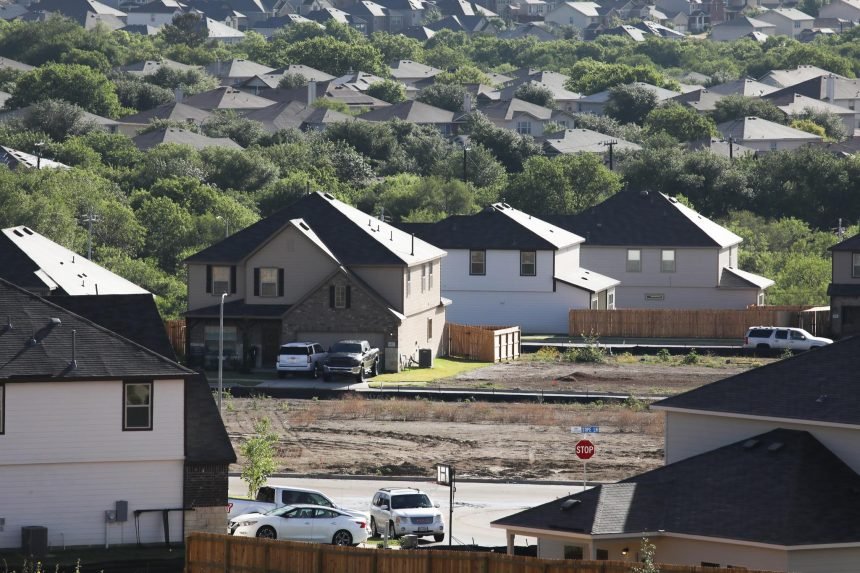
On average, Bexar County homes decreased in value by about .11% over the past year, according to the Bexar Central Appraisal District, reflecting a “continued softening” in the residential market.
That’s as average home sale prices also dropped slightly during that time, from about $340,000 to $338,800.
Overall, the total market value of properties in Bexar County rose by about 2.5% this year — thanks in part to new construction that wasn’t previously on the tax rolls.
Multifamily residences and commercial properties also outpaced single-family home values, rising about 1.6% and nearly 6%, respectively.
In a nod to the disparities, the appraisal district said the number of notices it sent alerting people that their property increased in value by more than $1,000 was substantially lower than past years — about 196,000 of the 734,000 properties reviewed.
“The 2026 appraisal year reflects a continued softening in the residential market, with many properties showing slight declines in value, while some areas continue to demonstrate stability or modest growth,” the Bexar Central Appraisal District said in a statement.
What is a property valuation?
Valuations are intended to provide a point-in-time market value of a property so that taxes can be assessed on that amount.
From 2025 to 2026:
Bexar County total market value: ↑2.5%
Multi-family market values: ↑1.62%
Commercial values: ↑5.99%
Single-family residential values: ↓.11%
As of Friday, Bexar County property owners can now find their 2026 valuations online.
Properties that went up in value by more than $1,000 will also receive a notification in the mail.
“Even if you don’t receive a notice [that your valuation has gone up], you still have the right to review and protest your property’s value,” said Chief Appraiser Rogelio Sandoval. “You can review your 2026 value online or contact our office with any questions.”
Property owners have until May 15 to contest a valuation and get it lowered before property tax bills are sent out in October.
Thanks to a recent policy change, most people who successfully challenged their valuation in 2025 do not need to do so again in 2026 — it will automatically roll over.
Tax hikes on the horizon?
Property taxes are a major funding source for municipal budgets, which generally rely on steady growth to fund services for a growing community.
San Antonio already raised fees and cut services to account for lower-than-expected revenue in 2025.
This year it’s facing an even bigger deficit, and city leaders have discussed raising taxes for the first time in three decades to keep moving on big infrastructure and downtown development projects.
Rubber is hitting the road on San Antonio’s era of no tax rate increases
The city of San Antonio did not immediately respond to a request for comment on this year’s valuations.
During the bullish housing markets, Bexar County’s total property values rose by an average of 16% in 2023 and 28% in 2022.
It cooled off to about 2.4% in 2024 and 2.1% in 2025 — with San Antonio’s growth coming in even lower than that because so much of the new development was happening outside the urban core.
As property values dip, San Antonio and Bexar County are on different financial paths
Why is my valuation still going up?
In times of skyrocketing valuations, the city, county and state all put in place measures to keep homeowners’ property tax bills from rising too quickly with them.
That’s led to a scenario where some properties are still appraising higher in times of slower growth — to catch up to their actual market value.
The homestead exemption, for example, acts as a buffer in an upward market. It keeps a property’s appraised value from rising by more than 10% in a single year, but it will keep going at that rate until it matches the market value.
This year the average market value of properties claiming a homestead exemption in Bexar County — meaning the property owner lives there and considers it their primary residence — dropped from about $337,000 to $330,000.