The first season of the NBA’s 11-year, $76 billion rights package delivered a seven-year ratings high, as the strategy of bulking up on big-reach broadcast windows offset the ongoing erosion of the pay-TV bundle.
According to Nielsen Big Data + Panel estimates, the NBA averaged 1.78 million viewers per game across NBC/Peacock, Disney’s ABC/ESPN and Amazon Prime Video, marking a 16% improvement versus the year-ago 1.53 million. The average pickup of a quarter-million impressions was powered by the league’s return to the NBC airwaves after a 24-year hiatus.
All told, NBC Sports’ new NBA package averaged 2.8 million viewers across the flagship network and Peacock, more than double (+109%) the turnout for analogous telecasts in 2024-25. NBC’s late-season Sunday Night Basketball feature did much of the heavy lifting; with an average draw of 3.4 million viewers, the window earned bragging rights as the NBA’s top draw in a decade.
Coast 2 Coast Tuesday, meanwhile, averaged 2.6 million viewers per week, good for a 99% lift.
NBC tipped off its renewed stewardship on Oct. 21 with a Rockets-Thunder/Warriors-Lakers doubleheader that averaged 5.61 million linear and streaming viewers, making it the NBA’s most-watched opening night in 10 years. The OKC game averaged 5.1 million TV impressions, while another 754,000 fans took in the action via Peacock.
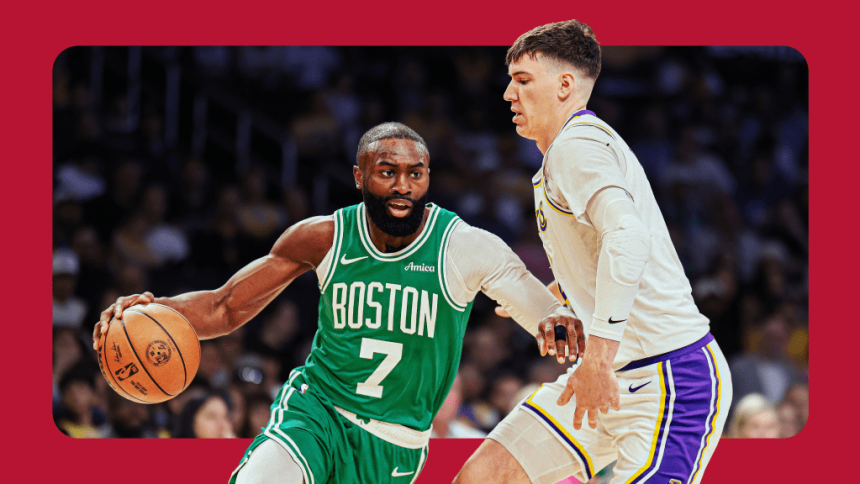
Other regular-season highlights include the Feb. 22 Celtics-Lakers blowout, which averaged 4.52 million viewers, with simulcasts on Peacock and the Spanish-language network Telemundo bumping the total to 5.6 million, and the NBA All-Star Game (8.8 million, including 6.73 million NBC viewers). The new-fangled “USA vs. the World” format served up the largest audience for a midseason NBA scrimmage since 2011.
NBC bought its way back into an NBA partnership by agreeing to pay an average fee of $2.45 billion per season for the rights to carry the league’s games. That’s about half-a-billion dollars more than the Comcast-owned media outlet spends on its Sunday Night Football package.
Adding upwards of 50 over-the-air broadcasts to the NBA’s national TV slate expanded the league’s overall reach by more than 20 million homes. With an estimated 67% affiliate coverage, NBC’s over-the-air signal is delivered to some 85.8 million U.S. TV households, whereas traditional and vMVPD pay-TV platforms now reach approximately 64.8 million homes. As is the case with every linear TV channel, NBC also was the beneficiary of Nielsen’s recent currency upgrade.
If nothing else, the NBA’s full-season ratings performance casts more than a little shade on a recent UBS report in which analyst Jay Sole theorized that Nike’s ongoing stock market decline is a function of what he characterized as basketball’s waning influence on American pop culture. (It’s tough to square a seven-year ratings high and a $76 billion rights payday with a reality in which the NBA is falling off, but some of that assessment seems to be based on the fact that science hasn’t figured out a way to clone the sneaker-selling phenomenon that was peak Michael Jordan.) “Nike’s areas of historical strength, mainly basketball, are less relevant today,” Sole wrote, before going on to suggest that “it’s unclear” whether basketball remains a vehicle for “selling a lot of commodity products.”
Game 7 of the 2025 NBA Finals averaged 16.4 million viewers. Presumably, at least some of those people are in the habit of wearing sneakers. Also: Jordan signed with Nike in the sepia-toned, pre-Internet days of 1984, with the very first batch of Air Jordan 1s shipping the following year. A lot has changed in 41 trips around the sun.
The season was something of a mixed bag for Disney, as ABC saw its NBA deliveries fall 14% to 2.3 million viewers per game, while ESPN posted a 6% increase with 1.4 million. The five-game Christmas Day extravaganza marked the in-season highlight for the Disney nets; all told, the ho-ho-holiday slate averaged 5.5 million viewers, the best average since 2018, with the 2:30 p.m. ET Spurs-Thunder matchup putting up the biggest numbers (6.7 million viewers).
Disney’s annual rights fee ($2.6 billion) is the highest among the league’s media partners, although that elevated rate ensures that ABC will continue to air the NBA Finals through 2036.
For its part, Amazon said the inaugural season of NBA on Prime averaged 1 million viewers over the course of 67 games here in the U.S. The streamer’s biggest draw was its presentation of the Knicks’ 124-113 victory over the Spurs in the Dec. 16 NBA Cup Championship game, which averaged 3.07 million viewers.
Prime’s NBA coverage served up an audience with a median age of 46.9 years, 9.1 years younger than the league’s following on linear TV (56 years). This dynamic is in keeping with Amazon’s younger-skewing NFL deliveries; last season Thursday Night Football boasted a median age of 49.4 years, down considerably from the league’s TV average (56.2). In the 53 windows that were directly comparable to year-ago linear-TV presentations, Prime boosted deliveries of adults 18-34 by 11% and grew adults 18-49 by 20%.
Those younger viewers also had a bit more money to spend on the brands that bought time during Prime’s NBA ad breaks. According to Nielsen, fans who watched the NBA on Prime earned a median household income of $96,800, up 16% versus the NBA’s linear-TV audience ($83,600).
Amazon shells out $1.8 billion per year for its NBA package.