Every year, when the dust settles in the days following the NFL Draft, college coaches and personnel staffers tend to have thoughts.
They know the draft prospects as well as anyone. They have also watched the entire scouting cycle, aware of the narratives, the interest and the best fits.
So, to add further perspective on the players the Minnesota Vikings selected, we thought it would be worth reaching out to many of these people to get their perspectives. Here is what we heard about each of the Vikings’ picks:
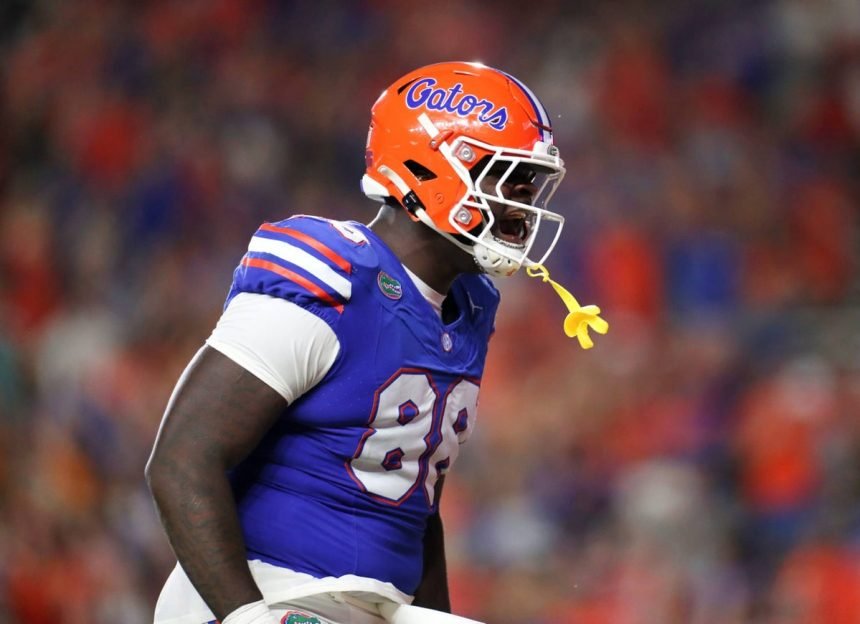
Round 1, No. 18: Caleb Banks, DT, Florida
We’ll start with former Florida coach Billy Napier, who said: “I would just tell you that, within the last decade or 20 years, this is a generational height, length, twitch and intelligence type of guy who also has a competitive streak that makes him different.”
This wasn’t a canned answer, either. One opposing coach, who is now an offensive coordinator in the SEC, was similarly effusive. He said that in 2024, when his team game-planned for Banks, they were talking about a “big, strong and twitchy guy who we found out was absolutely dominant.”
The primary hangup was and will remain Banks’ health. The foot injury scared multiple NFL evaluators, but they also understood the risk given the lack of blue-chip talent elsewhere in the draft. Gerald Chatman, Florida’s defensive line coach and perhaps the most important coach when it comes to Banks’ development, views Minnesota as an advantageous landing spot to continue to help Banks mature.
“I was there at his draft (party), and I was proud of him,” Chatman said. “But I said, ‘Hey, it’s time to get your a– on that plane, and it’s time to go to work.’ I told him, ‘People are doubting you right now. People don’t think you can do it. But the Vikings do. They showed that they believe. They’re saying that they believe you can reach your ceiling.’”
Round 2, No. 51: Jake Golday, LB, Cincinnati
One NFC executive loved Golday: the versatility, the intelligence and the grittiness. Another NFC executive questioned what position Golday would ultimately play.
This is part of the reason the Vikings took the chance. Their defense is multiple, adaptable and shape-shifting. Many of its positions, such as the roles played by Andrew Van Ginkel and Josh Metellus, are blends of several spots.
“He’s a unique athletic profile, and we had a unique defense,” said Jack Griffith, Cincinnati’s former director of player personnel. “He was playing almost a nickel defender role. We played so many RPO-heavy teams, so we put him out in space, and he eliminated those passing windows with his length, athletic ability and football intelligence.”
Scouts and coaches also rave about his character.
“You wonder why some people develop and some people don’t,” Griffith said, “and it usually comes back to learning capability and passion for the game. He represents both.”
Round 3, No. 82: Domonique Orange, DT, Iowa State
Who better to ask about “Big Citrus” than a one-time NFL Defensive Player of the Year who has coached the defensive line for more than two decades?
Bryce Paup, a former Buffalo Bills great who played for the Vikings in 2000, spent last year as a defensive assistant at Iowa State. The experience introduced him to Orange.
“For me, what stood out most was his athleticism,” Paup said. “When he plays hard, he’s a force. Sometimes, he’ll get a little tired. He probably won’t play as many plays there as he did here, but we made him play more plays than we should’ve because of a lack of depth.”
As the Cyclones’ nose tackle, Orange’s primary responsibility was occupying the backside A-gap. Occasionally, against outside-zone schemes, Iowa State asked him to dart into the front side. To maximize his talent, Paup said, the Vikings coaches will need to establish trust early on.
Do that, and ensure he keeps eating healthily, and multiple Iowa State staffers believe he’ll play a major role.
“He was utterly dominant at his best, as good as anybody,” said Derek Hoodjer, formerly Iowa State’s assistant AD for football player personnel. “He became much more consistent, and in his senior year, he was the foundation for us.”
Round 3, No. 97: Caleb Tiernan, T, Northwestern
Duke Manyweather, a premier private offensive line coach, worked with Tiernan throughout the pre-draft process. Manyweather knows this comparison is lofty, but in Tiernan, he sees shades of former Kansas City Chiefs All-Pro right tackle Mitchell Schwartz.
“I’ve been around both of them,” Manyweather said, “and Mitch was a college left tackle. In the run game, he was a mauler, smooth and efficient. I think Caleb is the same, but I do think Caleb is more explosive than Mitch was — his jumps, his power, his finishing. And their demeanors are similar. They’re cerebral.”
Bill O’Boyle, Tiernan’s offensive line coach in 2024 at Northwestern, used that word, too. An example? When O’Boyle began teaching the use of independent hands as a blocking technique, Tiernan listened intently and applied it. Tiernan overcomes a shorter arm length (32 inches), O’Boyle said, with his hip mobility.
O’Boyle thinks Tiernan’s ceiling depends on opportunity.
“We could put in a screen game where we could get him on the perimeter in a way you couldn’t with other tackles,” O’Boyle said. “Because he’s that fast. He’s got that sneaky, fat-man speed.”
Round 3, No. 98: Jakobe Thomas, S, Miami
Miami defensive coordinator Corey Hetherman is widely regarded as one of the top defensive minds in college football. In 2025, the Hurricanes hired him away from the University of Minnesota. One of his first orders of business? Finding a group of safeties who could communicate and play with an edge.
Thomas perfectly fit the profile. Having studied Vikings defensive coordinator Brian Flores’ system, Hetherman sees the same type of match.
“His style of play, and their style of loading the box and doing different things with the safeties and being multiple, is ideal,” Hetherman said. “He was also a guy who didn’t come in until August, and he picked it up quickly. So, you’d think he’d do the same there.”
One AFC scout said he placed a second-round grade on Thomas. Meanwhile, Miami safeties coach Will Harris, who mentored Byron Murphy Jr. at Washington, described him as a “hammer.”
“I say that all the time,” Harris said. “He was our enforcer. We always talked about enforcing your will on your opponent, and he did that.”
Round 5, No. 159: Max Bredeson, FB, Michigan
One AFC coach, who spent time around Bredeson at Michigan, succinctly summed up what the Vikings are getting: “(A) tough-as-s– player who is a great culture guy.”
Bredeson’s tight ends coach at Michigan, Steve Casula, sees Bredeson’s rugged exterior and thinks it masks, perhaps, his greatest strength: his mind. He motivates teammates. He’s fiery. But away from the field, he bounced between meeting rooms. At practice, he participated in different positional drills to prepare for all of his potential duties.
“He comes off like he’s just this see-person, hit-person guy,” Casula said. “But (his) football intelligence and understanding of leverage and angles, and how to hit someone or move someone, is, like, generational.”
While the fifth-round pick of a fullback raised some eyebrows, the previously mentioned AFC scout wholeheartedly understood the selection. This evaluator believed Bredeson was the best fullback in the draft. Finding an offensive contributor and special teams weapon in the fifth round, this scout said, can be a difference-maker.
Round 5, No. 163: Charles Demmings, CB, Stephen F. Austin
In the lead-up to the draft, one NFL assistant GM called Colby Carthel, the head coach at Stephen F. Austin. That team evaluates character with a what-it-takes grade. Essentially, part of their dissection of a player is whether or not that prospect has what it takes to be successful, beyond what you can see on tape.
“This assistant general manager said, ‘Charles has the highest what-it-takes factor of anybody on our board,’” Carthel said.
Loyalty? Demmings turned down at least $500,000, according to Carthel, to leave the FCS and transfer up. Team-oriented? After practice, Demmings often broke down the huddle. Some called him “Chucky D,” while others preferred “Deacon Demmings.” When he talked, the team listened.
Carthel said the leap in competition will call for development as a player, but Demmings’ explosiveness and mindset meet the requirements. His special teams willingness should keep him around, too.
Round 6, No. 189: Demond Claiborne, RB, Wake Forest
Eric Galko, the director of football operations and personnel at the East-West Shrine Bowl, monitored Claiborne up close this spring. His thoughts?
“Outstanding,” Galko said. “Elite top-end speed. Still ascending as a pass catcher but has the bend, twitch and understanding to quickly develop there.”
Claiborne didn’t fall to the sixth round because of his talent. Perhaps The Athletic’s draft expert, Dane Brugler, put it best in “The Beast”: “Claiborne is someone whom coaches and scouts have seen ‘mature’ over his four years.”
The Vikings haven’t had a running back with top-end burst since Dalvin Cook. How Minnesota uses Claiborne to further dictate offensive matchups is worth revisiting during training camp.
Round 7, No. 235: Gavin Gerhardt, C, Cincinnati
When you’re drafting a center in the seventh round, you’re looking for two things: smarts and reliability. Gerhardt checks those boxes.
“Probably the best servant leader I’ve ever been around,” Griffith, Cincinnati’s former director of player personnel, said. “He could’ve left a few different times, but he was the linchpin who brought the cultures together between Luke Fickell and Scott Satterfield. He’s the guy you trust to make all the calls.”
The knocks, Griffith said, are his size and length. On tape, Gerhardt fires off the football, a key characteristic of the Vikings’ revamped outside-zone-based run game. It’ll be interesting to assess what opportunities the Vikings give him this summer and fall, and how he performs against more explosive defensive linemen.