As the MLB season kicks-off, conversations about the lack of a salary cap and the extremely high spending of the top teams begin to spark up again.
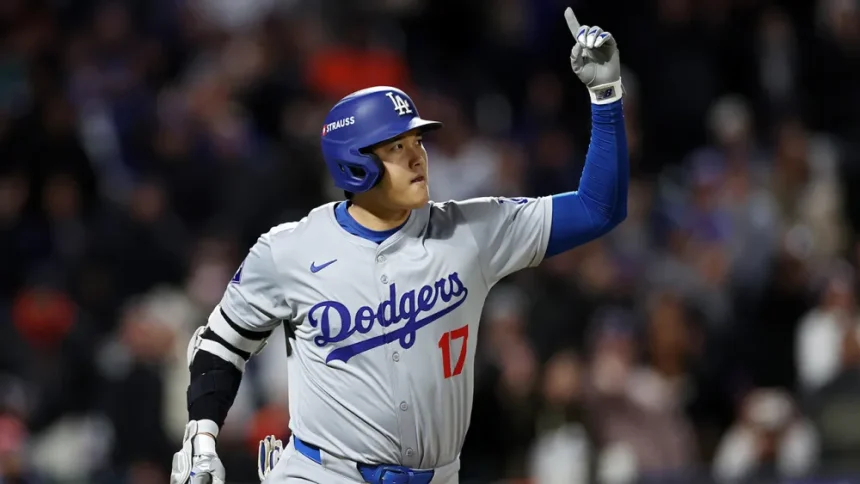
The reigning champions, the Los Angeles Dodgers, and their lineup of superstars are often a catalyst for this conversation. According to Shane Thruston in a BetMGM article, the team’s tax payroll in 2026 is $396,027,414, slightly down from last year’s $41,341,608.
While the MLB doesn’t have a hard salary cap like the NFL, it does force teams to pay a luxury tax if their payrolls exceed a certain number. For the upcoming season, this threshold is set at $244 million.
Last year, four teams paid over $50 million in luxury tax fees, with the Dodgers spending a record $169 million in just the luxury tax. In comparison, their opponents in the World Series, the Toronto Blue Jays, spent only $13 million on the luxury tax.
“With mega-contracts becoming increasingly common and payrolls continuing to rise, some teams view the annual luxury tax threshold as a minor obstacle rather than a genuine deterrent to spending,” Thruston said.
Even with top teams spending significant amounts of money on players, the MLB has maintained parity, with 10 different teams winning a World Series in the past 15 years. Still, most fans believe the league needs to implement stricter payroll controls, including a salary cap and floor. Why?
Despite the parity in that time period, only three championship rosters have been outside of the top ten in salary payroll in the given season. Even with the parity, to win a championship, you have to be one of the highest paying teams in the league.
Many teams are not spending enough though, which prevents them from ever contending for a championship.
“Baseball uses a revenue-sharing system to help smaller-market teams, but without a salary floor, these funds fail to reach player personnel,” Michael Hancock said in an article in The Quad. “In 2025, the Marlins and Pirates spent a combined $198.8 million on their rosters, barely over what the Dodgers spent in taxes alone.”
Instead of using the money to improve the roster and create a contending team, owners choose to pocket the extra cash for themselves. This diminishes the fan interest of the team, and also reduces the number of competitive and meaningful games in an already bloated 162 game season.
The Miami Marlins have a tax payroll of just $78 million for the 2026 season, the lowest in the league. This results in an average attendance of 14,282 people per game, according to Baseball Reference. For reference, the average MLB game has an attendance of around 30,000.
The low attendance at Marlins games creates a dangerous cycle. Seeing the lack of fan support, owners are now even less likely to spend on the roster, which leads to even less fans showing up the next year, and repeating the cycle.
The bottom eight teams, in terms of payroll, for the 2026 season are all spending less than they did last year on their roster, reflecting this cycle. Furthermore, the lowering fan interest can also result in the relocation of the team, something that did happen in Oakland to the Athletics.
By implementing a hard salary floor, these teams will be forced to spend, which in turn creates more competitive rosters and breaks this cycle.
“Despite the need for reform, the Major League Baseball Players Association (MLBPA) is described as the most powerful union in the country,” Hancock said. “Executive director Bruce Meyer and MLBPA leadership have historically argued that a salary cap system eliminates freedom and flexibility. The union also argued that the system would negatively impact middle-class players.”
Despite the MLBPA’s push back on a salary floor, the truth is that a salary floor would be more beneficial for middle-class talent. Currently, the lack of a floor forces non-contending teams to operate on a small budget.
“Trading a hard ceiling for a hard floor would force teams to stop pocketing revenue and chase after middle-class talent,” Hancock said.
With the growing size of player contracts and the willingness of big-market teams to pay the luxury tax, a soft salary cap would be useless. And a hard salary cap would face too much pushback to ever be implemented, as top players won’t be willing to lose out on the potential of lucrative contracts currently given out to top talents.
A hard salary floor is much more likely to be implemented and would be much more useful for the league. With a salary floor, teams will be forced to pay mid-level talent and increase the competitiveness of their rosters.
Also, by forcing more spending, the league will likely see an increase in fan attendance amongst teams like the Marlins, increasing the MLB’s overall revenue.
Currently, the MLB is the only major American sports league without a salary floor. If implemented, a salary floor stands to provide major benefits so the league. So the question is why not add one?