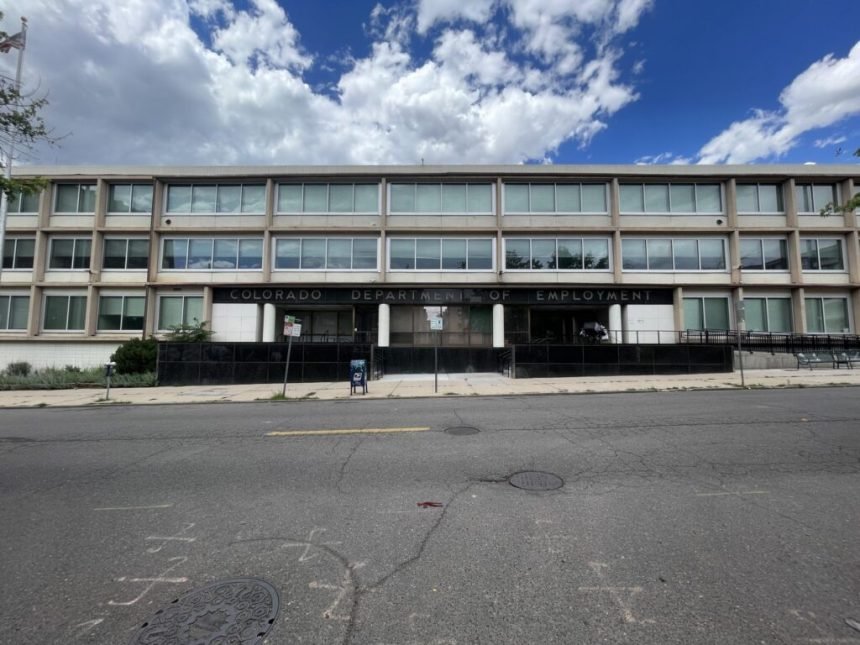
The Denver City Council approved the purchase of a former office building once home to the Colorado Department of Labor and Employment in Capitol Hill for $4.5 million on Monday — marking the first project to use Vibrant Denver Bond money for affordable housing.
The former CDLE office at 251 E. 12th Ave. has been empty for several years since state officials downsized its offices. Denver aims to buy the building with plans to either let a developer lease the property or sell it to someone who can convert it into affordable housing.
Denver seems to have gotten a good deal on the three-story, 91,470-square-foot building. Denver Assessor records show the appraised value of the building, built in 1957, at $18,159,500.
With council approval, the city said it plans to close by the end of the month.
Last year, voters approved nearly $1 billion for the Vibrant Denver Bond to support funding upgrades to libraries, parks, transit infrastructure and more.
One measure allocated $45 million toward buying or preparing properties for affordable housing.
City leaders have said the former CDLE office would support one of the densest neighborhoods in the city and lower-income residents who could potentially be displaced by investments that may follow once the Bus Rapid Transit route project is completed. It also has close proximity to schools, childcare, parks, playgrounds, libraries and grocery stores within a mile of the property.
The area the building is in hasn’t seen new housing units since 2020, according to a presentation shown earlier to the city’s finance committee.
The bill received nearly unanimous approval with the only dissent from Councilmember Flor Alvidrez of District 7, the area including South Broadway and West Washington Park. Alvidrez said she opposed the purchase because there was a lack of details on the feasibility of converting the building into housing.
She said she doesn’t feel like the building can practically be adaptively reused and there aren’t enough details on the area’s housing needs to see if the affordable housing will be workforce housing, mixed-income, extremely-low income or have larger units for low-income families.
“A lot of this hasn’t been decided or discussed, and these are one-time funds that we may not get back,” she said. “And I can’t handle the idea of approving this and finding out that nobody wants this building later on.”
Councilmember Chris Hinds of District 10, where the CDLE office building is located, said he’s already gotten interest from two prospective developers.
“We were lucky in that the state reached out to the city proactively,” Hinds said.
Laia Mitchell, the city’s director of catalytic partnerships at the Department of Housing Stability (HOST), told councilmembers the site is ideal for affordable housing because of its location.
“There’s a need, a strong demand for housing in the Capitol Hill area, there’s a strong employment base with all of the public workers and the downtown workforce,” she said.
Mitchell said they are targeting the site to cater to residents making 60% of the Area Median Income, but they also need to be flexible to make it financially feasible for developers.
“We do want to balance those with some of the more typical kind of low-moderate income affordability that makes the project successful and effective,” she said.
Councilmember Sarah Parady, who announced Monday plans to resign from council on Aug. 5 due to health reasons, said the bond’s parameters for affordable housing were designed with “anti-displacement” in mind.
She said there were many reasons to debate why this project may or may not meet the intent of the bond’s purpose, but said she supported the purchase of the site mainly because of the potential side effects of the Colfax BRT project.
“When we finally invest in an area and develop it and do something good for an area, then suddenly it becomes more attractive to the market, and all the parcels on it get snapped up and they get turned into luxury apartments,” Parady said. “So, I do think it’s an appropriate use of these dollars.”
But for the rest of the $40 million bond money, Parody added, she hopes it will go toward projects in other neighborhoods in the city that haven’t yet had the same level of investment.