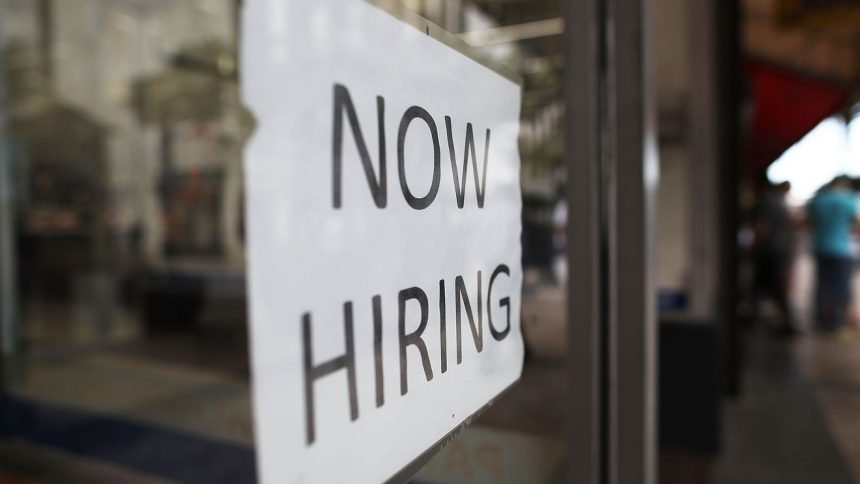
(TNND) — Small business owners appear to be pulling back on hiring plans, despite the government’s release of a hotter-than-expected jobs report just days ago.
The National Federation of Independent Business released its monthly report Tuesday on small business optimism and showed indicator after indicator that signaled a softening labor market in the small business sector.
NFIB’s headline optimism index for May registered a reading of 95.3, stuck under the 52-year average of 98 for the third straight month. Ten components make up the optimism index. Six fell, three improved, and one was flat.
Another NFIB index, one that captures uncertainty levels within the small business community, rose several points from April to reach 91, remaining well above its historical average of 68.
The NFIB’s surveys showed that small companies across a broad scope of industries seem to be shelving hiring plans.
Job openings and hiring plans fell to the lowest levels in six years, NFIB said.
The highest share of small business owners in NFIB survey history cited labor costs as their single most important problem.
And the lowest share of small business owners in nearly a decade cited a lack of available quality labor as their top problem, indicating they’ve either stopped looking for as many workers or the pool of available talent has improved.
Meanwhile, the highest share of small business owners since December 2024 cited inflation as their top problem.
Employers are reluctant to lose good workers, but they’re also reluctant to add to their head count while dealing with a lot of other inflationary pressures brought on by higher energy prices, rising health insurance expenses, costly state labor mandates, tariffs, and more, said NFIB Executive Director of Research Holly Wade.
“Employees are costly,” Wade said. “They’re one of the biggest investments that a business owner makes in operating their business. And so, that concern of adding another person to the payroll and that expense is a real pressure point.”
Just a few days earlier, the Bureau of Labor Statistics reported that American employers added 172,000 jobs to their payrolls in May – blowing away expectations that job gains would amount to around 80,000.
Wade said small businesses weren’t caught up in the surge of hiring.
She noted that many of the job gains reported by the BLS were in the leisure and hospitality sector and local government.
Wade said the leisure and hospitality growth might be somewhat temporary and tied to the upcoming FIFA World Cup, with 11 American cities hosting matches this month and next.
She said the NFIB includes a fair number of leisure and hospitality businesses, but its members mostly operate in the suburbs and aren’t reporting significant job growth.
Photo by Scott Olson/Getty Images, file
Leisure and hospitality added 70,000 jobs in May, well above the previous 12-month average monthly gain of 14,000, the BLS said.
An addition of 55,000 local government jobs also contributed quite a bit to the hot jobs report. And, of course, payroll gains in local government won’t be counted in the ranks of small businesses.
The NFIB surveys also showed that small businesses are hesitant to expand their facilities or locations. Just 16% of owners, seasonally adjusted, said they plan to make capital outlays in the next six months, the lowest reading in 17 years.
Wade said small business owners want to keep their powder dry, and “investment planning is largely off the table for a lot of them” at the moment.
“The overall mood seems to be concern,” she said. “It’s concern of the next, you know, six to 12 months. They aren’t particularly optimistic about business conditions moving forward. They don’t see the current environment (as) supportive of expansion opportunities. They’re concerned about inflation pressures. They’re concerned about shifting consumer spending outlooks. So, there’s a lot of pressure points that are impacting them.”