Editor’s note: This series of stories for Cascadia Daily News’ America 250 project highlights locals who each exemplify one of the five core freedoms of the First Amendment: religion, press, speech, assembly and petition.
It’s easy to forget the fundamental right of assembly until you’re in a union hall with three other people, wondering if someone might try to stop the gathering.
It’s happened before in America’s 250-year history. From white Southerners breaking up Black church gatherings in Antebellum America to the government raiding and arresting socialists at gatherings during the 1920s, freedom of assembly isn’t always honored.
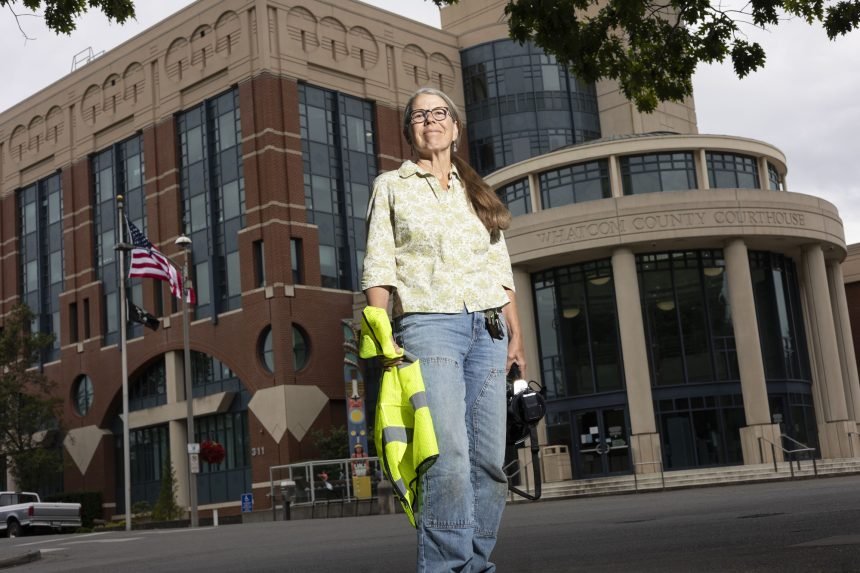
The country’s history is in the mind of Robin Thomas, a member of activist group Indivisible Bellingham.
“What if they decided to bust up an Indivisible meeting?” she asked. “We feel far from that, but it feels on the horizon.”
Indivisible has steadily engaged in organizing recent protests, including three No Kings gatherings in opposition to the Trump administration’s policies and actions.
“This is corporeal politics at this point,” she said. “We keep saying as an authoritarian regime takes place, you can vote but that’s not quite enough. Where you put your body, where you gather with people, where you assemble, becomes ever more important.”
The authors of the Bill of Rights recognized the importance of assembly; gathering spaces like colonial taverns were host to political conversations, argued constitutional scholar John Inazu, who deemed the right to assemble “long-ignored” and forgotten.
“They knew that assembly could be disruptive and destabilizing, but they also knew without the ability to gather, ordinary people had no way to resist government overreach,” Inazu said in a lecture earlier this year at Washington University in St. Louis.
For Thomas, getting people into public spaces to show their displeasure at government actions is just one way to make them feel supported. The tenor of protests has changed since she went to her first “No Nukes” protest as a 17-year-old in New York’s Central Park.
“They were concerts — but they were protests,” she said.
Now, safety is top of mind. With federal agents shooting and killing two Minneapolis residents in two separate incidents in January, people feel cautious about attending protests.
Thomas started the Bellingham Peacekeepers during the first Trump administration when counter-protesters at Planned Parenthood events made people feel unsafe. The Peacekeepers group is a steady presence at protests nowadays, trained in de-escalation tactics.
The sense of safety in Bellingham is why children and families attend protests, Thomas pointed out. But she also recognizes not all participants feel safe, including immigrants who may be targeted by federal immigration officers.
“White privileged folks, we need to get together and get out in the streets because other people might not be able to,” she said.
Annie Todd is CDN’s criminal justice/enterprise reporter; reach her at annietodd@cascadiadaily.com; 360-922-3090 ext. 130.