On July 21, the Marine Minerals Administration (MMA) and the Nuclear Regulatory Commission (NRC) took an important step toward preparing for the next generation of offshore energy.
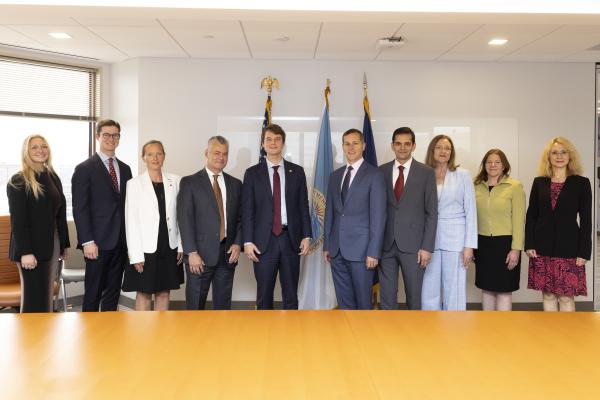
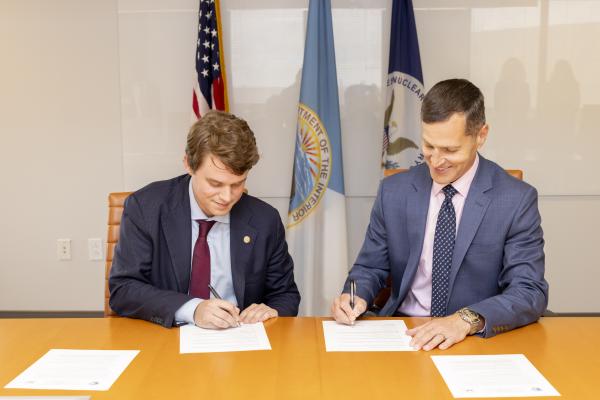
The two agencies signed a Memorandum of Understanding (MOU) that establishes how they will work together if developers propose nuclear energy projects on the U.S. Outer Continental Shelf in the future. Acting MMA Director Matt Giacona and NRC’s Director of the Office of Advanced Reactors Jeremy Bowen signed the agreement at a ceremony in Washington, D.C.
While no offshore nuclear projects have been approved or proposed for development, interest in emerging technologies is growing. By coordinating now, MMA and NRC are creating a clearer, more predictable regulatory process before project applications are submitted.
What does this agreement do?
The agreement outlines how the two agencies will communicate, coordinate, and share technical expertise when evaluating potential submerged nuclear energy projects.
It also helps:
- Clarify each agency’s responsibilities.
- Reduce unnecessary duplication during the review process.
- Give developers a better understanding of federal requirements.
- Support safe, secure, and environmentally responsible project reviews.
“This agreement demonstrates that the federal government is preparing today for the energy technologies of tomorrow,” said MMA Director Matt Giacona. “America’s Outer Continental Shelf has long been a driver of innovation, and this partnership positions us to responsibly evaluate new opportunities that strengthen our nation’s energy security, industrial competitiveness, and technological leadership. By working together, we can provide the regulatory certainty needed to encourage innovation while ensuring any future offshore nuclear energy projects meet the highest standards for safety and environmental stewardship.”
What is offshore nuclear energy?
One concept currently being explored by industry involves placing small modular nuclear reactors on the seafloor, where surrounding seawater could provide cooling. These technologies remain in the early stages of development, and no decisions have been made regarding deployment on the Outer Continental Shelf.
If companies eventually submit proposals, both agencies want a coordinated regulatory framework in place to evaluate them efficiently and safely.
Supporting America’s energy future
The agreement supports the Administration’s priorities to expand American energy production, strengthen domestic manufacturing, advance next-generation nuclear technology, and enhance national security.
It also supports several Executive Orders focused on American energy and advanced nuclear technologies, including Executive Order 14154, Unleashing American Energy, and additional Executive Orders promoting advanced reactor deployment, nuclear innovation, and a stronger domestic nuclear industry.
What’s next?
The Memorandum of Understanding does not authorize nuclear development on the U.S. Outer Continental Shelf.
Instead, it establishes how MMA and NRC will work together if future proposals are submitted. Any submerged nuclear project would still be subject to all applicable federal laws, environmental reviews, permitting requirements, and regulatory approvals before it could move forward.
###
As of July 10, 2026, the Department of the Interior has reunified the Bureau of Ocean Energy Management and the Bureau of Safety and Environmental Enforcement into the Marine Minerals Administration, which will oversee the responsible development of the nation’s offshore energy and marine mineral resources with an integrated focus on safety, environmental protection and efficient oversight. For more information, visit https://www.boem.gov/mma-reunification.