KKR manages nearly $800 billion in assets, yet its next big bet is a Phoenix company that fixes broken garage doors. The logic behind a $2 billion valuation reveals something unsettling about where private equity is hunting for returns.
This post may contain links from our sponsors and affiliates, and Flywheel Publishing may receive compensation for actions taken through them.
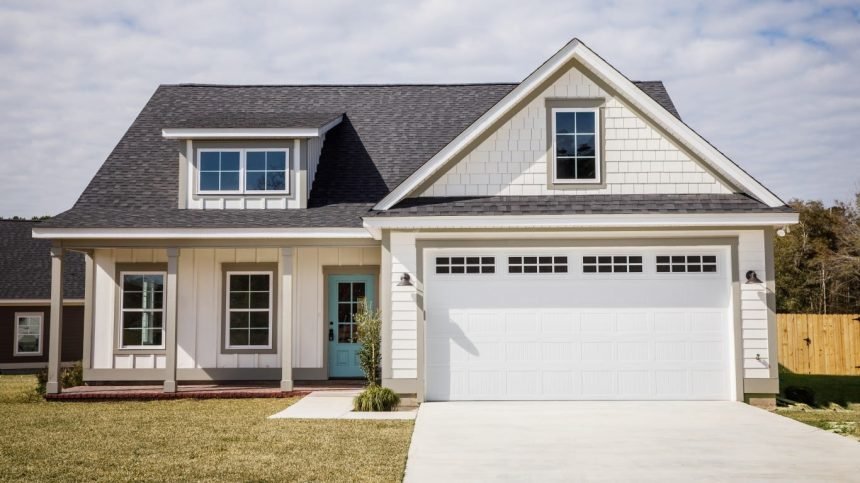
There is something almost funny about a firm that manages $796.49 billion in assets writing a check for a company that fixes garage doors. Yet that is reportedly what has happened. KKR has agreed to buy A1 Garage Door Service at a valuation of roughly $2 billion, adding a Phoenix operator founded in 2007 that took growth capital from Cortec Group in 2022 to a home-services portfolio that already includes Neighborly and Groundworks.
KKR (NYSE:KKR | KKR Price Prediction) is doing what the largest alternative managers have been doing for a decade: buying the cash flows that public markets cannot access directly.
What KKR Is Actually Buying
A1 is a rollup of local garage-door repair and installation shops. The appeal is the demand pattern. A broken garage door is not a purchase a homeowner postpones or comparison shops for three weeks. The thesis rests on non-deferrable demand, local pricing power, and a customer who is not shopping on price when the technician arrives.
KKR is scaling this playbook. It already owns Neighborly, whose franchise brands cover plumbing, electrical, pest control, and HVAC, and Groundworks in foundation repair. The category is fragmented, unglamorous, and too small for public markets to price efficiently.
The Roll-Up Mechanic In Plain English
Private equity buys many small operators at low-single-digit multiples of earnings, consolidates back-office functions, and then sells the combined platform at a higher multiple. Multiple expansion does much of the work. It only works if the next buyer pays more, which is where the argument becomes uncomfortable.
The other constraint is labor. Technicians are the binding input, and their wages are rising faster than the cost of the trucks they drive. Centralized ownership of local service brands also has a mixed record on pricing before customers notice.
Why This Matters To KKR Shareholders
KKR earns money through management fees and carried interest, so any single deal matters less than fundraising, deployment, and monetization. Q2 was its largest monetization quarter ever, with FRE of $1.21 billion, up 37% year over year, and $143 billion in dry powder. Co-CEO Joseph Bae said the firm delivered “record Fee-Related Earnings, Total Operating Earnings and Adjusted Net Income per share”.
The stock has not cooperated. KKR is down 15.79% year-to-date and 22.5% over the last year, even as consensus 2027 EPS is $7.39.
Is KKR Stock a Buy?
Blackstone (NYSE:BX), with $1.35 trillion in AUM, is bigger and more capital-light. Apollo (NYSE:APO) at $1.05 trillion carries meaningful insurance balance-sheet exposure through Athene.
Ares Management (NYSE:ARES), the smallest at $671.3 billion, is the credit-heavy pure play. KKR sits between them, with a large Global Atlantic book and a growing strategic-holdings segment that management believes can reach $1.1 billion in operating earnings by 2030.
At roughly 14 times 2027 earnings, with fundraising running at a record and the shares down sharply, the setup looks like a Buy for patient holders. The franchise, not the garage doors, is the point of the deal.
Contact [email protected] for any questions or corrections.