TEXAS — There are more than 80 performing arts centers across Texas, from major city venues to university programs. What happens in Dallas is part of a much larger conversation about the future of the arts and how organizations can remain sustainable.
Kevin Moriarty, CEO of Dallas Theatre Center, said collaboration is becoming increasingly important in a changing arts landscape.
“I think that in the dynamic world we live today, we are stronger together than we are when we stand individually,” Moriarty said.
Moriarty has dedicated his career to theater and the arts, a field he has watched grow across Texas.
“That feeling is, it’s almost like a drug,” Moriarty said.
But the business behind the curtain is changing. That includes Dallas Theatre Center and arts programs at Texas State University, where Sarah Maines serves as theater director.
“Some theaters never really got to regain their footing since COVID,” Maines said.
A September 2025 Southern Methodist University report found that nonprofit arts revenue fell 25% from 2023 to 2024.
Maines said grants are often critical to keeping arts organizations operating.
“When we can’t get grants and we can’t get other external funding, then we need to defer to our ticket sales to be able to support the production,” Maines said.
Those financial pressures are pushing organizations to adapt.
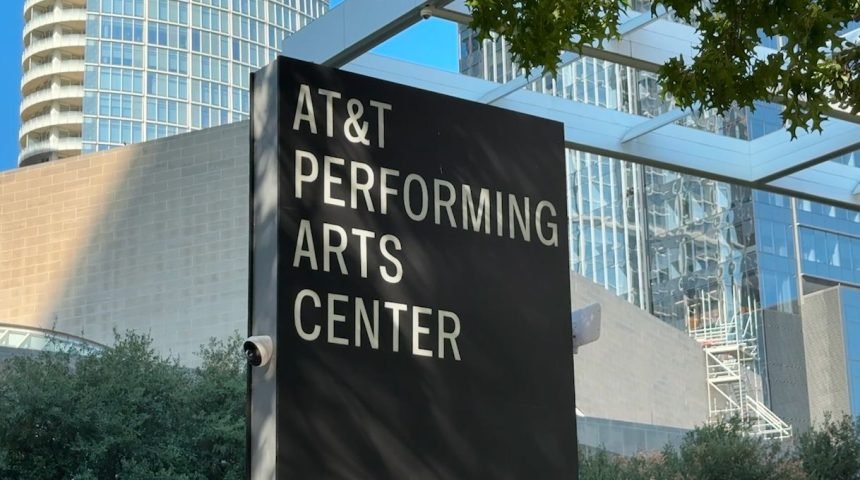
In Dallas, Moriarty’s Dallas Theatre Center and Warren Tranquada’s AT&T Performing Arts Center are merging.
“This is an opportunity to really strengthen both organizations, put more money towards the mission, operate more efficiently, and ultimately have a stronger product,” CEO of the AT&T Performing Arts Center Warren Tranquada said.
But funding is not the only challenge facing performing arts organizations. Experts say audiences are changing, too.
“There’s just sort of a change in society that if people can watch something from their couch in their pajamas, that that is potentially what they will gravitate towards,” Maines said.
And when audiences do choose to attend performances in person, Tranquada said the cost extends beyond the price of a ticket.
“And not just the cost of the tickets, but the overall experience, whether that’s parking, food, babysitters, you know, everything has gone up.” Tranquada said.
Still, the picture is not the same everywhere. Maines said audiences have returned to Texas State.
“But last year we even exceeded our pre-COVID audience numbers.” Maines said.
For those audiences, wherever they are, Moriarty said the appeal of live theater goes beyond the show itself.
“I love when I’m sitting in an audience and something happens in a stage in front of me that makes me leave, exit my own personal experience, my thoughts or my feelings, and enter into the experience of someone else.” Moriarty said.
The challenge now is turning that connection into a sustainable future for the organizations and the audiences they serve.