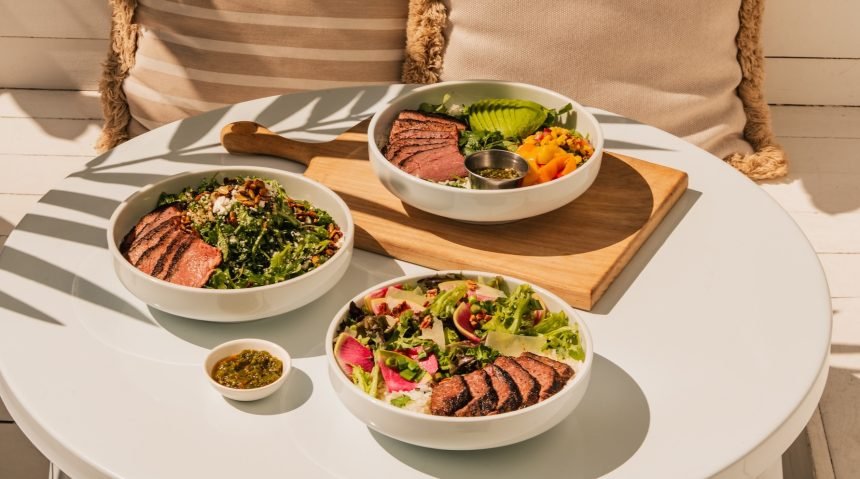
Pura Vida’s menu is seed-oil free, ingredients are unprocessed and service is more elevated. | Photo courtesy of Pura Vida Miami
Late last year, the fast-casual-ish concept Pura Vida Miami won an investment from private-equity firm TSG Consumer. Since then, this emerging all-day-café chain has been busy.
When TSG took its minority stake, Pura Vida had about 40 units in Florida, New York and California.
Founded in Miami in 2012 by the married couple Omer and Jennifer Horev, the 57-unit all-day cafe is now in seven states. In a couple weeks, it will be eight states, after the first unit opens in Massachusetts (Boston).
By the end of the year, the Horevs expect to reach 65 units, all company owned. And the count is expected to reach 100 by the end of 2027.
To help support that growth, Pura Vida has lined up an all-star corporate team this year.
Bruno Cardinali, formerly of Oakberry and, before that, Popeyes, is the chief marketing officer. (Cardinali led Popeyes’ iconic chicken sandwich launch in 2019 that was arguably the first shot in the Chicken Sandwich Wars.)
Chad Brauze, formerly of Sweetgreen, Chipotle and Burger King, was snagged as head of culinary. Andrew McCaughan, who spent 16 years at Shake Shack, is Pura Vida’s chief development officer. Former Wingstop exec Donnie Upshaw is chief people and culture officer.
And there are more hires coming, said Omer.
The brand is effectively carving out a space at the crossroads of health, beverages, upscale design and experience.
Guests order at a counter, but food is run to the table, for example. The dine-in menu is served on real plates with silverware. Custom scents in restaurants add to the beachy, Miami vibe.

Pura Vida aims to be a fast-casual/casual-dining hybrid. | Photo courtesy of Pura Vida Miami.
About 65% of sales are dine-in, and that’s deliberate.
Omer doesn’t like to call it fast-casual, but describes Pura Vida as a hybrid lifestyle brand.
“You have the hospitality component that you don’t get [in fast casual]. It’s not a transaction, per se. It’s more of a third place,” he said. “It was always started as an extension of our home. I wanted it to feel that way, that third place.”
Pura Vida is known for what the Horevs call “clean food.”
On the menu is a mix of breakfast items, like avocado toast, yogurt parfait or acai bowls. A top seller is the Perfect Egg Sandwich, with a pasture-raised soft-boiled eggs, arugula, smashed avocado, tomato, mozzarella and red pepper flakes on an artisanal bagel.
There’s a coffee program and smoothies, cold-pressed juices and wellness shots. A full menu of salads, wraps, sandwiches and bowls is all made from scratch in house — without seed oils and big on protein.
Another top seller is a raw wild tuna plate, with slices of tuna sashimi over warm cilantro jasmine rice with greens, pecans and shaved parmesan with a sweet honey yuzu dressing.
This year Pura Vida launched several items with “grass-fed, grass-finished” steak. “It’s what we serve our kids at home,” adds Jennifer.
And the chain’s banana bread has somewhat of a cult following on social media.
Pura Vida is not cheap.
The average check is about $20 per person, said Omer. But for the quality of ingredients and hospitality of the setting, people are willing to pay a bit more, he contends.
“When you spend, 10% to 20% more on the right type of food that makes you feel better, you become a lot more productive as a human being,” said Omer.
Pura Vida has been criticized on social media for the high fat content of some dishes, but Omer said the macros cited by those critics are incorrect. “It was mathematically impossible to have that much fat” in the tuna salad sandwich that came under attack, he said.
Now the chain is keeping a closer eye on digital conversations, and Pura Vida has hired a full-time nutritionist and is testing dishes with a third party to ensure accuracy.
Omer declined to share sales data. According to Technomic, Pura Vida ended 2025 with 48 units and $34.5 million in sales, a more than 12% increase year over year. The average unit volume at the time was $750,000.
The similarly positioned Tatte Bakery last year had 51 units and ended the year with close to $79 million in sales, and an AUV of $1.66 million. Maman, likewise, ended the year with 52 units and nearly $90 million in sales, with an AUV of $1.96 million, according to Technomic.
Omer and Jennifer Horev say Pura Vida is still relatively small and has plenty of white space ahead, especially as more consumers look for more healthful, unprocessed ingredients when they dine out.
Now Omer said the two are trying to stay focused on “what brought us this far,” which is the brand’s culture, its people and listening to guests.
“Growth is very seductive,” said Omer. Some can be critical of chains that grow too fast, he added.
But “we believe that we are solving a problem for many people. For the moms out there, such as my wife, who are looking to be able to have access to healthy food when they’re in a rush, whether they stop by with the kids there, or by themselves. And for guys like me who are on the run and busy and want to have access to healthy food … so I can get back to work right away,” he said. “And for everybody in between.”
Members help make our journalism possible. Become a Restaurant Business member today and unlock exclusive benefits, including unlimited access to all of our content. Sign up here.