I have spent the past 13 years serving the Chicago Housing Authority as commissioner, then board chair and CEO. I have also had the privilege of serving the residents of the CHA under three mayors — I was initially appointed to the board by Rahm Emanuel and reappointed during Lori Lightfoot’s administration, and now I’m concluding my service as Brandon Johnson moves to replace me.
I initially joined the board because, far too often, the neighborhoods we are born into shape our trajectories and where we end up, and I wanted to help change that narrative.
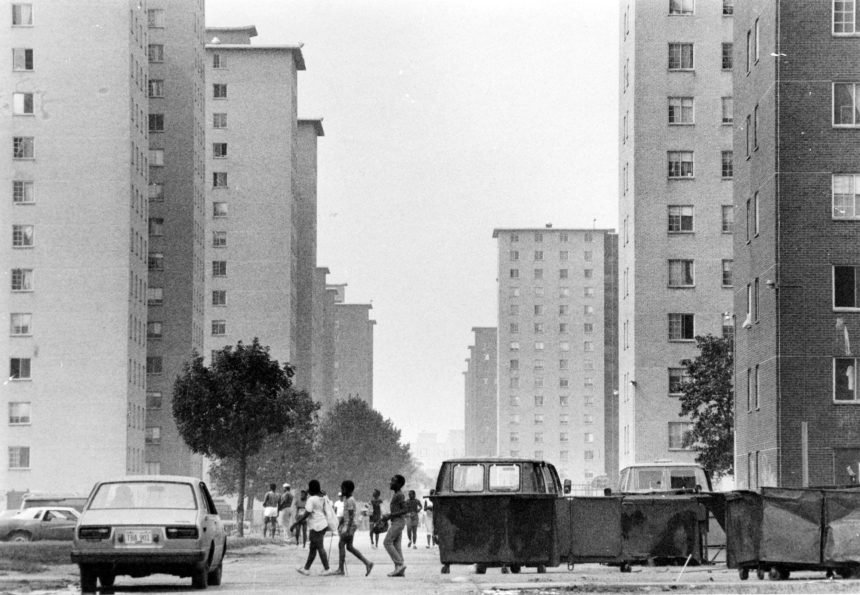
As a kid growing up on the South Side, I attended Beasley Academic Center at 5255 S. State Street alongside the Robert Taylor Homes, then one of the largest public housing developments in America.
Beasley drew students from many South Side neighborhoods, including Robert Taylor. We sat in the same classrooms, but when we left school, the circumstances waiting for each of us at home could be dramatically different.
I didn’t have the language for it then, but I understand it now. I was seeing how the neighborhood we grow up in — wherever that pin drops on the map — can shape the trajectory of our lives.
But Beasley also taught me the other half of that lesson. The right institution, the right teacher, the right program or the right opportunity could reach across those geographic lines and change a child’s path. I know because that happened for me.
After Beasley, I graduated from Mount Carmel High School, Stanford University, Yale Law School and Harvard Business School. For a Black kid growing up on the South Side of Chicago, that journey defied the odds associated with where my pin dropped.
That tension — between the enormous power of where we start and our ability to change where we end up — has shaped much of my life.
This is the reason I joined the CHA board in 2013 — housing is never just about housing. Where someone lives affects where their children go to school, whether they can get to a job, whether they feel safe walking home, whether a grocery store or pharmacy is nearby and whether their family has an opportunity to build wealth and upgrade where the pin drops for their next generation.
Throughout my time with the CHA, I have seen both the promise and frustration of trying to build more affordable housing. The housing itself is extraordinarily complicated to finance and build. Government processes can be painfully slow. Construction costs have risen dramatically. Federal, state and local requirements overlap. A development can require multiple funding sources and years of approvals.
But I also saw what happens when residents, government, developers, community organizations, businesses and other institutions align around a common goal. Vacant land becomes homes. New residents support neighborhood businesses. Development creates jobs and expands the tax base. Families gain stability. Communities that once were defined by what had disappeared can begin to be defined by what is being built.
That may be the larger lesson of my 13 years at the CHA: Transforming neighborhoods requires institutions and communities to work together. Imagine the CHA, the city’s housing and planning departments, transportation, schools and parks working alongside developers, organized labor, businesses, community organizations and residents toward a common strategy. The role of City Hall’s fifth floor is to make it easier — not harder — for these institutions to work together to build the Chicago we want.
Serving during three mayoral administrations has given me a close-up view of very different approaches to leadership. One difference has been particularly striking. During Johnson’s first three years as mayor, he did not engage with CHA leadership. That was a significant departure from the previous two administrations, when the mayor communicated with CHA leadership regularly — often weekly — about the agency’s work, priorities and challenges. Under the Johnson administration, we learned to operate without the guidance and vision of our mayor. And yet the work of the CHA continued.
We worked with other government agencies, residents, developers, community organizations and partners. Relationships strengthened. Problems were solved. People learned to work together, without direction or leadership from City Hall.
As I step down from the CHA board, I find myself returning to the same question that drew me there in the first place: How do we change outcomes for Chicagoans, regardless of where their pin drops on a map?
I think about those pins differently now. A pin can represent a child’s ZIP code and all the inequities we have allowed to accumulate around it. But it also can mark a vacant lot waiting for a home. A commercial corridor waiting for investment. A transit station around which we can build. A neighborhood where public and private institutions decide together that the next generation should inherit something different from the last.
For too long, Chicago has allowed the pin to predict the future. We have the land, talent, capital and institutions to change that.
What we need is leadership capable of connecting them — and a shared vision ambitious enough to ensure that no matter where a Chicagoan’s pin drops, it does not determine how far they can go.
Matt Brewer is running for mayor of Chicago.
Submit a letter, of no more than 400 words, to the editor here or email letters@chicagotribune.com.