Credit: Ben Guenther for WYSO
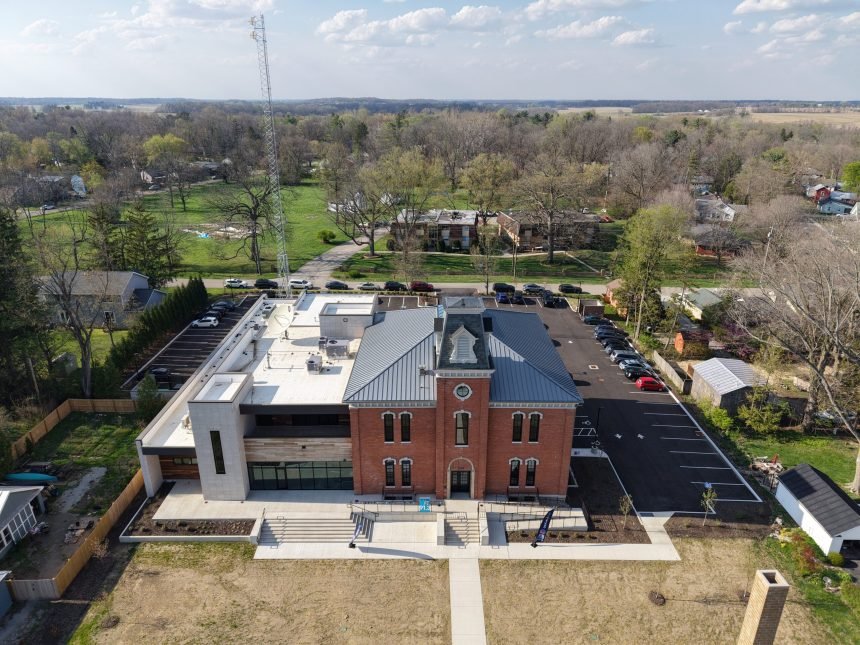
WYSO Public Radio is broadcasting from its new home in a historic schoolhouse in Yellow Springs, part of Ohio’s Dayton-Springfield market.
The FM station is a non-commercial NPR affiliate licensed to Miami Valley Public Media. The multi-year project included restoration and expansion of an iconic 1872 building, the construction of new state-of-the-air studios and a big business boost from a famous comedian.
Now the station has settled into its home in a village known for eclectic décor and bohemian culture.
“How this project came to fruition is one of the factors that make it so unique and interesting,” said Jim Stitt, CPBE, president of JMS & Associates as well as WYSO’s chief engineer.
Credit: Kelly Ann for WYSO
WYSO had been sold by Antioch College to Miami Valley Public Media in 2019 and since then had rented space back from the college. But its lease at the Kettering building was set to expire this year.
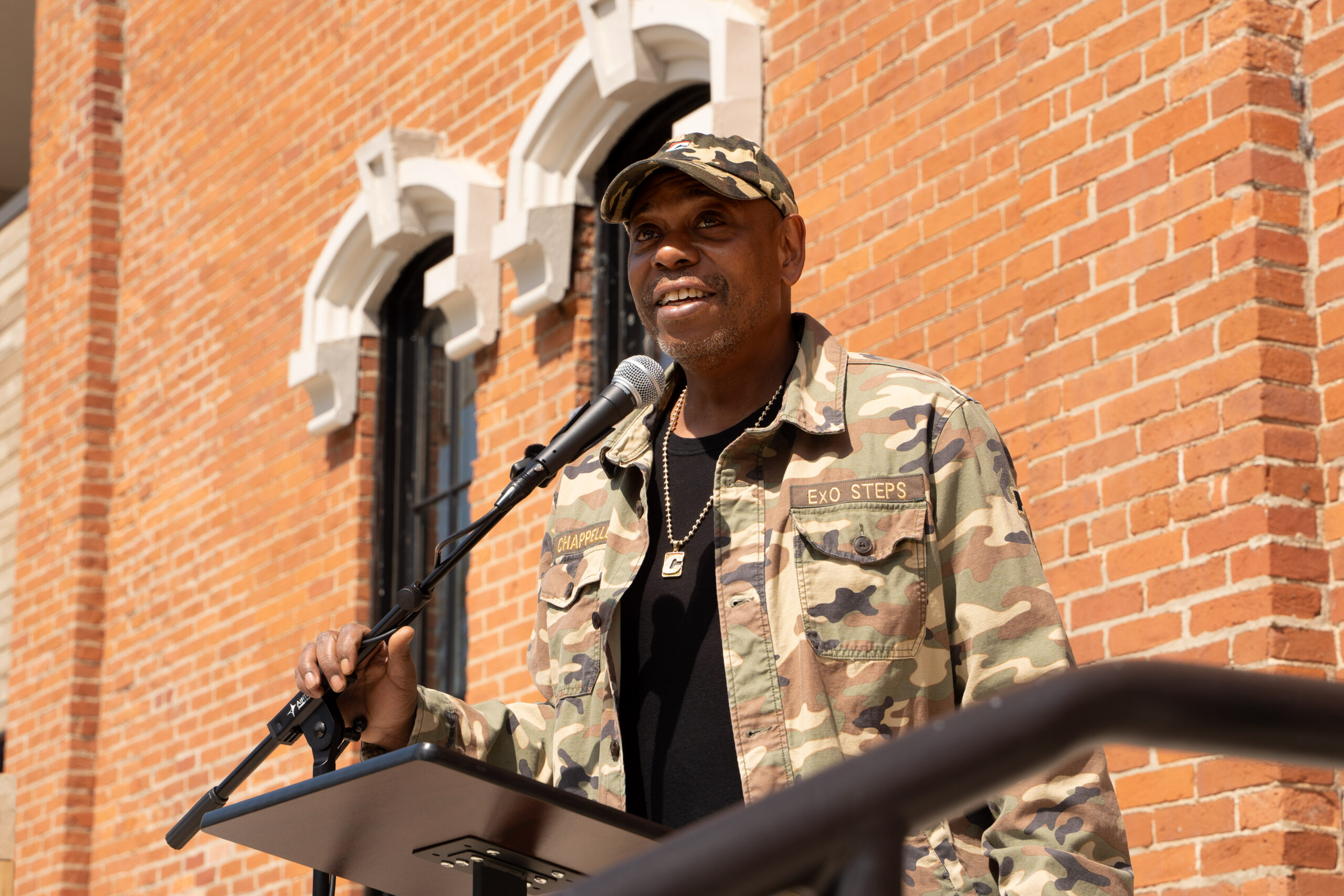
Comedian Dave Chappelle, a Yellow Springs resident, offered to renovate the historic Union Schoolhouse through his Iron Table Holdings real estate division.
His company contributed $15 million to make WYSO’s new home a reality. The station leases the new space and it separately raised more than $3 million to complete its broadcast facilities.
“The vision began to coalesce in 2020 and design commenced in 2021,” Stitt said.
“Following a period of bidding, value engineering and contractor selection, construction commenced in 2024. WYSO began broadcasting from the new facility in April 2026.”
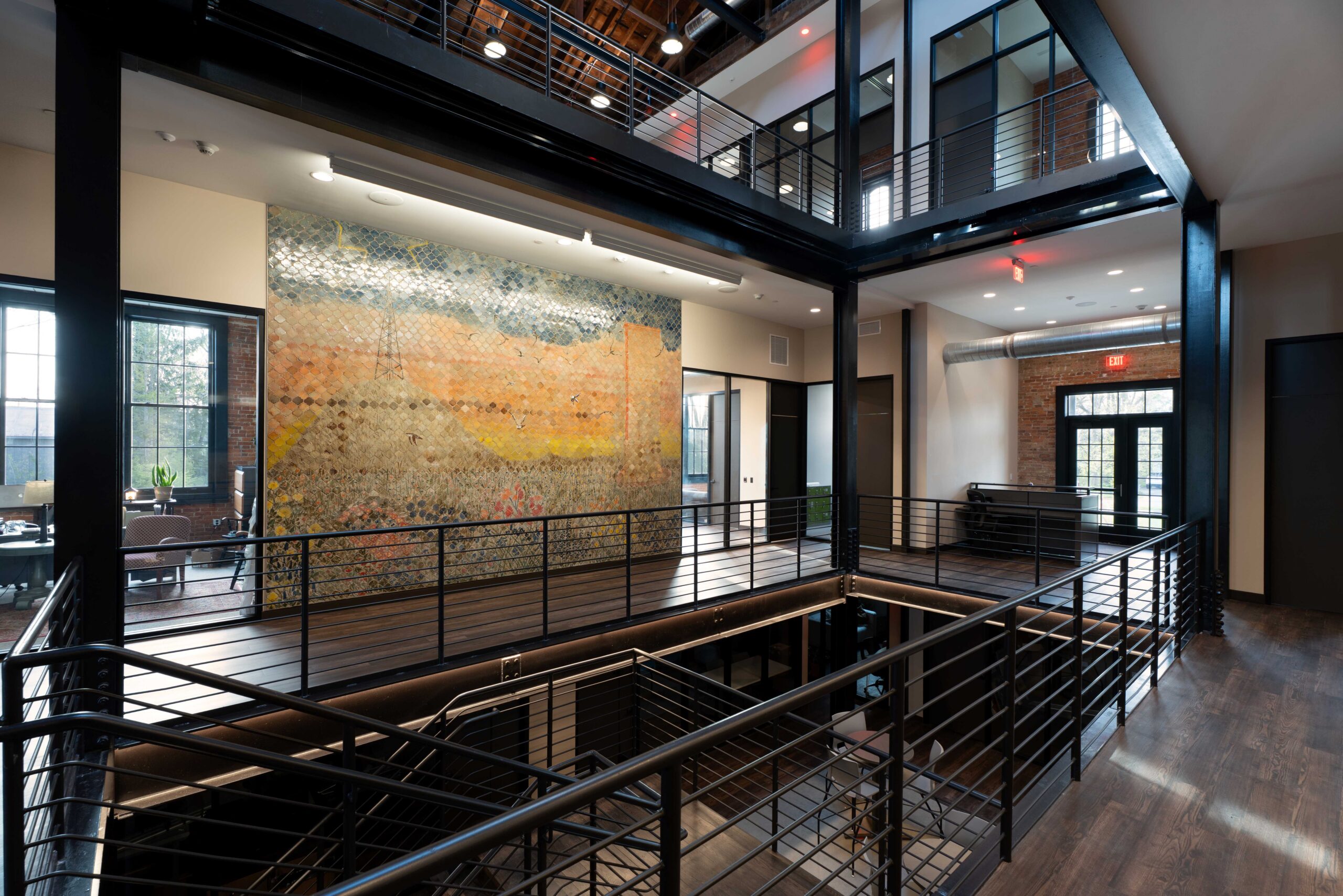
The restored Union Schoolhouse features a central core atrium rising from the lower level to a rooftop skylight.
The first two floors house the station administrative offices, archives and kitchen, as well as a classroom where the station trains community members to produce their own shows.
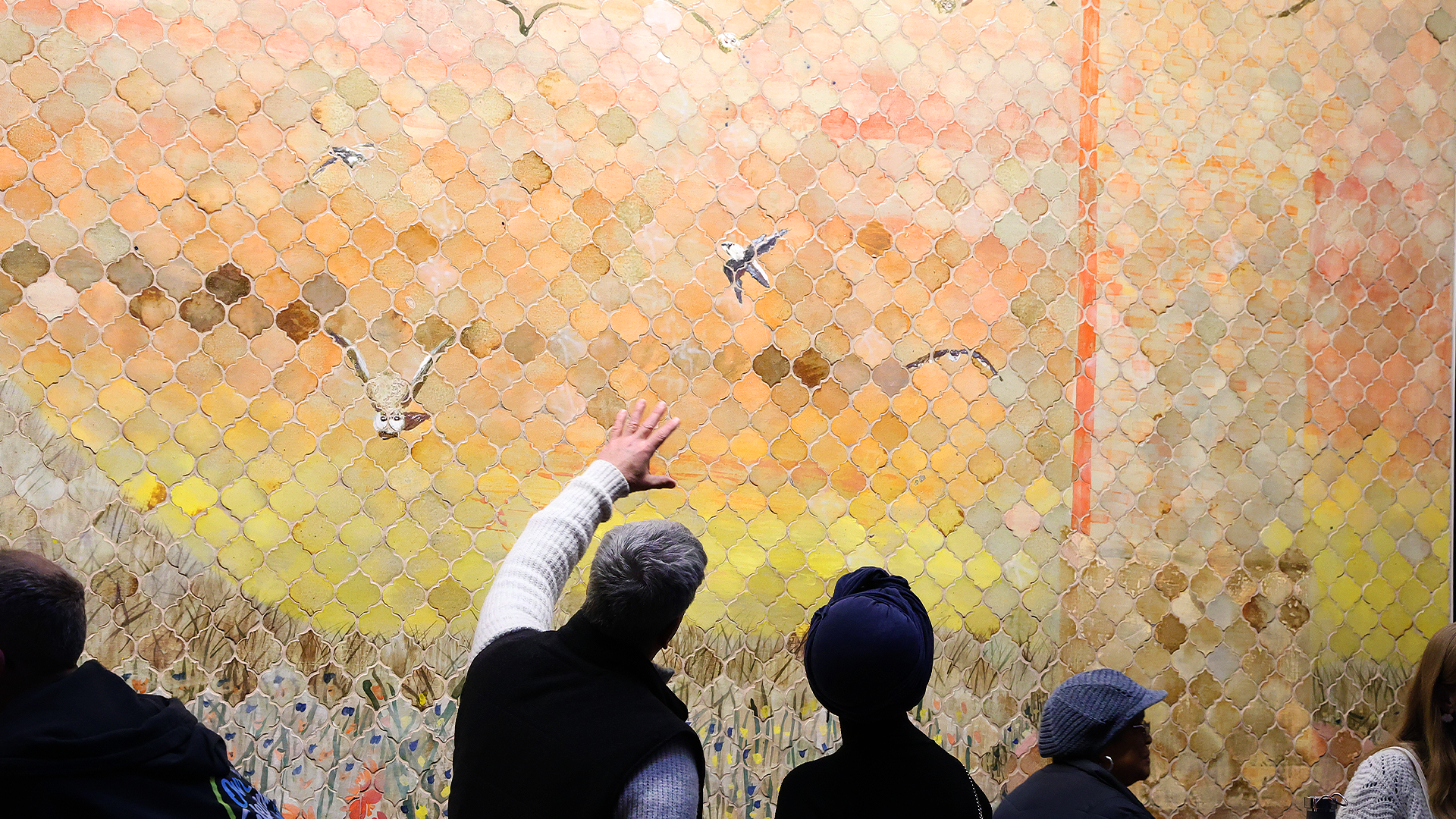
The lobby features a 14-by-18-foot ceramic mural created by potter Naysan Mcllhargey that contains more than 4,000 ceramic pieces.
A 10,000-square-foot addition houses the newsroom, music library, technical operations center, two air studios, production studio/control room, performance studio and four edit suites. There’s also an event space with stage that seats up to 110.
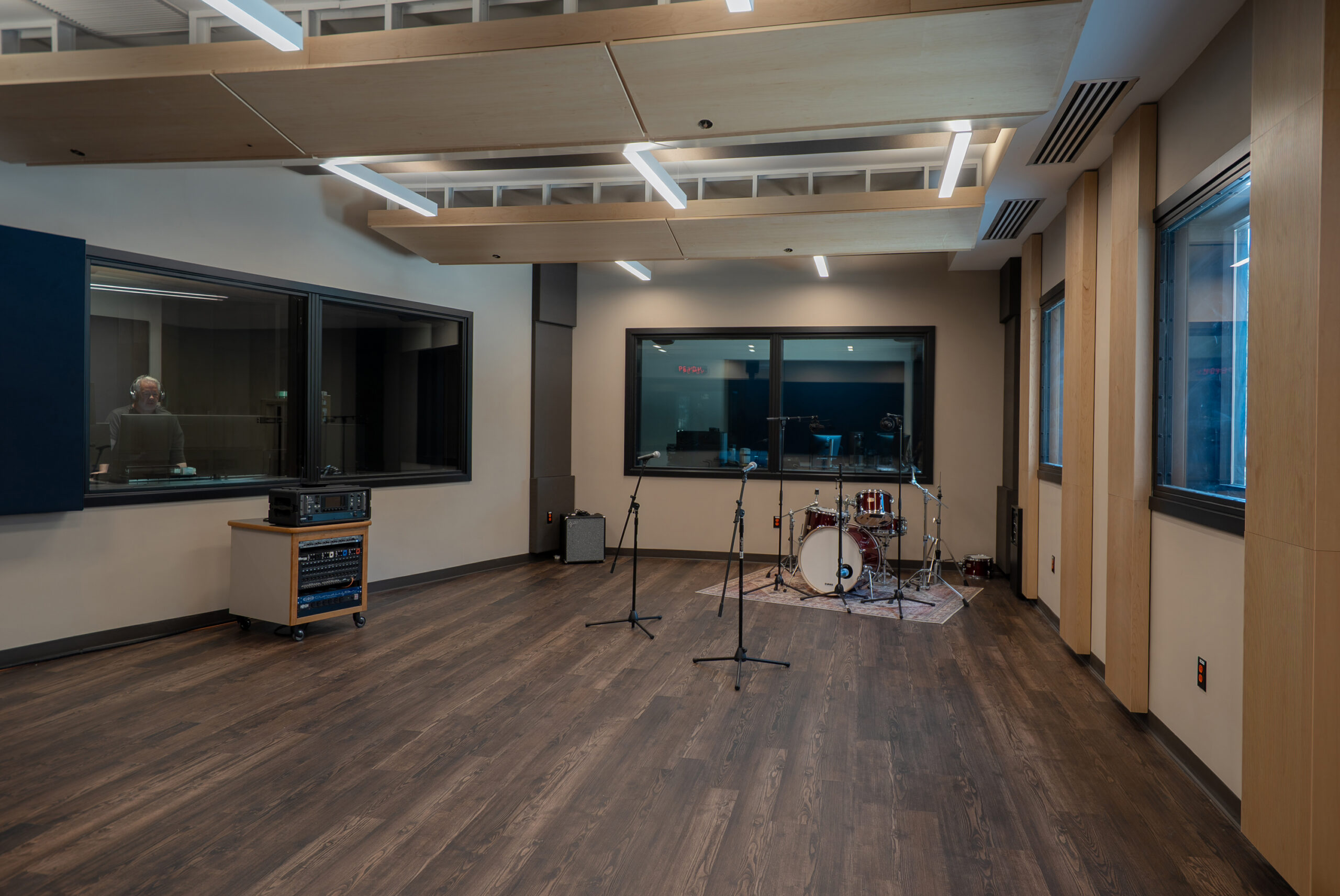
Two of the edit suites emulate rooms at NPR headquarters, with a producer/engineer position for remote operation. The design of the production studio and control room was inspired by the “Live End Dead End” philosophy of acoustical design. The facility supports 5.1 surround monitoring and has multi-track recording capabilities paired with the performance studio or the event space.
All studios have isolated floating floors, walls and ceilings with a maximum noise criterion of NC-25, and each studio has its own thermostat for independent HVAC control.
Working under Miami Valley Public Media’s CEO Luke Dennis, Jim Stitt directed the project, including the technical plant, acoustical and architectural aspects, supported by Richard Schrag of Russ Berger Design Group.
Iron Table Holdings hired Crome Architecture and Oberer Construction for the building overhaul. Interior design elements were contributed by J. Stanton of Studio Volant.
“The studio integrator was the crack team from RadioDNA, led by Rob Goldberg and assisted by Russ Hines of JMS & Associates,” Stitt said.
Vince Fiola of Studio Technology built custom cabinetry. Protocol Communications installed cabling and ITA Audio Video provided house AV systems.
Infrastructure
“We assume this will be WYSO’s forever home,” Stitt told Radio World.
“The infrastructure and the systems were designed to be flexible, able to accommodate change and capable of being self-sufficient as well as maintaining accessibility to the cloud and outside world.”
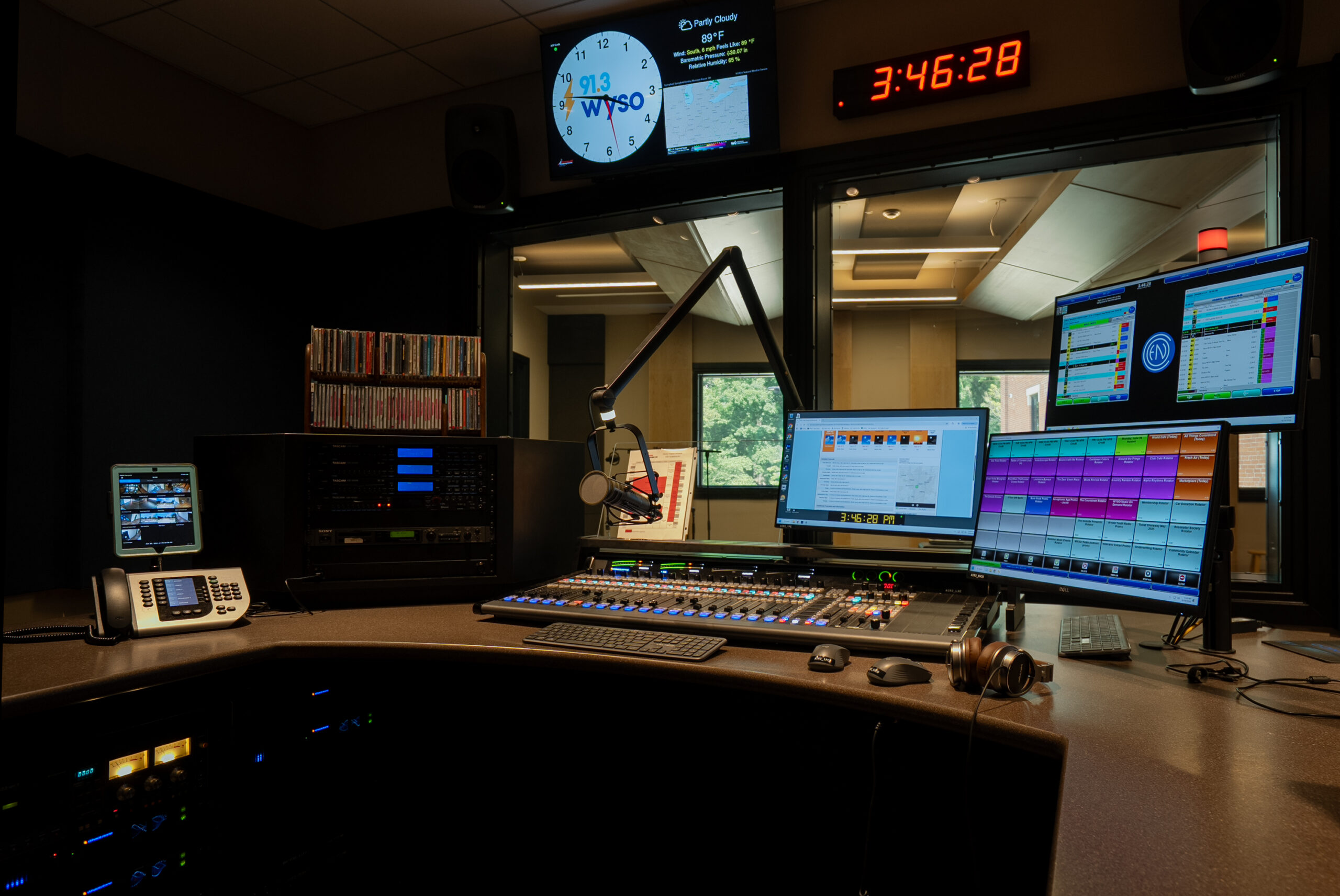
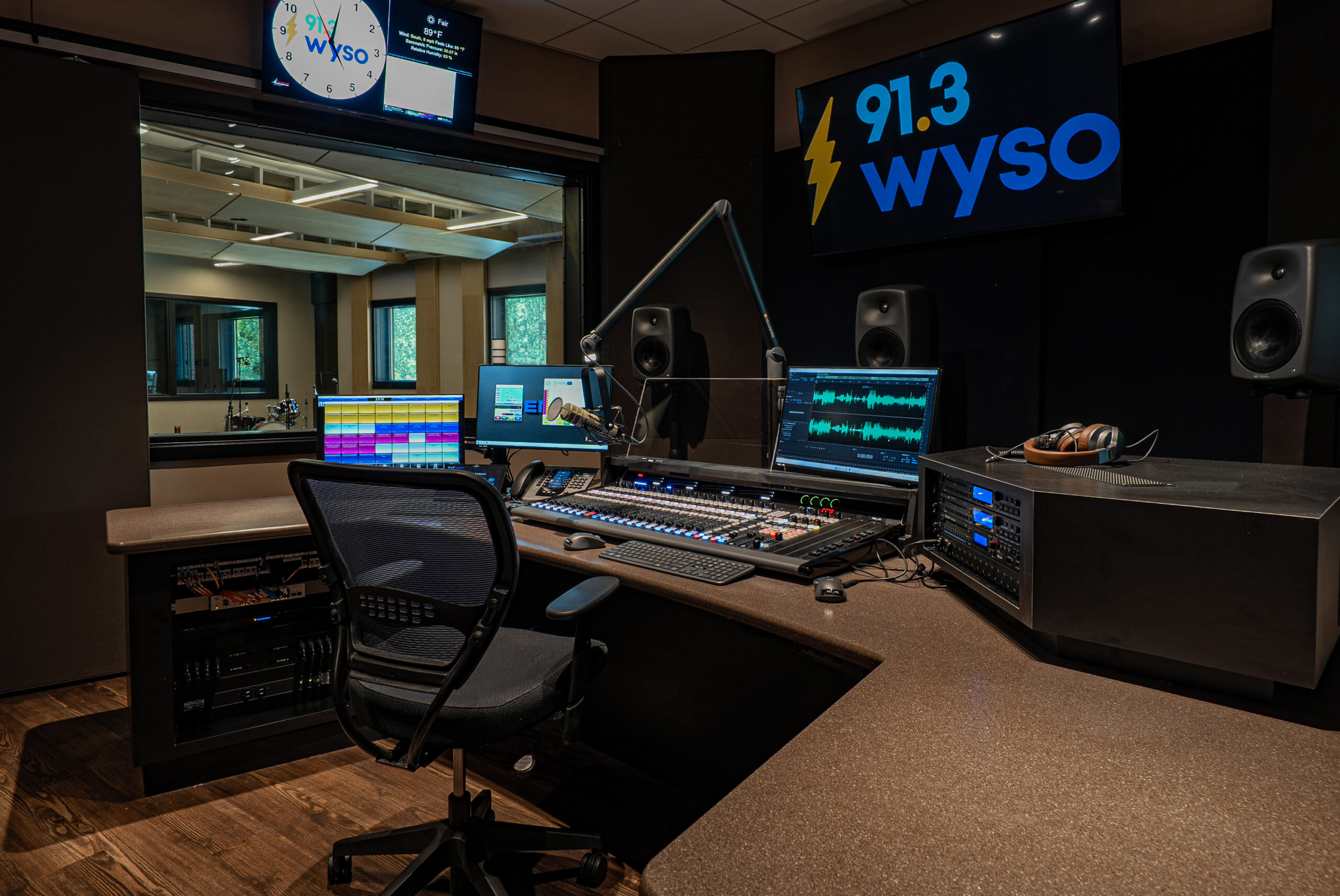
The studios feature a Wheatstone AoIP system including LXE and L-Series consoles. The production studio/control room and its LXE console are used for both typical stereo production as well as multitrack production by configuring custom layers on the LXE for each scenario, Stitt said.
Credit: Ruthie Herman
“The control room is also shared between the performance studio and event space, each with its own Wheatstone Stagebox. This required several creative custom scripts to control the sources, functions, ‘Recording’ lights, monitor speakers and talkback. Credit for that goes to the RadioDNA team.”
The automation system is ENCO DAD. The fiber network and Cisco access points are by Miami Valley Educational Computer Associates, supported by Spectrum and Altafiber.
Credit: Ruthie Herman
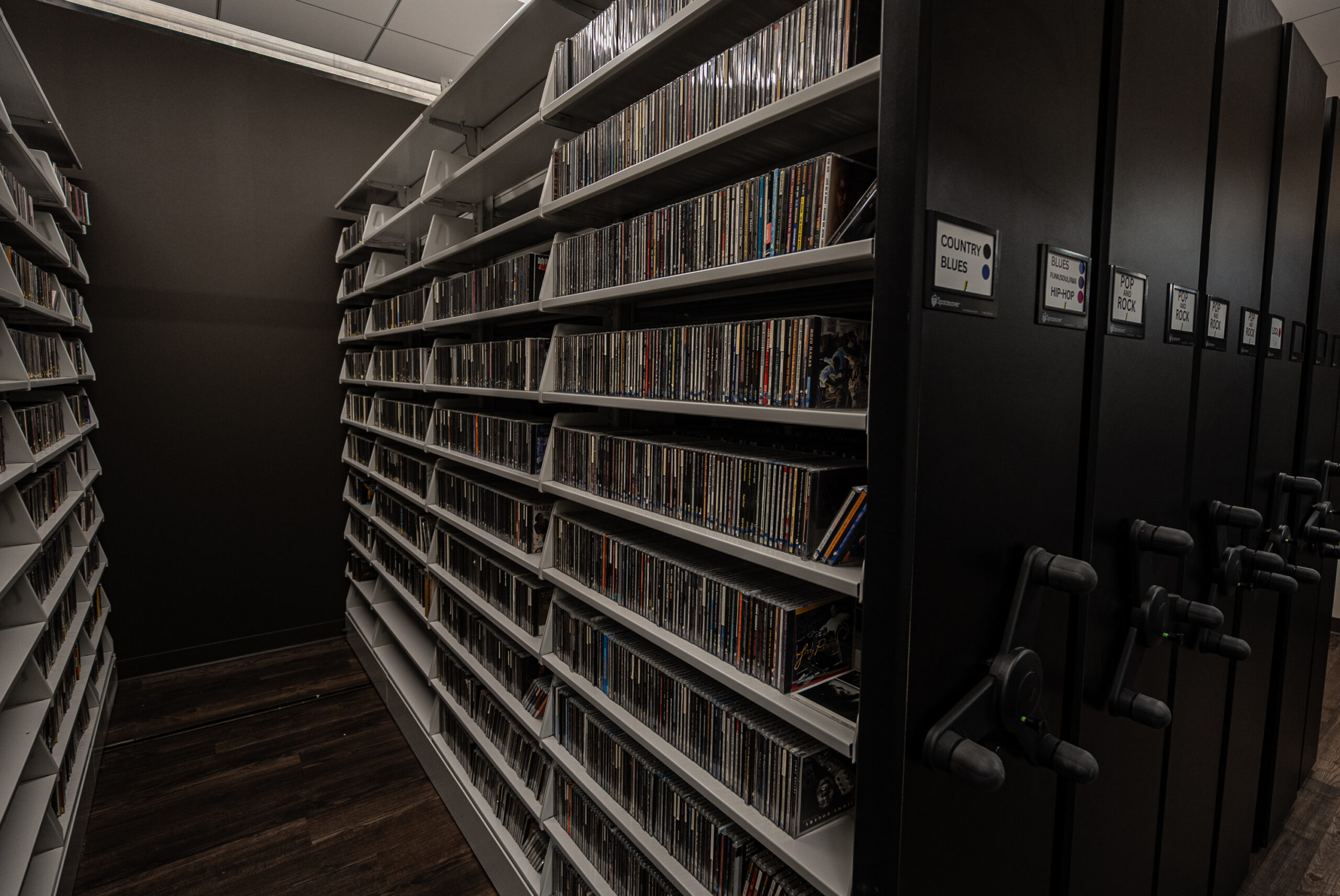
“Another unique feature are the Technics SL-1200 MK7 turntables,” Stitt said. “Yes, turntables! WYSO has hosts that still play vinyl LPs!” It also has a library of 50,000 compact discs.
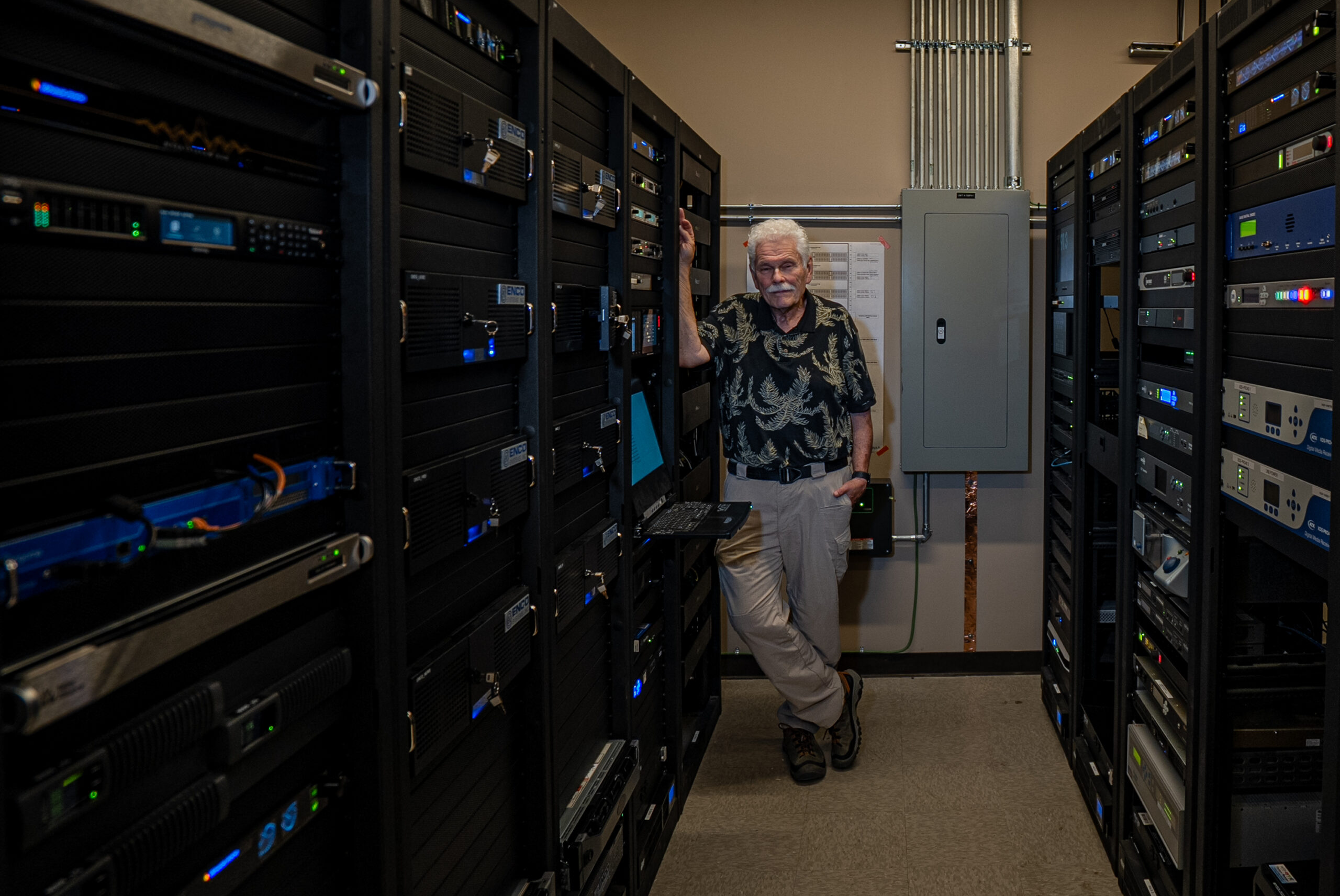
A GatesAir digital MPX system delivers the content to a Nautel transmitter and ERI antenna via point-to-point fiber as well as a 960 MHz STL system for redundancy.
Credit: Kelly Ann for WYSO
The directional FM antenna is on a tower in Dayton and optimized to cover the Dayton MSA as well as a fast-growing area between Dayton and Cincinnati in which 1.7 million people live.
Architect’s vision
The old schoolhouse was built in a Victorian Italianate style and was the village’s first integrated school. It later housed municipal offices.
Jim Stitt told us that while excavating around the foundation during the restoration of the Union Schoolhouse, the team discovered why the village is named Yellow Springs.
“There is literally a spring running underneath the building. It required extensive and creative mitigation,” Stitt said.
Credit: Kelly Ann for WYSO
Architect Max Crome said the interior load-bearing brick walls divided the space into quadrants, which would have limited the circulation and public engagement needed for a community-oriented radio station.
“To resolve this, the load-bearing masonry was replaced with a rigid steel frame,” Crome wrote in a project summary.
“This structural intervention freed up the floor plan, allowing for flexible room placement and the introduction of a central atrium that visually and physically connects all three levels. While the original south-facing rooms enjoyed beautiful natural light, the building’s core was dark and forbidding.
“The new steel framework allows light from the large historic windows to penetrate throughout the building.”
Credit: Kelly Ann for WYSO
Opening the space in this way also presented an opportunity to expose the building’s “bones.”
“I created an open ceiling to reveal the original roof framing and removed the failing plaster to reveal the structural brick underneath,” Crome said.
“The final design contrasts the raw details of the historic construction with modern office storefronts.”
According to Crome, “The modern addition provided an opportunity to build what Le Corbusier might have called a ‘machine for making radio.’”
He said the purpose-built structure enabled control over the station’s technical demands, including acoustics, broadcast functionality and live performance spaces.
“When integrating a modern addition with a historic structure, the new must contrast harmoniously with the old. The addition’s exterior rhythm and massing take cues from the schoolhouse while ensuring the original structure maintains its visual prominence.”
Crome reinterpreted the traditional bell tower as a modern stair tower, and instead of brick, he used a contemporary wood rainscreen.
Credit: Ben Guenther for WYSO
“Most importantly, I introduced no new walls between the two structures, thereby preserving all four original exterior walls of the schoolhouse. The fourth historic wall is now experienced from within the new addition, touched by as little structural intervention as possible.”
A commitment to local
WYSO began broadcasting with 10 watts of power in 1958 as a student-run station at Antioch College. The Union Schoolhouse is its fourth home since its launch. Today its 50 kW signal reaches 14 counties in southwest Ohio.
The station features locally oriented music programs and it operates a full newsroom. It also leads the HBCU Radio Preservation project, which protects recordings from radio stations at historically Black colleges. And it has a dedicated music channel, Novaphonic.fm, heard online and on HD2.
Jim Stitt acknowledged that this ambitious project was completed even as many radio stations in the country are downsizing studio facilities.
“Streamlining and centralizing are certainly good business practices for owners of multiple stations,” he said when asked how this project fits into that picture.
“However, downsizing or eliminating local studio facilities threatens one of radio’s primary advantages, and that is localism. WYSO is committed to producing high-quality local content, both in news and music, and fostering community involvement.”
He said the primary mission of public radio is to cultivate a more informed, culturally enriched public through independent journalism, educational programming and community engagement.
“That requires creative talent and local production facilities to provide the necessary tools.”
Find a virtual tour by scrolling down at www.wyso.org/wyso-station-updates.