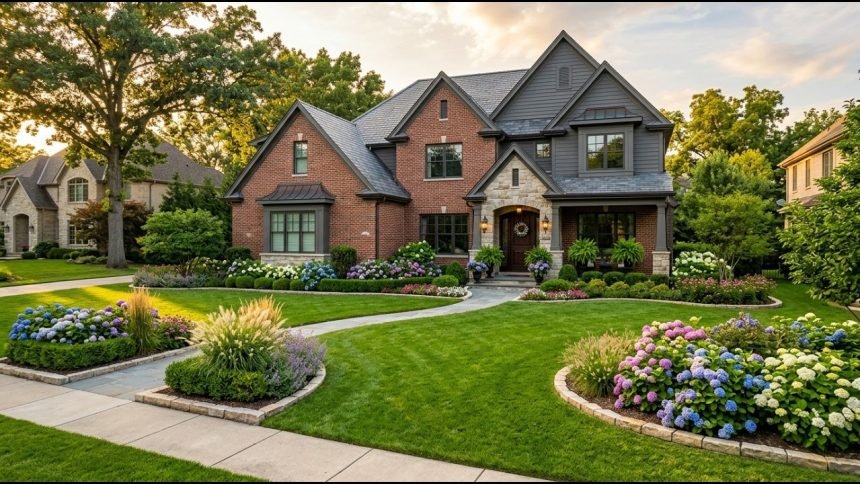

A garden doesn’t necessarily have the same kind of major transformation to make it feel fresh, new and modern. At times just changing the placement of some pots along a fading border or leaving one area to become totally wild can be quite the boost for the garden compared with an expensive total renovation. This trend seems to be catching on throughout a great deal of UK residences where it is getting increasingly easier for one to see.
It is obvious the desire to own an attractive or nice looking garden by individuals is still very strong. What people also want is a place where their efforts at maintenance don’t take away their Saturday mornings that they could spend relaxing. Practical planting, casual-style layouts, and gardens with the highest level of utilization are features that are coming to the forefront of people’s awareness.
As an example of this, I recall a friend who I visited during spring in Leeds where he had replaced a rather patchy lawn edge with, on the whole, about £650 worth of gravel, herbs, and six large planters. Not a lot was done in terms of changes. Nevertheless, the garden looked totally different, especially from the viewpoint of the kitchen window!
With this in view and considering the fact that the main aim is not only to make gardens look beautiful and fresh but also provide a relaxed, low-effort environment for the homeowner, one of the questions one might ask oneself is: exactly what changes in landscaping are being done by property owners today besides just replacing a few items here andthere? These are seven garden landscaping ideas that could possibly be of interest to you if you want to change the way your outside area feels a bit too…same.
1. Why Are Low-Maintenance Gardens Becoming So Popular?
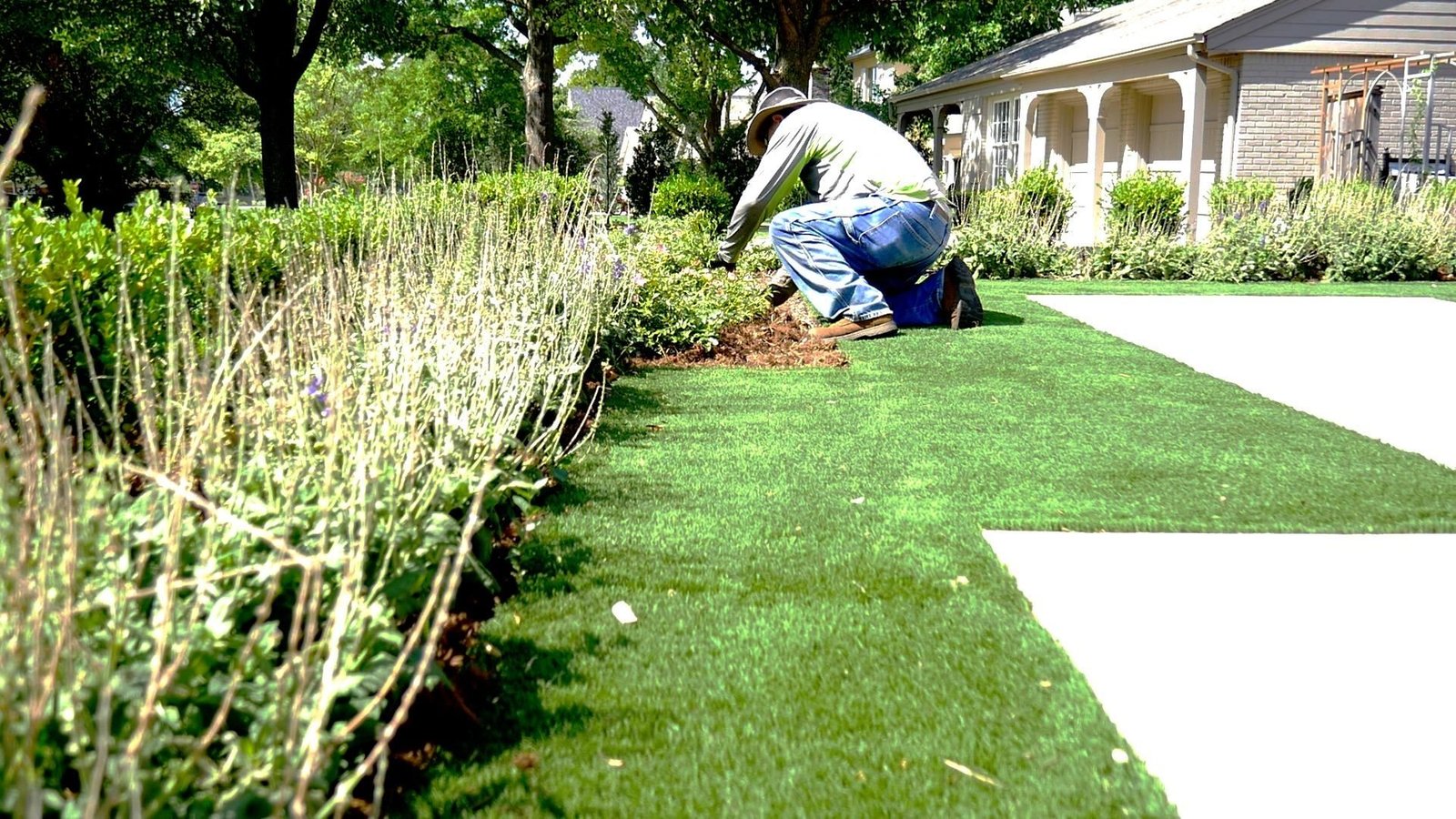
We all want to have free time and the only thing we don’t really want is to give those precious time to cutting and cleaning our gardens all the time.
Low-maintenance landscaping is getting more appreciated as it provides homeowners with an attractive outdoor area without creating another weekly chore. Gravel areas, hardy perennials, ornamental grasses, and basic borders, can all help reduce the amount of regular work, though.
But that does not mean putting everything with paving.
With a well-thought landscaping plan, you can mix planting and practical surfaces and the garden still has its living vibe. For your example, perhaps you could leave a smaller piece of lawn and use flower planting around it instead of having the whole fence be grass.
If your home is being landscaped on a large scale by professionals or the drainage/uneven areas are part of your concern, they’ll handle the groundwork. Then your landscape will become easy living and maintenance.
2. What landscape ideas make small gardens feel bigger?
Sure, small UK gardens aren’t going to be large. But one thing in their favor is that small changes still have a noticeable impact.
A very practical landscaping idea is that rather than having your entire garden in one go, you create small zones, e.g. a seat corner, narrow planted path and raised bed, and thus a very small garden can have a 3D look that a flat one cannot.
Vertical planting works well too.
Climbers, wall planters and narrow trellises add greenery without stealing much floor space. Good landscape design also uses sight lines. A path running slightly diagonally, for instance, can make a rectangular garden feel longer than it really is.
I tried something similar in a roughly 5 x 8 metre garden once. Moving the seating area away from the back door looked wrong on paper. In person, weirdly, it worked.
3. Is Naturalistic Planting Replacing Perfect Flower Beds?
Strict,even borders do not disappear, but certainly loose planting is coming more in fashion.
Instead of putting everything in very straight rows, homeowners are blending grasses, flowering perennials, and plants of variegated heights. This type of landscaping usually gives the garden a softer appearance, and with the seasons there are natural transitions in the view.
Getting to know the wildlife in the yard is one of the attractions. Flowers that bees enjoy, or plants that birds and insects found for nesting or food will help to attract various forms of wildlife. This can be easily done without having the garden go wild. For instance, having a border with plants of a wild look next to a well-kept patio makes a nice contrast.
Some landscaping companies now offer this new way of planting as an option in their otherwise modern designs so the whole space has the feel of being not too set-up or staged.
4. Why Is Backyard Landscaping Becoming More Practical?
People are asking more from their gardens.
Backyard landscaping isn’t just about creating something attractive to look at through the window. Homeowners want outdoor dining areas, quiet seating, children’s spaces and somewhere to have coffee when Britain unexpectedly gives us three hours of sunshine.
Sometimes all in one garden.
That has pushed landscaping services towards more practical layouts. Patios are being positioned around how people actually use the property, while paths and planting help separate one area from another.
For backyard landscaping, think about daily habits before materials. If everyone naturally walks across one particular corner to reach the shed, putting a flower bed there probably won’t end well.
5. Are Homeowners Replacing Large Lawns?
Not completely.
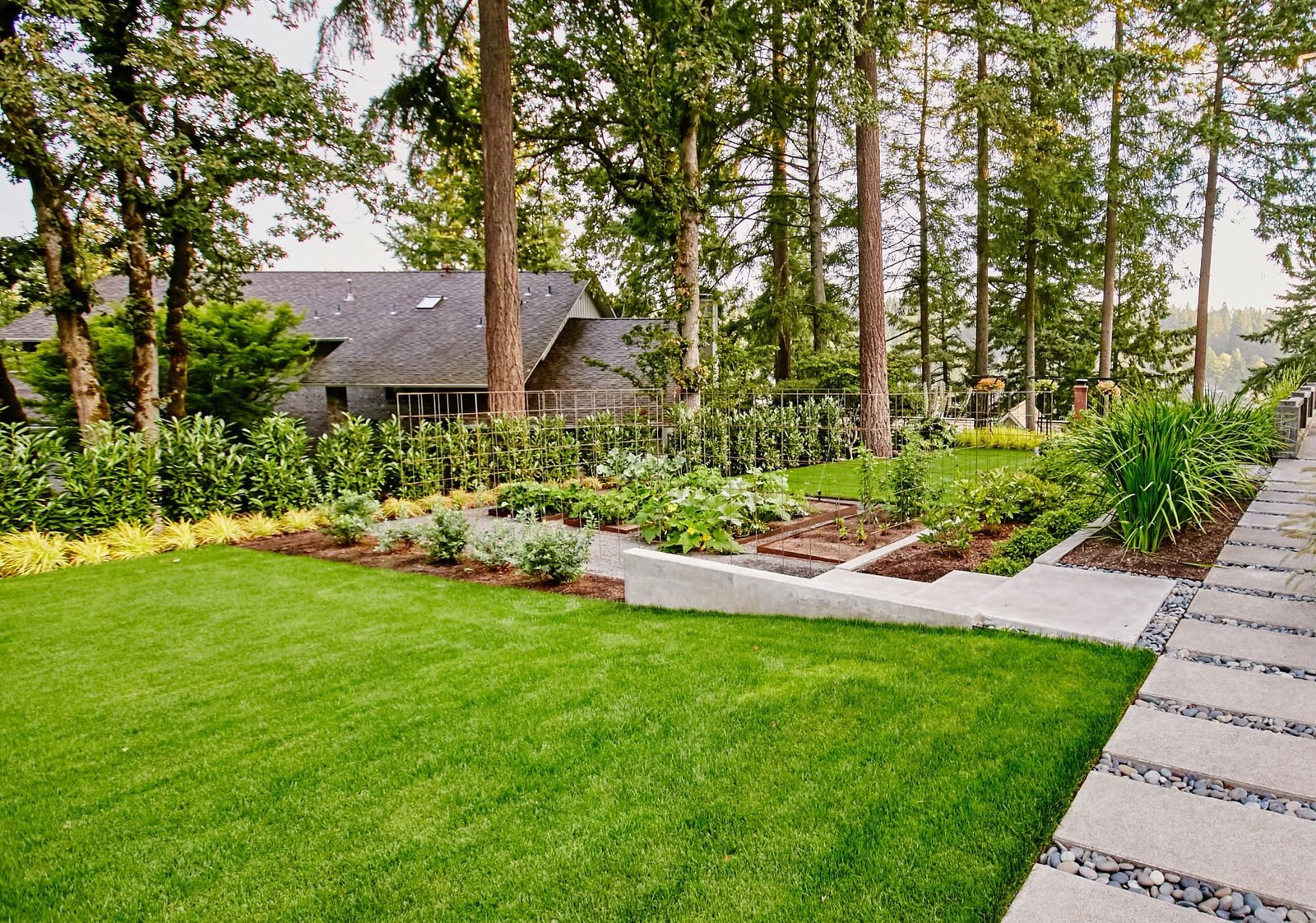
Grass still has a perfect fit in a variety of gardens, especially those where children or pets need space. The changing aspect is the assumption that almost every possible meter needs to be lawn.
A smaller lawn requires less lawn care.
A few homeowners are turning to planting beds, gravel, paving or ground-cover plants in difficult corners. Meanwhile, some others still retain the central lawn but give it its simplest shape without those inconvenient little strips that are frustrating when mowing.
I found a garden in Manchester where the owner cut down the grass from about 70 to only 45 square metres. The grass left actually looked so much better because of the less complicated shape, and lawn care once a week hardly took that much effort anymore.
Having less grass doesn’t mean automatically having less green.
6. Why are mixed materials being introduced into garden designs?
A uniform material may leave the space quite drab.
Landscape design nowadays uses combinations of materials such as paving, wood, gravel, brick and planting. The key is restraint. In a small garden only introducing five types could already result in the area becoming quite crowded.
Generally, using only two or even three materials will provide enough variation for an aesthetic space.
For instance, a stone paved ground around a seating area can contrast with a gravel path whereas a wooden edge will divide adjacent flowering plants. There are landscaping agencies that make a shift in the type of material to signify different areas without the need for actual walls or sizable physical separation features.
It’s practical as well.
Different surfaces can suit different jobs, especially around dining areas, sheds and heavily used paths.
7. Can Better Lawn Care Make an Old Garden Feel New?
Yes, and this one’s easy to overlook.
Before planning an expensive landscaping project, look at what you’ve already got. Thin grass, messy borders and overgrown edges can make an otherwise decent garden feel neglected.
Basic lawn care may involve mowing at an appropriate height, dealing with bare patches and keeping edges tidy. Cutting back overcrowded plants can expose paths and features that were basically hidden before.
Then reassess.
You may discover that the garden doesn’t need rebuilding at all. A few focused landscaping ideas, fresh planting and one better seating area might be enough.
That can save quite a bit of money.
Which Trend Should You Choose for Your Garden?
First of all, think about how you live in and work the space rather than what could be a hit online.
Family garden requirements vary quite a bit over the ones for a quiet courtyard. A gardener may have a go at raising a really long bed whereas a fellow household might be completely satisfied after having spent some ten minutes watering all the plants one by one to then have the last task done by their robotic helper!
For any considerable change in your plot, you’d do well to check out quite a lot of landscape contractors and ask your question not just about the things they would do away with, but also what they think could or even should go on with. From these responses you will probably get quite a good picture.
Pleasing backyard landscaping should not only give visual gratification but allow ease in working the garden as the case may be, so you enjoy spending time out of the house. You do know better than to be influenced by the changing fashions of the backyard scene. After all, Saturday mornings, or any other time of the day, belong to you and they never really go away.
FAQs
What is the easiest way to improve a UK garden?
Tackling the visible and the basic: straighten out borders, fix up areas that are bare of any grass, cut back crowded plants, and make one clearly separate seating area. It’s not necessary to have a full-scale redesign.
What portion of my garden should I alter at one go?
The size of a plot and the type of changes it can hold determine the extent of a change. Minor modifications can give even the littlest yard a brand new look, while big gardens that get the most intensive alterations often turn out to be finished piece by piece over a period of time. Set up your budget before removing anything.
Am I supposed to hire professionals or should I do the work myself?
Small things like planting flowers and basic maintenance can be done by oneself at times. It could be wiser to get professional help with things like drainage, retaining walls, heavy paving, levelling or an overall redesign work.
Are you ready to make your garden look different? The idea is to start from the section in which you spend your time most, and identify a change that will resolve your issue, and then gradually carry out one step after the other gradually.