



The eight-year-old lawsuit claiming New Jersey should be held responsible for its “egregiously segregated” public school system took its next step through the court system on Thursday as the parties made their cases before a panel of three appellate court judges.
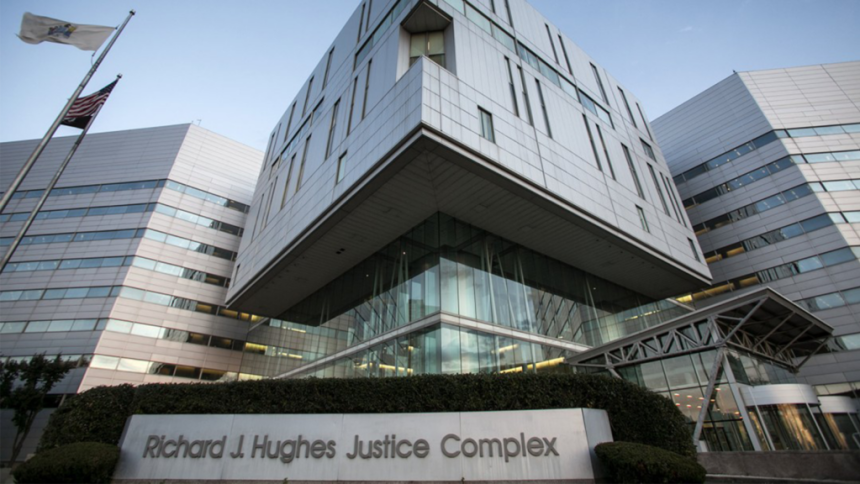
Advocates supporting the plaintiffs’ case squeezed into the limited five rows of benches in the courtroom at the Richard J. Hughes Justice Complex in Trenton as attorneys for each side dueled over two hours before Appellate Judges Hany A. Mawla, Mark K. Chase, and Lorraine M. Augostini.
A coalition of families and advocacy groups led by the Latino Action Network sued the state in 2018 for what it said was racial and socioeconomic segregation in 23 public school districts across eight counties where Black and Latino students make up more than 90% of the population.
They include East Orange, Irvington, Passaic, Plainfield and Paterson, based on state enrollment data, where Black and Hispanic students attend schools overwhelmingly students of color.
Lawyers described Plainfield students, for example, attending schools that have less than 1% white students enrolled, a number that hasn’t changed in the 60 years since the courts first ordered desegregation in that city’s schools.
“This is an historic day,” opened Lawrence S. Lustberg, the plaintiffs’ co-counsel and a prominent school equity lawyer in the state. “Because for decades, those of us who live in and those who govern and those who study New Jersey have been aware of the stark and tragic fact that many of its public elementary and secondary schools are severely segregated.”
The case spent five years at the trial court level before receiving a mixed ruling in 2023 that left both parties in limbo, and more than one year in mediation where the state defendants and plaintiffs failed to reach a resolution, which would have saved years of litigation.
The moment before the appellate judges marked a new phase that could bring the case closer to the issue of addressing remedies for the state’s segregated school system, which has been analyzed by researchers and ranked among the most segregated in the country for Black and Latino students.
It is also the first indication of Gov. Mikie Sherrill’s stance on the issue, an awkward one for her and past Democratic administrations that have been left to defend a system they have acknowledged is problematic.
“The state has long recognized the important benefits of educating students in a diverse learning environment,” testified Francesco Ferrantelli, a state deputy attorney general, representing Sherrill’s administration.
A matter of proving de facto segregation?
The suit claims that pervasive school segregation exists as a result of state policy, namely the residency statute that dictates students attend the schools within their home city or town. Plaintiffs say the state is liable for allowing “de facto” segregation to persist.
Enshrined nearly a decade before the U.S. Supreme Court’s seminal Brown v. Board of Education, New Jersey’s 1947 state constitution explicitly prohibits segregation in schools, one of the only such state constitutional provisions in the country.
The state’s courts have a long history of litigating the matter in individual communities, from Englewood Cliffs in Bergen County to Buena Regional in Atlantic. But the plaintiffs argue that the state government as a whole must be held liable for failing to address the violations on a statewide basis.
Attorneys defending the state’s position on Thursday – initially under the former Murphy administration and now under Sherrill’s administration – continued to fight back the claims that segregation exists throughout the state and that the state has caused any constitutional harm.
“What we are saying is that this claim trying to prove the existence of de facto segregation by pointing to just the enrollment percentages in a school district is unsupported by precedent,” Ferrantelli said. “This is a novel theory. All the precedents have involved deep dives into de facto circumstances of a district.”
Ferrantelli argued that prior cases, both in New Jersey and nationally, have set a precedent regarding whether their intent to segregate one group of students from another.
One case repeatedly cited by both parties was the 2004 state Supreme Court decision in the case of North Haledon. The predominantly white town in Passaic County sought to withdraw from the Manchester Regional High School system, which was shared with the predominantly Black and Latino communities of Haledon and Prospect Park.
The high court reversed a decision by the state Board of Education that would have permitted the withdrawal, citing the racial imbalance that would ensue.
On Thursday, the plaintiffs prominently cited a decade-old study by UCLA Civil Rights Project that found New Jersey ranked sixth in the nation in terms of the highest segregation of Black students and seventh in segregation of Latino students.
“Regardless of test scores and outcomes, education in a segregated setting simply does not, as a matter of law, constitute a thorough and efficient education,” Lustberg said. “And it can’t without running headlong into the ‘separate but equal’ doctrine that the U.S. Supreme Court rejected in Brown v. Board of Education — and that, alarmingly, is what they’re trying to resurrect today.”
Statewide demographics keep shifting
The state’s lawyers also argued that New Jersey’s racial makeup has been shifting over the years, with the Hispanic and Latino communities expanding and the white population decreasing.
“The statewide demographics are always shifting,” Ferrantelli said. “A school in Salem County is going to have a very different number of white students available to balance than a school in Hudson County.”
“It’s a fundamental problem to try to prove segregation just by looking at a number,” Ferrantelli said of the plaintiffs’ case relying heavily on state enrollment data. “We don’t concede that segregation has been proven here.”
In his final statements, Ferrantelli brought some murmurs among the audience of advocates, when he noted that the “majority white” school districts in Essex County were “nowhere near Newark.” He said that weakens the plaintiffs’ argument that Newark students are being prevented from attending those districts, and Newark students might prefer to stay put.
“Maybe the students in Newark like being in Newark,” Ferrantelli said. “Maybe it would be more beneficial for those students to stay there. Maybe they have better English as a second language learning programs, because they’re an immigration community.”
After the deliberations concluded, some advocates and the plaintiffs’ lawyers pushed back on the state’s final point.
“That point of theirs was irrelevant. Sure, there may be some kids who want to stay in Newark,” said Michael Stein, the plaintiffs’ co-counsel, after the hearing. “The promise in our state constitution, the promise in Brown, is to give everybody who wants it an opportunity for a diverse education.”
The appellate panel is tasked with deciding an appeal of the lower court’s decision that denied summary judgment to both parties. Should the higher court determine that the lower court erred in denying summary judgment, it could order the trial court to submit a judgment of liability in favor of the plaintiffs and direct the parties on remedies. If it favors the state defendants instead, that could push the plaintiffs to likely appeal to the state Supreme Court.
“This case has never been about violating kids’ rights to go to school where they live,” Lustberg said after the hearing. “It’s about giving them the choice to go someplace else, including crossing district lines in an effort to desegregate our schools.”
The court is expected to take several months to make its ruling.