



Columns
To build new industries, Korea must connect technology, capital, regulation and markets to go beyond isolated innovation programs.
Son Su-jeong
The author is a senior research fellow at the Science and Technology Policy Institute.
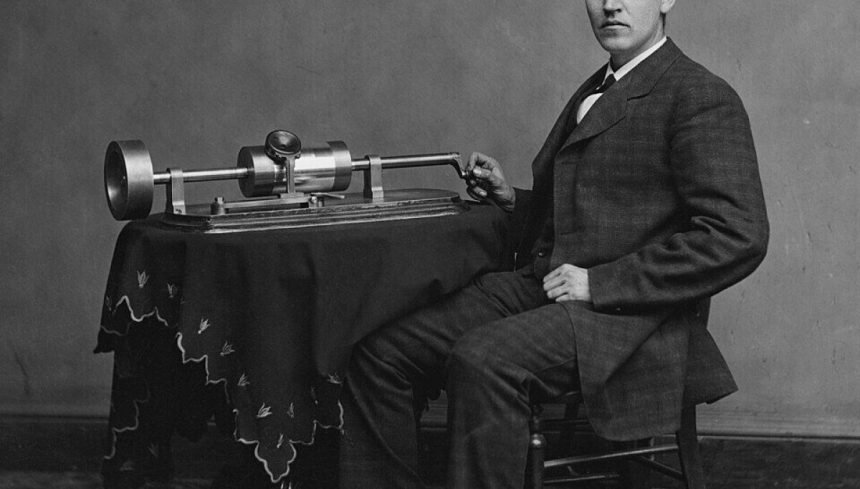
On the evening of Dec. 31, 1879, a public demonstration took place in Menlo Park, a New Jersey town. Electricity generated by dynamos traveled through wires, illuminating bulbs installed in buildings and along streets. Thomas Edison was demonstrating his incandescent lighting system. What he showed investors and the public was not merely a glowing bulb but a new world in which generators, wires and lamps operated together.
The significance went beyond illuminating the darkness. When laboratory technology became something people could experience in everyday life, technological innovation began transforming the economy and society. Perhaps Edison, remembered as an inventor, should also be regarded as an entrepreneur. His achievement was not simply developing a light bulb. He demonstrated how a technological invention could become the foundation of a practical service that households and businesses would eventually use. That required thinking beyond the laboratory and considering the infrastructure needed to deliver electricity. By integrating power generation, transmission and supply, he opened the way for a new industry.
Another name comes to mind: Medison, a Korean venture founded in 1985. Drawing upon research from KAIST, the company commercialized a domestically developed ultrasound diagnostic device. Its importance extended beyond becoming a successful first-generation technology venture. Former employees went on to establish companies of their own, creating technology businesses and professional networks.
Medison was both an innovative enterprise and an incubator for subsequent generations of entrepreneurs. That is why Korea’s venture industry still remembers the company and its founder, Lee Min-hwa. Its success brought together technological potential, market demand and entrepreneurial determination. The businesses and networks it helped produce became an enduring part of its contribution to Korea’s innovation ecosystem. If Medison’s name is understood as combining “medical” and “Edison,” perhaps its founders also dreamed of transforming health care and creating a new medical industry.
Consider a hypothetical question across different eras and industries: What kind of company would Edison have built had he founded Medison? Rather than stopping at ultrasound machines, he might have connected hospitals, medical imaging, diagnostic services, specialized businesses and investment capital to create a medical industry.
The real question is whether Korea’s innovation system can support such ambitions. Developing ultrasound equipment, testing it in hospitals, improving it with medical data, introducing diagnostic services and nurturing specialized spinoffs all require coordination among laws, institutions and investors. Yet systems governing research, licensing, medical services, data, markets and finance operate according to different objectives.
Regulations protecting patient safety, personal information and fair competition are necessary. What is missing may be sufficient pathways connecting those legitimate safeguards so that new industrial systems can emerge. Had Edison worked in Korea, would he have invented the bulb but struggled to connect power plants and transmission networks, mobilize capital, establish an electricity industry and transform its value chain?
A new industry does not arise from outstanding technology alone. It requires technology that anticipates or creates market change, environments where solutions can be tested under real conditions, risk-taking capital, companies with strategic and commercial capabilities and government action that reduces uncertainty in emerging markets. These elements must function as an interconnected system. Progress in one area cannot compensate indefinitely for barriers elsewhere. The challenge is to make their separate contributions work together.
Korean innovation policy must therefore move beyond supporting individual technologies, demonstrations, startups and corporate growth. It should test entire systems against defined missions, connect fragmented institutions and participants around emerging industries and close gaps throughout the innovation process.
Edison’s demonstration occurred around the era when the Korean Empire was established. By overcoming the constraints darkness imposed on time and space, he showed what technological demonstration should accomplish. The objective is not simply to prove that a bulb works. It is to establish whether a system connecting lighting, electricity and the places where they are used can operate sustainably.
Such demonstrations should also establish whether related industries can expand and entirely new markets can emerge. Only by assessing these broader effects can Korea develop the leadership needed in a changing innovation landscape.
Korea’s next Edison may already be developing technology in a university, government-funded institute or corporate laboratory. What matters is whether that innovator can move beyond a single invention to build an industry.
Future Medisons need more than programs designed to increase the number of deep-tech startups. They need a system of connections linking talent, technology, capital, regulation and markets so that companies can continually enter new industries and grow.
As Korea approaches an era of 40 trillion won ($30 billion) in research and development spending, its innovation strategy must change. Support should no longer end with developing technology. It must help build the world in which that technology can actually operate.