



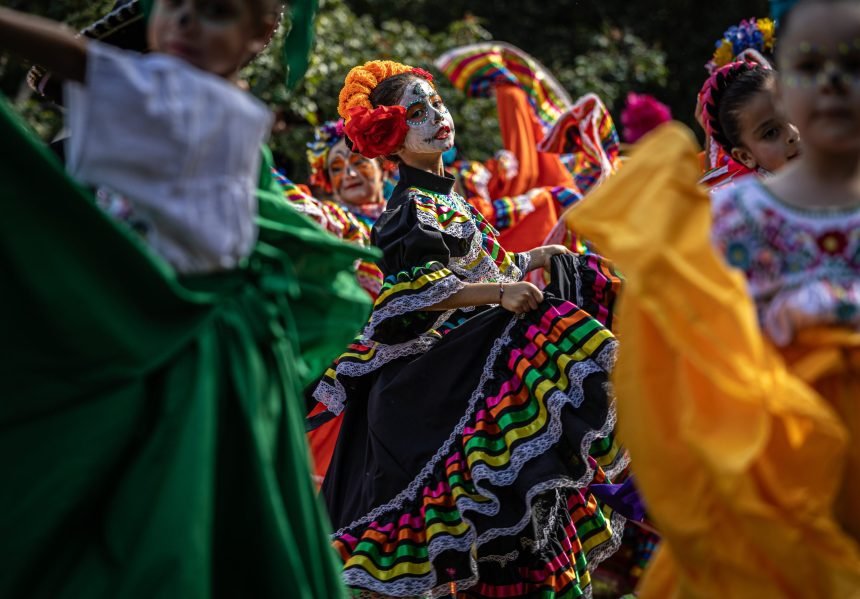
Framed pictures of loved ones who have passed away shook on an ofrenda as folklórico dancers with face-painted skulls danced to the beat of Aztec drummers to celebrate Día de los Muertos at the Fort Worth Botanic Garden this weekend.
Traditional Mexican performances by Mariachi Amatitlan and Ballet Folklórico Uribe brought dance and music to the garden Nov. 1.
Sonia Hernandez, mother of folklórico dancer Camila Hernandez, said the event gave families an opportunity to share their heritage.

“We’re able to see all different types of ethnicities here, and we’re able to expose our culture and our heritage to not just the Hispanic community, but also to everyone here in Fort Worth,” Hernandez said.

For Hernandez, the celebration was also an opportunity to teach her daughter how to continue family traditions
“We really want to pass down our traditions. We want to make sure that she knows that her roots are Hispanic roots,” Hernandez said.

Sunday’s celebration was the first time the Fort Worth Botanic Garden invited Aztec drummer group Danza Chichimeca to participate in the celebration, drummer Jubith Tovar said.
She said the invitation offered an opportunity to remember family and friends who have passed away while sharing Mexican culture with the wider local community.

“It’s a way to celebrate and commemorate all of our dead loved ones. It’s a way to share the beautiful culture we have over in Mexico,” Tovar said.


For attendee Cory Pritchard, Sunday’s celebrations offered a sense of community for Latino residents. It was also a time for those unfamiliar to learn about Mexican traditions.
“It’s definitely important. A lot of people who live in the area appreciate it, as you can see by the turnout. For everybody else, it’s informative,” Pritchard said.
Tovar looked around the garden. She saw children dancing and singing around her. The younger generation plays an important role in keeping cultural traditions alive, similar to the beds of flowers growing around them, she said.
“It brings me a lot of joy and emotion because these kids are where we are leaving our culture,” Tovar said. “We are planting the seeds of our culture in them so it never dies, so that when we’re no longer here, they keep following our steps.”

This article first appeared on Fort Worth Report and is republished here under a Creative Commons Attribution-NoDerivatives 4.0 International License.