



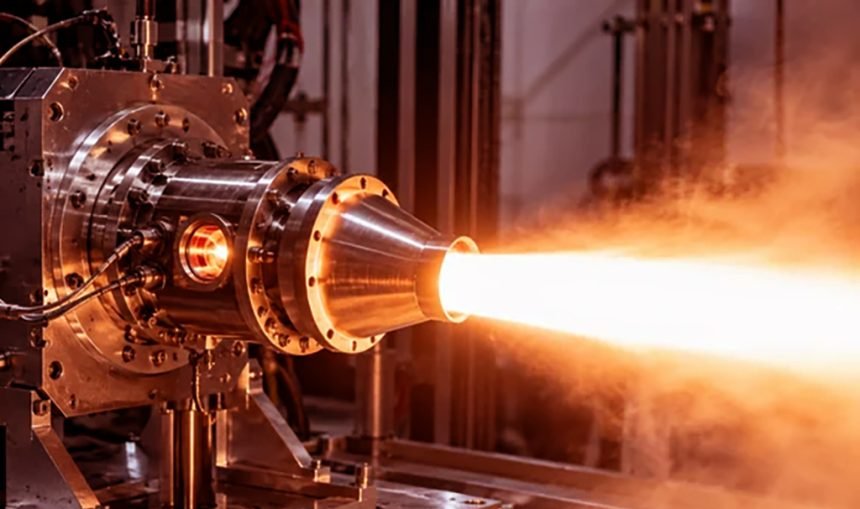
Advancements in electric thrusters, non-toxic green propellants, and miniaturized hardware are reshaping spacecraft propulsion design as operators seek to cut launch mass and extend orbital lifetimes.
Rapid adoption of high-efficiency propulsion technologies is central to expanding the global satellite propulsion market from $2.07 billion in 2026 to $4.66 billion by 2031.
Chemical, Electric, and Green Subsystem Specifications
While traditional monopropellant and bipropellant chemical propulsion remains the leading technology segment by revenue—favored for high-thrust orbit raising, rapid transfers, and emergency attitude adjustments—electric propulsion is capturing growing market share due to its higher specific impulse and fuel efficiency. Electric architectures include Hall-effect thrusters (HET), ion thrusters, and pulsed plasma thrusters engineered to prolong mission life.
Simultaneously, eco-friendly chemical alternatives utilizing ammonium dinitramide (ADN) and hydroxylammonium nitrate (HAN) monopropellants are emerging to replace toxic hydrazine. These green propellants reduce ground-handling hazards and launch-processing costs while preserving chemical thrust performance. Across all architectures, digital control units provide automated station-keeping and precise telemetry for large satellite fleets.
SmallSat Miniaturization and Orbital Servicing Demand
Propulsion development spans spacecraft classes ranging from CubeSats, nanosatellites, microsatellites, and mini-satellites to large geostationary Earth orbit (GEO) communications platforms. Surging commercial imaging and Internet of Things (IoT) constellations are driving the miniaturization of low-power electric thrusters to fit standard small-satellite form factors without sacrificing specific impulse.
Looking toward 2031, regulatory pressure against hazardous hydrazine and the expansion of in-orbit servicing—which relies on precision propulsion to dock, refuel, and reposition aging GEO spacecraft—will continue to accelerate the transition toward modular electric and green propulsion systems.