This post was contributed by a community member. The views expressed here are the author’s own.
In the 1950s and ’60s, a period defined by profound social movements and calls for justice, universities across the United States became vital spaces for intellectual exploration and social change.
At Cal State LA, this spirit of activism and inquiry led to the creation of the Latin American Institute in 1960, founded by Emeritus Professors Louis De Armond, Donald Bray, and Tim Harding. By 1964, the institute evolved into the Latin American Studies (LAS) Program—one of the earliest of its kind in the nation and among the first in the California State University system. Today, the program is nationally recognized for its distinguished faculty, transnational community engagement, and accomplished alumni.
The LAS Program at Cal State LA recently marked its 65th anniversary with a two-day celebration, “Latin American Studies 1960–2025: Celebrating 65 Years of Teaching, Scholarship, and Activism,” honoring its long history of solidarity with Latin America and Latino/a communities in the United States.
Find out what’s happening in Los Angelesfor free with the latest updates from Patch.
“For 65 years, the Latin American Studies Program at Cal State LA has been guided by a vision of equity, critical inquiry, and community-based pedagogies,” said Enrique C. Ochoa, professor of Latin American studies and history and current director of LAS. “This celebration honors generations of students, faculty, and community members who have made the program what it is—a space where students’ lived experiences, community knowledge, and otros saberes link to scholarship and activism, as we continue to imagine and build a more just future.”
Cal State LA alumni, students, faculty, administrators, and community partners converged in King Hall Lecture Hall on Friday, Nov. 21, during the morning welcome highlighting the intersections of research, art, and activism that have long defined the LAS community.
Find out what’s happening in Los Angelesfor free with the latest updates from Patch.
About 100 students from the Hacienda La Puente Unified School District and Synergy Quantum Academy were also invited by LAS alumni teachers to attend the celebration, taking part in an art tour highlighting the program’s legacy.
The tour included visits to the Zaida del Río’s LAS mural in the Chicanx Latinx Student Resource Center; the 65 Years of Student Action and Scholarship exhibition in King Hall’s third-floor lobby alongside the Chicanas and Activism exhibit; the mural art project titled Drowning in the American Dream nearby the LAS office in King Hall; and the La Piedra Artist Collective exhibit titled Echoes of the Street, organized by LAS alumna Claudia Portillo and located on the first floor of University Library North.
Panels and breakout sessions explored issues such as immigrant rights organizing, land struggles in the Américas, holistic health and healing, tenant rights, women and popular struggles in Mexico, public policy, and community-based mental health practices.
One highlight was the plenary panel, “LAS Past, Present, and Future,” featuring LAS Director Ochoa; Marjorie Bray, former LAS program director; Bill Bollinger, emerita faculty lecturer; Ericka Verba, LAS professor and program director from 2015 to 2025; Gabriela Fried Amilivia, professor of sociology and LAS; Alejandro Villalpando, LAS and Pan African Studies faculty member; and Sandra Gutiérrez de Jesús, LAS and Chicana/o and Latina/o Studies faculty member.
Panelists reflected on the program’s 65-year history, its role in connecting scholarship and community, and its commitment to social transformation.
“Familia,” Bollinger said during the panel. “I see Latin American Studies as a web of relationships—a community of faculty and students who share values and vision. It’s a program, not a department, which means we’re not confined by academic silos or rivalries. We’re interdisciplinary, and that’s vital to undergraduate education.”
The afternoon continued with additional sessions and a film screening, featuring documentary and creative works by LAS students and alumni.
“The films reflected the program’s interdisciplinary focus and the ways in which art and storytelling continue to serve as powerful tools for research, activism, and social transformation,” said Ochoa.
The evening culminated with a concert at the University-Student Union Theatre celebrating the program’s rich artistic and activist traditions. The lineup opened with “Canción de Protesta,” performed by Mexican musician and activist Jesús “Chuy” Pérez and his ensemble.
Additional performances showcased the depth and diversity of Cal State LA’s creative community—from the student-led Florecer Collective and regional Mexican ensemble Los Humildes de California to a trip-hop and hip hop set by alumni Pau ix xofi and Carlos Somoza and a special appearance by alumnus and rap artist Olmeca, whose fusion of hip hop and activism has earned him national acclaim.
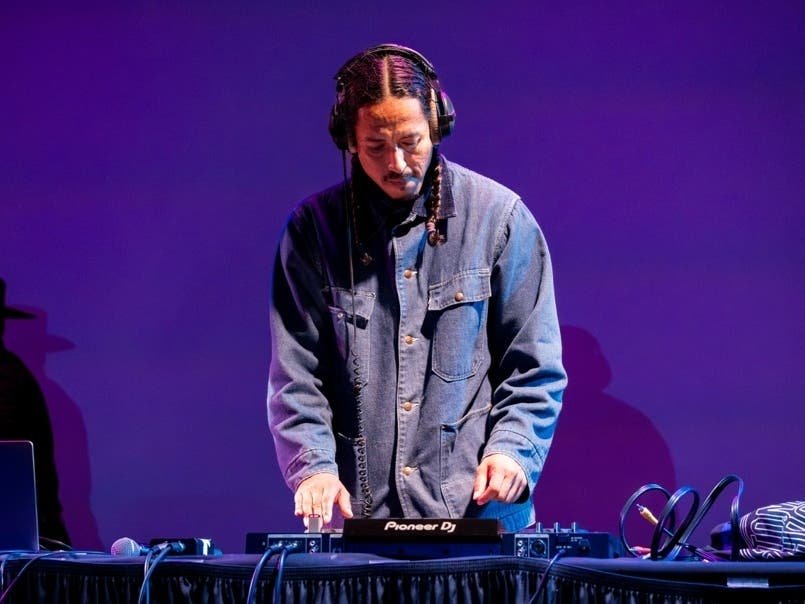
Capping the night was a powerful closing DJ set by Cal State LA alumnus Bardo Martinez, the renowned lead vocalist and multi-instrumentalist of the acclaimed band Chicano Batman. Martinez’s return to Cal State LA was a homage to the fusion of artistry, activism, and community that has defined the LAS Program for 65 years.
On Saturday, Nov. 22, the celebration took place at the Garment Worker Center in Los Angeles. The day began with a welcome and plenary panel on “LAS in Labor and Community Organizing,” followed by breakout sessions that engaged participants in dialogue on social movements, education, and struggles for justice in Latin America.
A closing reception and cultural program honored the program’s past, celebrated its present, and looked toward the future. The evening concluded with a vibrant folklórico performance by Corazón Trio, an ensemble led by Cal State LA alumna and Golden Eagle Mariachi director Cynthia Reifler-Flores.
LAS alumni in attendance represented the local community and beyond, with some traveling from as far as New Mexico, Chicago, and Indiana to take part in the milestone celebration.
Among them was Hugo García, director of community engagement for the Save Elephant Hill grassroots coalition, who reflected on the program’s impactful influence.
“When I was a student in Latin American studies, there was so much happening at that time; it was fascinating to be a student here,” García said. “I was more excited to go to conferences, workshops, and films than anything else on campus. That experience inspired me to stay involved with nonprofit organizations supporting the local community in El Sereno.”
García, who also serves as director of community engagement for the ClockShop arts and culture nonprofit and on the Los Angeles County Fish and Wildlife Commission, added: “Now, seeing students organizing around tuition increases reminds me of the same fight we had back then with the Coalition Against Cutbacks. We even marched into the dean of student affairs’ office to demand better financial aid. It’s inspiring to see that today’s students are continuing that tradition of activism—something we really need in the current political climate.”
The Latin American Studies Program, housed in the College of Natural and Social Sciences at Cal State LA, offers both bachelor’s and master’s degrees that equip students to become leaders in government, education, business, social services, community organizing, and the arts.
“Being part of the Latin American Studies Program means being part of a living history of activism, art, and solidarity,” Professor Verba said. “As we look ahead, we remain committed to fostering scholarship that uplifts social justice and strengthens ties across the Américas.”
Photo: During the plenary panel, “LAS Past, Present, and Future,” panelists reflected on the LAS program’s 65-year history, its role in connecting scholarship and community, and its commitment to social transformation. (Credit: Victor Mojica/Cal State LA)
The views expressed in this post are the author’s own. Want to post on Patch?