
UFC champion Khamzat Chimaev has been slammed as ‘boring’ according to a UFC veteran. Brazilian jiu-jitsu legend Allan Goes, a pioneer who spent the better part of three decades competing at the highest levels of combat sports, recently shared some blunt thoughts on UFC middleweight champion Khamzat Chimaev’s fighting approach. Goes, who trained under Carlson Gracie and competed in PRIDE Fighting Championships, the UFC, and the International Fight League, didn’t hold back when discussing the undefeated Russian wrestler’s current reign.
UFC Champ Khamzat Chimaev Slammed for Being ‘Boring’: MMA Veteran Allan Goes Explains
“People talk about this now – guys that stall or just go to the ground and stay in a half-guard position and control. They say, ‘Chimaev is boring. He sits in the guy’s guard or in half guard, punching, and it’s boring.’ He’s controlling and he’s dominating. Controlling, dominating – but it’s boring to watch, boring to watch.” The comment came in the wake of Chimaev’s dominant title-winning performance at UFC 319 in August, where he methodically dismantled former champion Dricus du Plessis over five rounds. The interview was with Quinton ‘Rampage’ Jackson.
Chimaev secured 50-44 scorecards across the board in that fight, a result that sparked significant crowd reaction and commentary about the style of combat he employs. The new champion demonstrated elite-level grappling and wrestling, executing over ten takedowns and maintaining ground control for 21 minutes and 40 seconds of the 25-minute contest. Du Plessis, a former champion, had virtually no answer for Chimaev’s suffocating top pressure and technical positioning.
Goes acknowledged Chimaev’s technical credentials. “He’s the world champ, I respect that. He’s probably got the best wrestling in the UFC by far, that’s why he dominates everybody.” The assessment rings true when examining Chimaev’s record. The middleweight champion sits at 15-0 and has defeated several high-calibre opponents, including former welterweight champion Kamaru Usman and former middleweight champion Robert Whittaker. His wrestling combines explosive takedowns with suffocating positional control, a style that has proven nearly impossible to counter at the professional level.
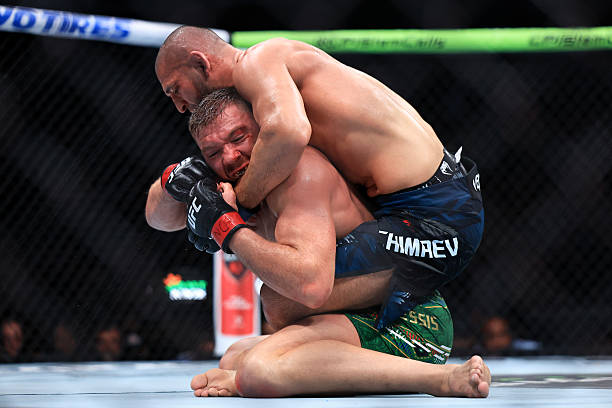
However, Goes drew a distinction between effective fighting and entertaining fighting. “But it’s not a fight I would watch all day. I would watch Rampage all day because I know somebody’s going to go down, not have somebody just trapping the leg, controlling distance.” The reference to Rampage Jackson, the legendary PRIDE and UFC fighter known for violent knockouts and aggressive striking.
Goes then offered a glimpse into his own perspective on what constitutes complete fighting. “I love Chimaev’s game as a grappler, I would be doing the same thing – but I would look for submissions.” Goes came up through Brazilian jiu-jitsu and transitioning to MMA during an era when submission attempts and technical exchanges happened frequently. Chimaev, by contrast, specializes in control-based wrestling that prioritizes position and dominance whilst minimizing risk.
Chimaev landed over 500 total strikes against Du Plessis, demonstrating that his approach generates offensive output. Yet the crowd reaction at UFC 319 suggested that technical dominance doesn’t always translate to audience satisfaction.
As an eight-time Brazilian National Jiu-Jitsu Champion and a fighter who competed against Frank Shamrock, Dan Henderson, and Kazushi Sakuraba during his professional MMA career, his perspective stems from genuine experience at the sport’s highest level. He witnessed firsthand the evolution of MMA from the 1990s through the 2000s, a period when fights looked fundamentally different from today’s technical wrestling-dominated contests.
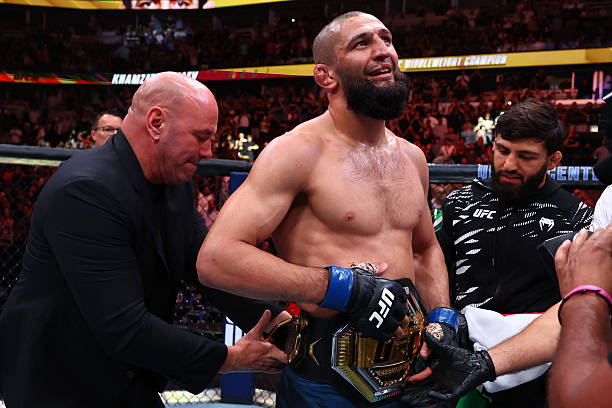
Chimaev remains focused on his path forward. The champion recently indicated plans to make one middleweight title defence before attempting to capture a second belt at light heavyweight, targeting current champion Alex Pereira. Whether that strategy will earn him different crowd reactions or continued criticism for his control-based approach remains to be seen.