July 2025 marked the centennial anniversary of the Fischer−Tropsch process. This Editorial celebrates this milestone and looks ahead to the next era of Fischer−Tropsch technological innovation.
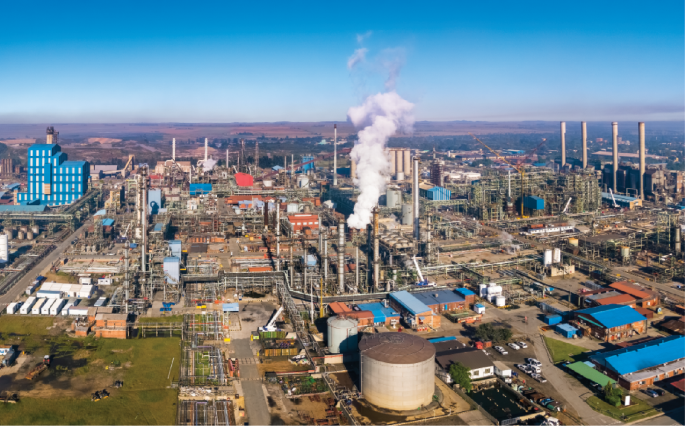
The Fischer−Tropsch (FT) process, first patented in the summer of 1925 by Franz Fischer and Hans Tropsch, has become one of the most influential catalytic processes in the chemical industry. Beginning with syngas (a mixture of CO and H2), FT synthesis enables the production of a broad spectrum of compounds ranging from liquid fuels such as gasoline (C4–C11), jet fuel (C8–C16) and diesel (C10–C20) to building block chemicals such as lower olefins (C2–C4) and aromatics. Over the past century, this technology has evolved into a key driver of large-scale commercial plants that convert both coal and natural gas into liquid hydrocarbons, a sector dominated by two companies, Sasol and Shell.
Credit: THEGIFT777 / E+ / Getty
Given the industrial significance of FT synthesis and the urgent societal need to reduce carbon emissions, it is no surprise that there is now also a strong push toward developing more sustainable FT technologies. These efforts often demand a multiscale, interdisciplinary approach: enhancing catalytic performance or designing more energy-efficient processes, for example, may require innovations ranging from catalyst design and reactor-scale transport optimization to process-scale heat integration and intensification.
With this in mind, this month, we introduce ‘100 Years of Fischer–Tropsch Technology’, a Collection jointly developed by Nature Chemical Engineering and Nature Catalysis. The Collection highlights studies and commentaries from both journals that both celebrate the technological progress made in FT synthesis since its inception and showcase the diverse frontiers that are actively shaping the next era of development.
As the world marks the centenary of FT synthesis, the process stands at the intersection of the chemical industry’s history and future. In a Viewpoint featured in this issue, we present perspectives from eight experts in academia and industry who discuss the most exciting opportunities ahead and share their vision for the future of FT synthesis. Historically, FT synthesis played a crucial role in the rise of the chemical industry. Now, it has the potential to serve in a new and equally critical capacity as an enabler of the global energy transition.
“The FT process […] has traversed a remarkable industrial arc: from coal-rich origins to a cornerstone of sustainable fuel innovation,” remarks Denzil Moodley, senior scientist at Sasol Research and Technology, in the Viewpoint, “Today, FT stands at the threshold of a third transformation […] This shift not only decouples hydrocarbon production from fossil-derived feedstocks but facilitates new pathways toward circular carbon economies.”
The Viewpoint authors also emphasize the need to leverage approaches across scales to develop more sustainable FT processes — a major theme running throughout the Collection, which we will now discuss in brief, while also taking the opportunity to highlight a few works from the Collection.
Beginning at the catalyst level, designing catalysts with higher selectivity, activity and durability can have substantial downstream impacts on the overall process viability. In the context of FT catalysts, much effort remains directed toward overcoming selectivity limits imposed by the polymerization-like chain-growth mechanism historically quantified by the Anderson–Flory–Schulz (ASF) distribution, as well as elucidating the underlying principles of this mechanism, which remain under investigation.
One promising approach to addressing the constraints in selectivity is the development of tandem (or multifunctional) catalysts. Using this strategy, a conventional FT catalyst can be paired with another component that provides additional functionality, such as cleaving or coupling C–C bonds, creating a tandem catalyst that enables secondary reactions to reshape the hydrocarbon distribution and mitigate the constraints implied by the ASF model1,2. In line with this, this issue takes a retrospective look at progress in the field by presenting two highlights of key historical work on employing such strategies: a Picture Story covering a bifunctional oxide–zeolite-based process and a Picture Story reporting on an integrated system that uses only mesoporous zeolite-supported cobalt catalysts.
At the reactor level, a century of technological progress has driven the evolution from fixed‑bed designs to slurry‑phase and microchannel systems, further enhancing productivity by improving heat, mass and momentum transfer. Nevertheless, tracking transport phenomena among active sites and within reactors under demanding working conditions remains challenging, particularly with high temporal and spatial resolution (see refs. 3 and 4, as well as a Q&A by Lynn Gladden on catalyst and reactor design through operando imaging5). Another important consideration in FT reactor development is tandem reactor design. Similar to tandem catalysts, tandem reactors in FT synthesis couple reaction steps within an integrated system, allowing for improved energy efficiency and tailored hydrocarbon production beyond those given by ASF constraints6.
Finally, both smaller-scale advances and process-scale innovations feed into the continued transformation of FT synthesis into a more sustainable technology — a key priority for future research. To this end, this issue contains a Q&A with Ding Ma from Peking University, where he discusses emerging multiscale strategies to reshape the FT process into an energy-efficient, low- or zero-carbon pathway. As Ding notes, “the challenge of system integration is crucial, as full carbon neutrality can only be achieved when the process is coupled with upstream low-carbon modules such as green hydrogen and CO2 capture.”
For nearly a century, FT technology has operated as a reliable and adaptable platform for converting diverse carbon resources into clean fuels and chemicals. As it enters its second century, it is worth reflecting on how a process originally championed by the petrochemical industry may soon help drive the transition away from fossil fuel dependence toward a sustainable, low-carbon chemical industry.