At CES 2026, Samsung Electronics and LG Electronics will push micro-RGB televisions as a defensive move to protect the premium TV segment from fast-advancing Chinese LCD rivals.
The two South Korean companies will showcase micro-RGB TVs at the January trade show in Las Vegas, alongside mini-RGB-based models from China’s Hisense and TCL and likely Japan’s Sony. The lineup shows how competition over high-end picture quality is shifting as global TV demand stagnates and price pressure intensifies.
RGB TVs differ from conventional LCD TVs by using separate red, green and blue LEDs as backlights instead of white LEDs filtered into color. This allows independent control of each color, improving brightness, color accuracy and contrast. The technology is generally seen as more advanced than mini-LED TVs, while remaining structurally distinct from OLED, which uses self-emissive pixels and does not rely on backlighting.
Samsung and LG are positioning micro-RGB as the highest tier of LCD. Micro-RGB uses RGB LED chips smaller than 100 micrometers, enabling denser and more precise local dimming than mini-RGB or mini-LED systems, according to the companies.
Samsung first commercialized a micro-RGB TV in August with a 115-inch model. The company said for 2026, it has expanded the lineup to six sizes ranging from 55 to 100 inches.
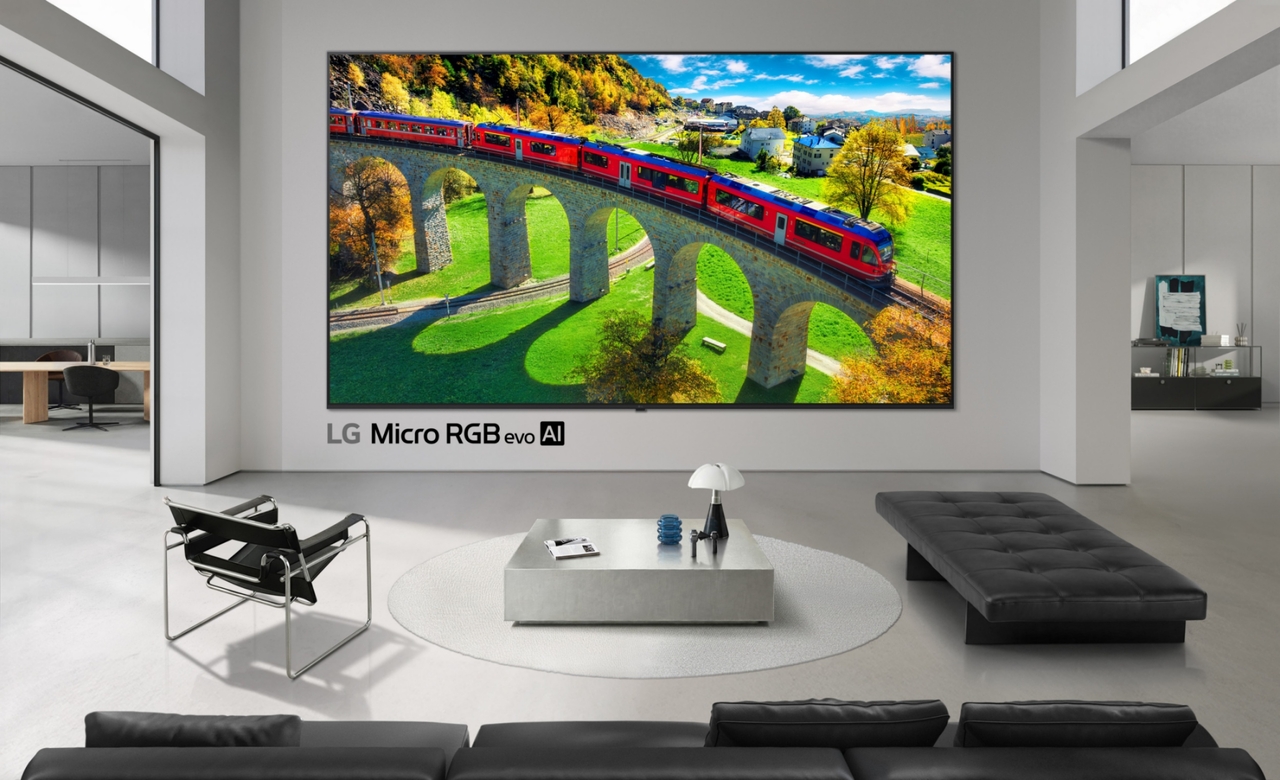
LG will debut its first micro-RGB TV, branded “LG Micro RGB Evo,” at CES 2026. The company said the model received “Triple 100% Color Coverage” certification from testing firm Intertek, meaning it fully meets broadcast, digital cinema and photo and graphics color standards.
Chinese manufacturers moved into RGB TVs earlier, though with less advanced implementations. Hisense unveiled what it called the world’s first RGB TV at CES 2025 and later released it in China and limited overseas markets. TCL displayed a 163-inch RGB TV at IFA 2025 in Berlin. Industry analysts say these products rely on mini-RGB technology, with larger LED chips typically between 100 and 500 micrometers, resulting in lower precision than micro-RGB.
Sony is also expected to enter the segment. The Japanese firm announced in March that it had developed RGB LED technology for large displays and filed a “True RGB” trademark in October, moves seen as signaling a CES 2026 preview.
For Samsung and LG, the shift toward micro-RGB is less about replacing OLED than shoring up premium pricing. Chinese brands have expanded global shipments by aggressively pricing LCD and mini-LED models, narrowing the performance gap. Micro-RGB offers Korean TV makers a way to defend the space between mini-LED and OLED without diluting their OLED flagship positioning.
Structural constraints remain. The supply chain for large LCD panels is heavily concentrated in China, increasing dependence on Chinese suppliers. LG Display exited the large LCD business earlier in 2025 after selling its Guangzhou plant to TCL.
mjh@heraldcorp.com