In 2025, steakhouses got a new look for the social media era, the Michelin Guide drove conversations, and opulent ingredients became commonplace. One newcomer stacked foie gras on tuna sushi, another served a $150 martini with a caviar garnish, and a third charged $245 per guest for dinner, not counting tax, tip, or drinks. These are decadent times.
Some luxurious new bites were standouts, including those served by the restaurant that stunned North America by earning a Michelin star after being in operation for only 57 days. But a funny thing happened as all these high-profile openings made, or missed, their marks. Almost all the best new eating in Dallas turned out to be casual and affordable. We got boosts to our pizza, barbecue, burger, and taco scenes. Spectacular new Indian and Vietnamese restaurants debuted in the suburbs.
So we can start 2026 with good news: your culinary world just expanded, and your wallet can breathe a sigh of relief.
Farina in Grani Pizzeria
It has been nearly six years since the coronavirus pandemic began, but diners are still benefiting from the bored home hobbyists who turned to baking sourdough, designing desserts, and otherwise leveling up their lockdown cooking. Take Maen Azzam and Sonia Khan, the married couple who says they had nothing to do that first summer. Khan was obsessed with dough, so she started baking croissants and brioche. “I made pizza for the kids one night,” she says. “The first few times were flops, but we kept at it.”
Soon, pizza night turned into pizza events for family and friends, then a catering business with a portable Gozney oven. Now the couple sublets a space with an Italian pizza oven that adjoins Communion Coffee Shop. Khan obsesses over dough, and Azzam focuses on the cooking. Khan says the oven is her husband’s “most prized possession.”
Farina in Grani’s style is Neapolitan because it is the couple’s favorite. The restaurant name denotes the use of whole grain in the dough, which you can see in the golden color of the crust. Khan and Azzam make their own lamb sausage for the Terra e Mare pie and import Italian cheese, tomatoes, flour, and soda. Their 12-inch pies are thin enough to fold, but the bottoms are perfectly crispy all the way through. You’ll catch a gentle whiff of smoke as you bite down on the outer crust.
Although the couple has expanded their hobby into a full-time restaurant, Farina in Grani is still small. The menu is a concise set of pizzas with just one appetizer (salad), although the owners have added new desserts recently, along with seasonal pizza specials. Azzam and Khan would rather do a few things well than more things poorly. Mission accomplished. They’re serving some of the best pizza in the region.
Vaqueros Texas Bar-B-Q
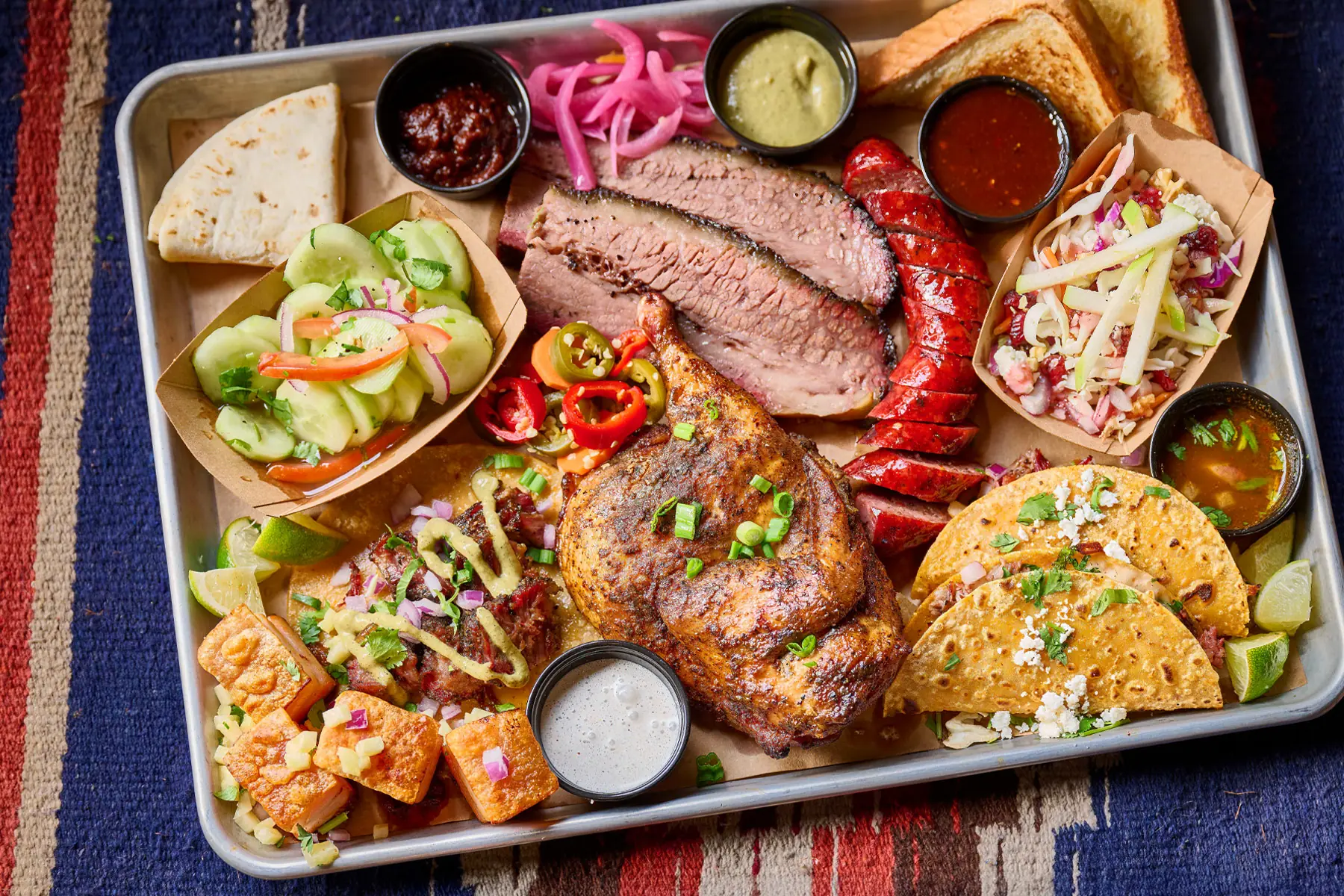
We might need to perform a wellness check on the suburbanites of Allen. One of North Texas’ best barbecue trailers opened a brick-and-mortar restaurant in Watters Creek Village, serving a sensational collection of trays, meats by the pound, tacos, and even nachos. But I’ve never encountered a line at Vaqueros. Indeed, as this feature went to press, the restaurant was remodeling to add a full-service bar, out of concerns that Allen’s customer base expects cocktails and waiters with their smoked meats. If you’re the type of person who likes to mutter “bah, humbug” when a wave of Californians moves to Texas, feel free to mutter.

Now let’s talk about the meats that have made Vaqueros a rookie sensation and should soon give this sleepy suburb its barbecue wake-up call. Pitmaster Trey Sánchez, a second-generation hand in the game who grew up play-acting as a Wild West gunslinger in his father’s themed catering-and-a-show troupe, simmers chunks of brisket burnt ends to use in suadero tacos, slow-cooks pork carnitas in the smoker, glazes pork belly burnt ends with al pastor marinade, and makes a Texas hot link sausage that is properly, eye-poppingly hot. Pastrami tacos come out to play on Fridays. His brisket is some of the region’s best, but the specialty items are such clever blends of Texas and Mexican tradition that it may take a visit or two before you get around to ordering the brisket. (I’m talking to the Californians here.)
The side dish canon gets a gentle rewrite, too, including a refreshing cucumber salad that’s one of the lightest barbecue sides I’ve ever tasted. If you need a drink, the joint even has its own beer, Vaqueros Light Lager, a collaboration with Hop & Sting, the brewery where the business began. With beer can in hand, it’s worth seeking out the pit room, kitted out with windows so that spectators can watch as the staff tends huge custom-built smokers. If anyone can teach Allenites how to dine like Texans, it’ll be Vaqueros.
Pillar
Pillar begins with the restaurant that previously occupied its space: Boulevardier. That French bistro served crawfish beignets and brunch burgers at this address for nearly a dozen years, growing up along with the fast-rising Bishop Arts District. Everybody loved Boulevardier. When I visited on Sunday nights, I usually saw two or three other neighborhood restaurant owners or chefs hanging out at the oyster bar. The fact that it was being replaced filled Bishop locals with trepidation and excitement.
That, in part, is where the name Pillar came from. It’s meant to be a pillar of the community. So says chef-owner Peja Krstic, who accomplished that particular feat in East Dallas with Mot Hai Ba. To preserve continuity with Pillar’s predecessor, he maintained the bistro format and some of the dining room’s history. They just got dressed up a little bit. The room has new wallpaper and a reshaped bar, and the menu adopted an American accent.
Pillar
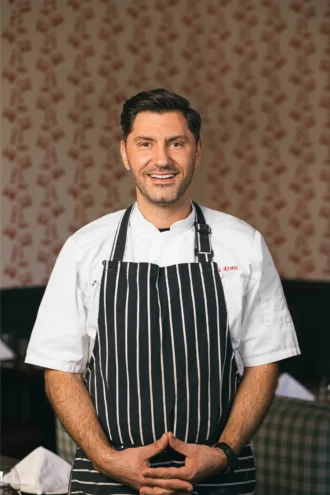
Pillar chef-owner Peja Krstic.
Dan Padgett
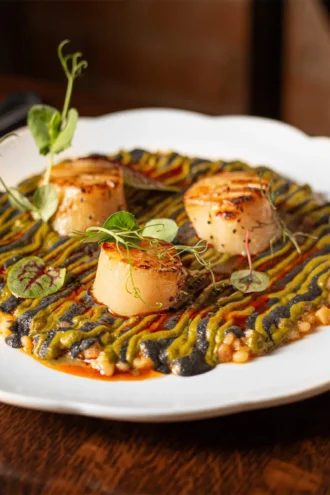
Day boat scallops served over sweet corn chowder.
Dan Padgett
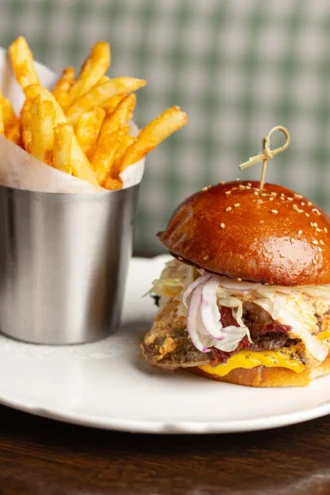
The Pillar burger.
Dan Padgett
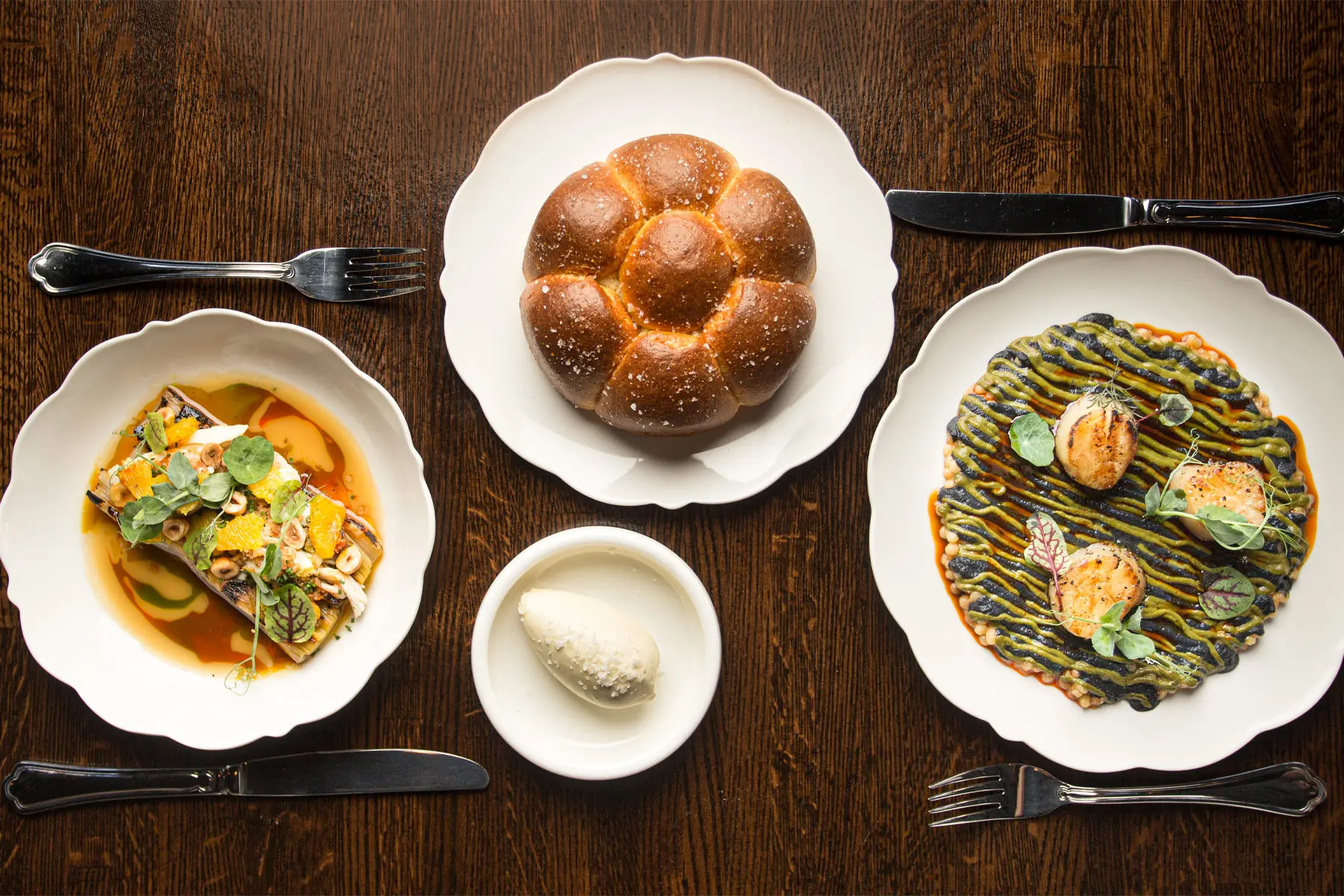
And, because this is Krstic, everything is a little different from what you’d expect. Many of the dishes could be described as clever “I wish I’d thought of that” ideas. Start, for example, with Nashville hot oysters, not chicken, served on the half shell. Grilled summer squash is served atop a salad of crumbled deviled eggs. (I’ll have to try that at home.) Cornbread and brioche are fused into a new superbread, served in a cast-iron skillet alongside the family-style fried chicken platter. Beets deepen the flavor in the comically tall chocolate cake, carried over from Mot Hai Ba’s dessert menu.
I have observed an unusual amount of staff turnover across my visits this year. But I’ve also seen the menu change with the seasons, a new brunch service rollout, and many of Boulevardier’s regulars stopping in to give the newcomer a try. There’s plenty of time for Pillar to grow with the neighborhood and live up to its name.
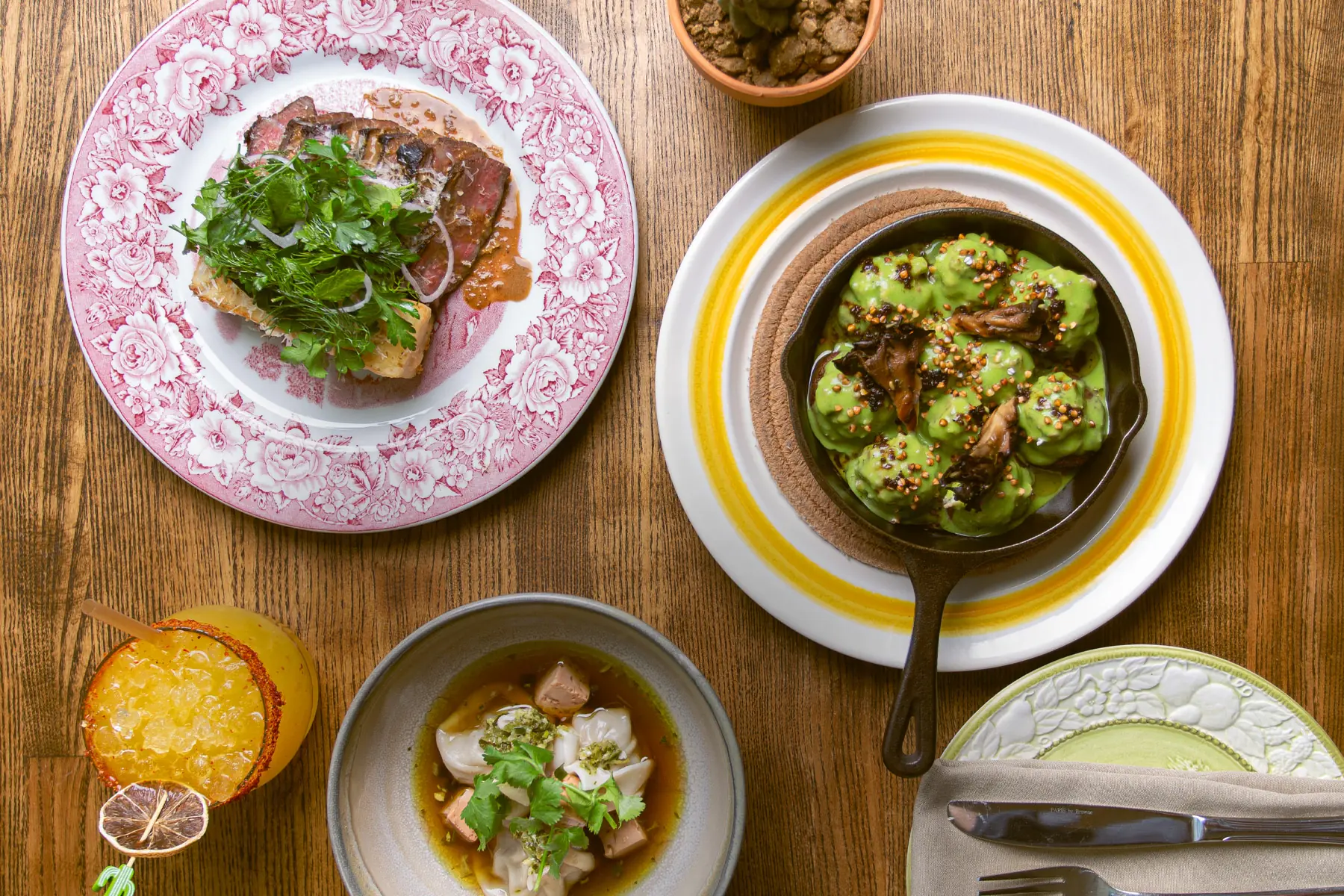
Far Out
No new restaurant in Dallas was more puzzling, or more unusual, than Far Out. It sits just northeast of Fair Park, at the corner of two polluted boulevards, in one of the poorest neighborhoods in the city, far from any restaurant of similar quality. It replaced a previous bar in the same space, and from the same owner, with little explanation. Now a foodie destination with menu descriptions that name veggie breeds and farms, it serves as the anchor to a significant new real estate development.
Here’s the backstory: owner James Lee is on a mission to “destigmatize” Fair Park and create community-oriented development. His acreage will eventually include an event space, artist colony, and urban farm, and he plans to collaborate with local schools to help make that farm, especially, support the neighborhood. But Lee’s plot needed a centerpiece, something to get the conversation started. That’s Far Out.
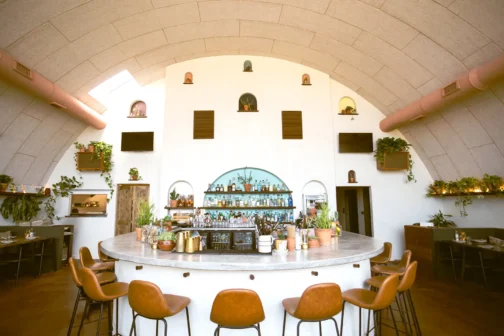
So far, the new restaurant has played its cards well. The decor matches its name, with a way-out-West aesthetic that evokes images of Marfa or Taos. It has, the owners tell us, attracted a community of artists who live in the neighborhood. (One neighbor brought in pottery to put on the shelves.) By hiring chef Misti Norris, Far Out ensured that food lovers from across town would make the trip to see what Lee and his crew are doing.
Dan Padgett

Dumplings at Far Out.
Dan Padgett
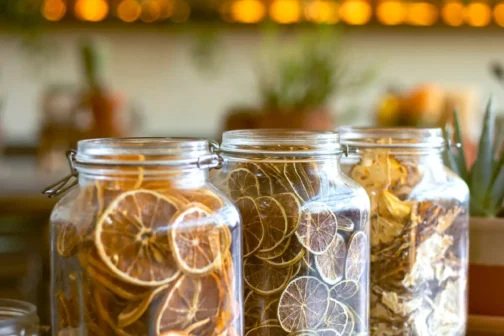
Bartop garnishes.
Dan Padgett
Dan Padgett
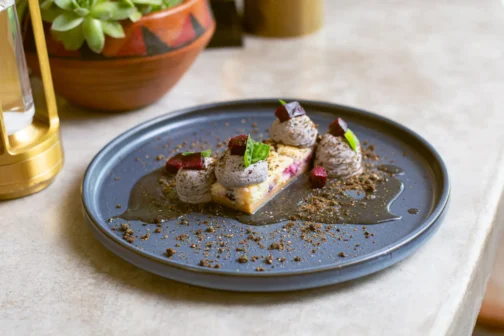
Norris’ food is as eclectic as ever, with a sharp focus on local ingredients and seasons. She is also more relaxed here than she was at her ambitious previous venture, Petra and the Beast. She’ll cook a mean steak, for example, and indulgent desserts starring Texas fruit. The cocktail program is calibrated to match Far Out’s spacious patio.
I’m still a little bit surprised that all the different parts of this formula seem to be working together. But if they continue to succeed, the result could be a rare restaurant that draws Dallasites from across town while also welcoming the neighborhood. The stakes are high.
Bharat Bhavan
One of the biggest restaurant openings of the year took place just east of downtown Frisco. I mean “biggest” literally. Indian vegetarian kitchen Bharat Bhavan takes up an entire 200-foot-long strip center all by itself, and it has already become North Texas’ vegetarian mecca.
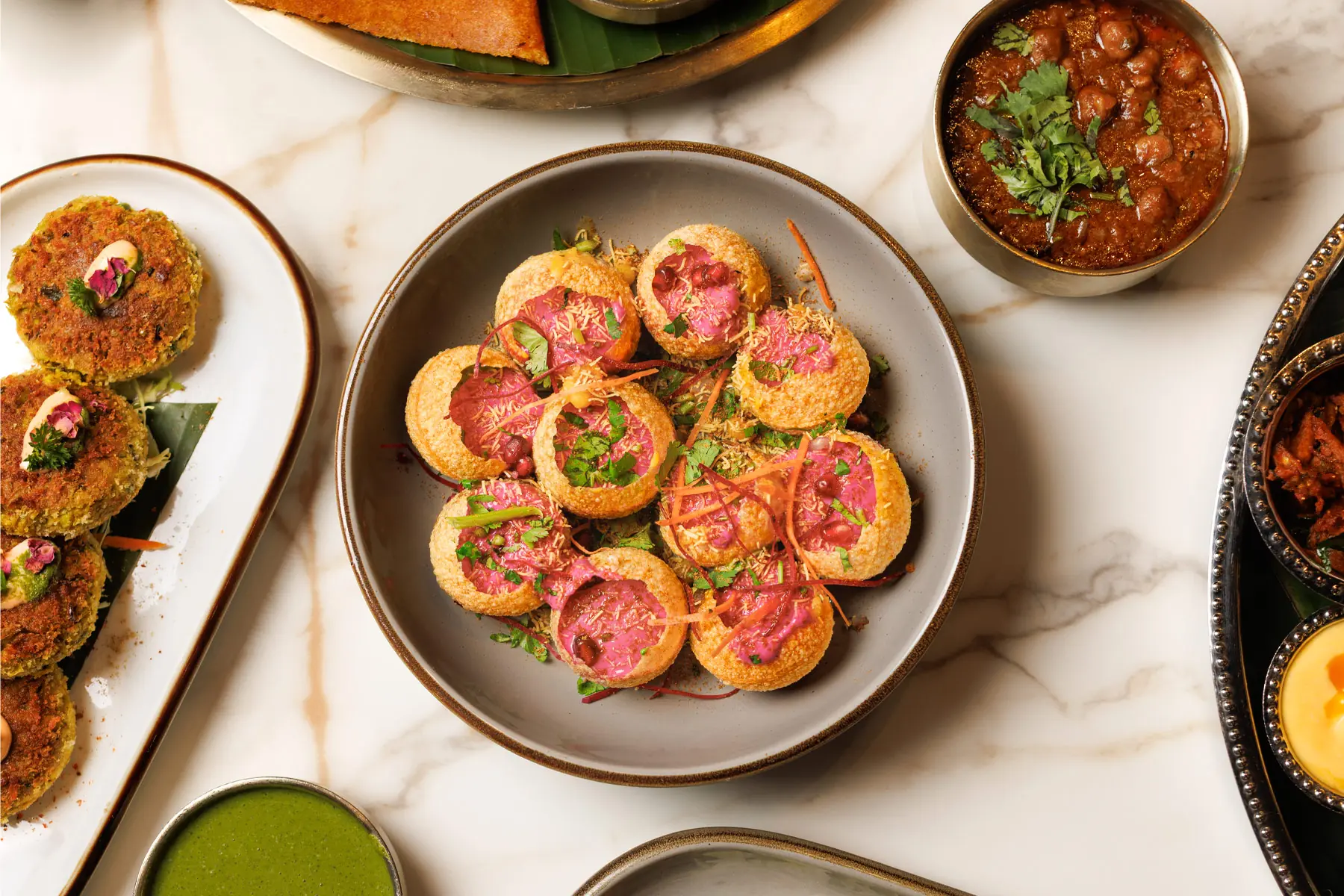
The dining room is enormous, with enough space for a video wall, and the menu is just as wide. You’ll need to spend a few moments with the restaurant iPad to strategize. (Or ask your server, who is likely to be helpful with recommendations.) Parse through many varieties of dosa, including benne dosas topped with pats of butter and served with four or more chutneys. Do pyaza, an onion sauce, brings welcome spice to cubes of paneer. My favorite dish so far is shikampuri kebab,a patty the shape of a crab cake but made with edamame instead of meat. There’s a gentle kick of chile pepper in the edamame mix, and another in the chutney.
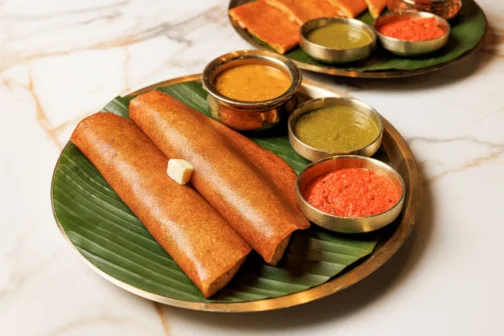
Davangere benne dosa at Bharat Bhavan.
Dan Padgett

The main dining room.
Dan Padgett
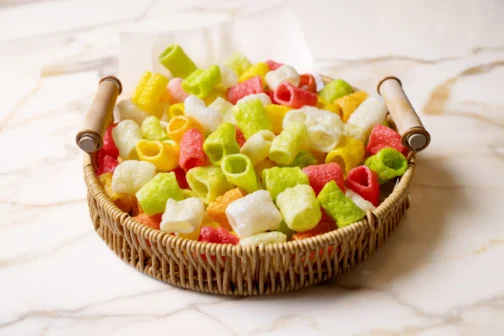
Fryums.
Dan Padgett
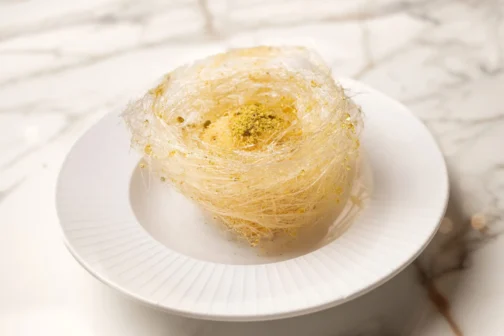
Kunafa net with fried pistachio ice cream.
Dan Padgett
Usually a menu this long is a sign that you’re at the Cheesecake Factory, but the kitchen consistently turns out high-quality dishes. The only thing longer than the menu is the line that forms at peak hours. Yes, believe it or not, Bharat Bhavan is such a smash hit that, for all its size, they could have made the dining room even bigger. Maybe if enough Dallasites make the vegetarian pilgrimage northward, the owners will be able to take over another strip mall.
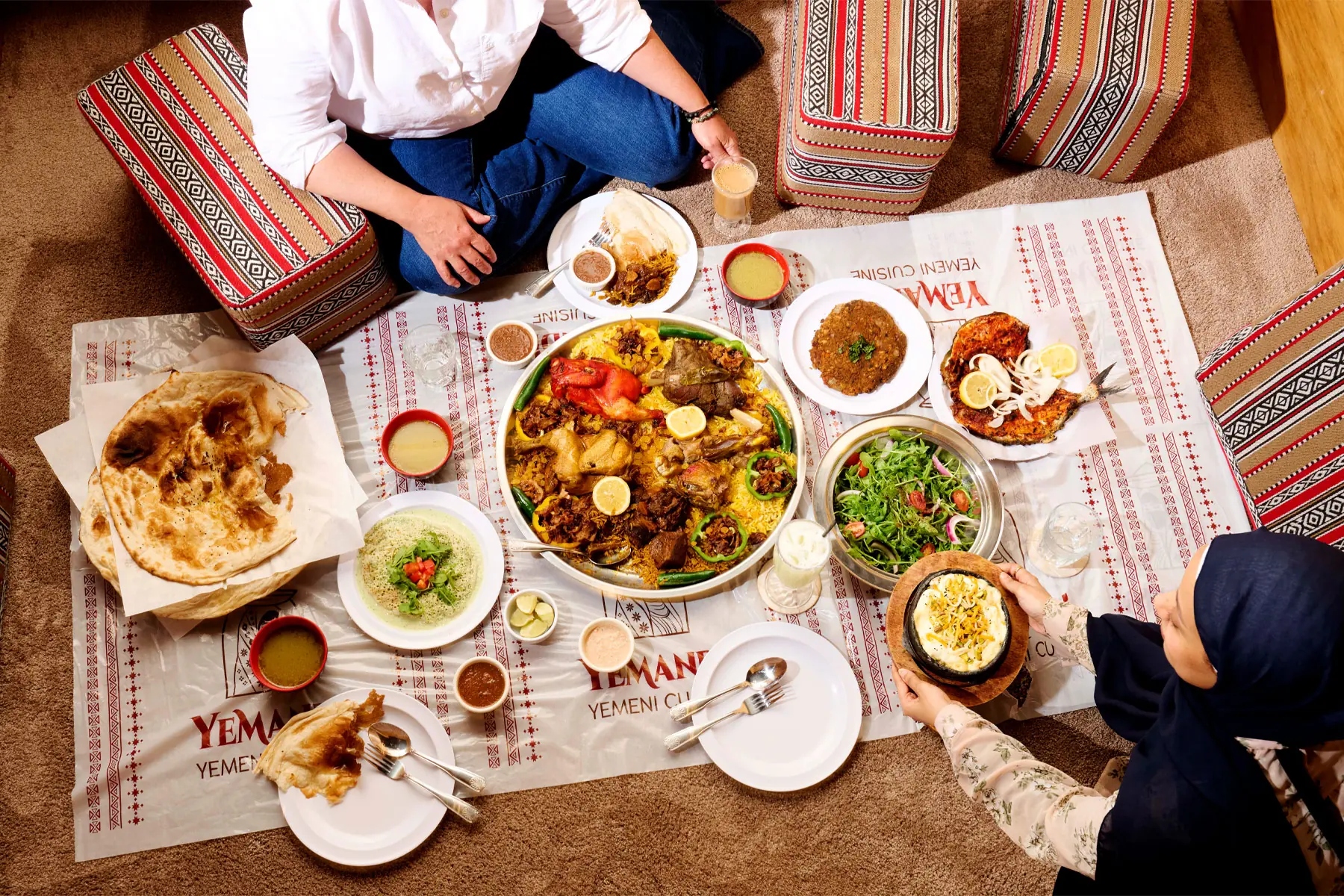
Yemandi Yemeni Cuisine
You could treat Yemandi like a normal restaurant: walk in, sit at a table, order a dish, pay the check. Or you could see it as a social occasion and a chance to unplug from the grid for a few hours.
Here’s what the second option looks like: Yemandi’s table-free booths, separated from the main dining room by short walls, where guests sit on the plush carpet, leaning their elbows against sturdy pillows. A picnic-style sheet will be laid across the carpeting, then filled with dishes of food. Covered shoe racks and burning incense sit at the entrances to these booths, and the sound system plays a quiet, relaxing mixture of string quartets and oud solos. Everything about the restaurant invites you to slide your shoes off and settle in.
It’s especially important to share your carpeted booth with friends because many of Yemandi’s dishes are enormous, sized to share among families. After a handful of salads and other starters—don’t miss the nourishing cup of lamb broth for only $1—you’ll choose among platters such as chicken or lamb mandi, the meat roasted until tender and plated on a heap of aromatic rice pilaf. Fasoolia translates as charred white beans, a description that dramatically undersells the excitement of the dish itself, a sort of stir-fried white bean dip with onions, bell peppers, and tomato paste, so loaded with seasoning that it turns dark orange-brown.
The menu’s other big hero is rashosh, an absolutely enormous Yemeni sourdough flatbread. It’s the size of a sombrero, baked in an oven much like an Indian tandoor. When you begin to tear off a piece, you’ll discover that it has serious stretch and chew. It’s the perfect vehicle for picking up a scoop of fasoolia or stewed meat.
Yemandi is meant to feel like home: the calming mood, the family-style sharing platters, the glasses of tea, and, of course, the seating on carpet. True, it’s still a traditional restaurant with tables and takeout ordering. But if you really want to feel transported, you’ll need to remove your shoes.
Hugo’s Seafood Bar
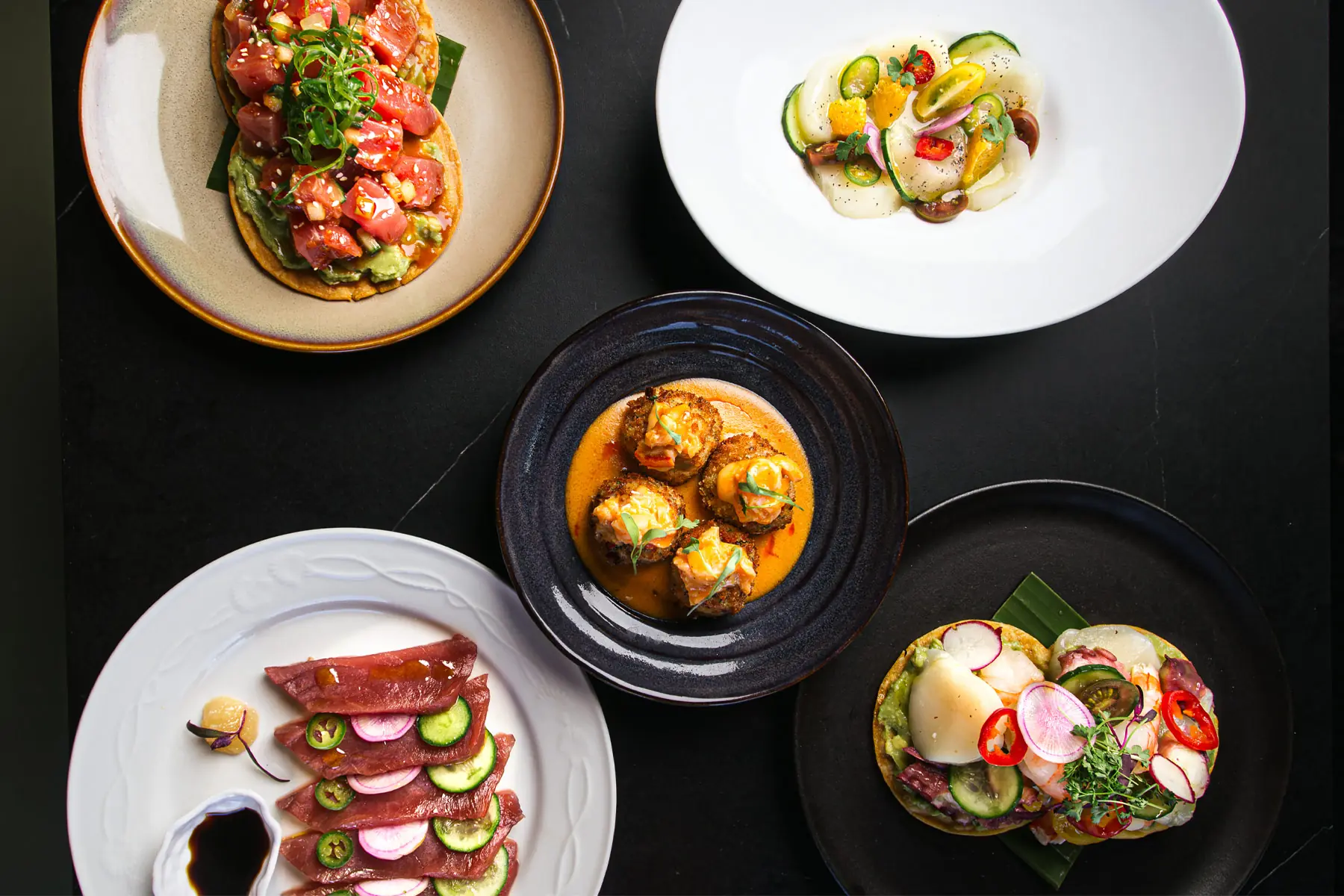
What good fortune that Hugo Galván and Hugo Osorio share a name. The two—Galván a well-known chef, Osorio a terrific bartender—teamed up to open a Mexican seafood bar in a tiny building at the heart of the Bishop Arts District. Exposed brick walls and a welcoming bar are the main features in the cozy dining room. Just behind the bar, the kitchen team serves a lot of food from very tight quarters. (There isn’t even a back door for deliveries and trash.)
Sometimes the adversity of an old and ill-suited building can spur restaurateurs to creative heights. Hugo’s is a good example. The kitchen’s seafood can be ordered on a tower, on tostadas, and in a variety of other preparations. Aguachiles have enough hot peppers to set your lips tingling. Seafood pasta offers a variety of species, all cooked separately to ensure they’re done right. Even the thick cheeseburger is a thing of improbable beauty.
Meanwhile, Osorio serves cocktails that incorporate Mexican and Asian flavors. They’re almost all light and refreshing, perfect to pair with oysters or a crab tostada. In an industry rife with copycatting, it’s cool to see the menu credit the original artist who inspired one drink’s matcha foam garnish. The wine list is smartly calculated to pair well with seafood, with an emphasis on good bubbles and whites by the glass. This probably goes without saying, but the bar also serves a Hugo spritz.
In a year dominated by big-time restaurant openings occupying thousands of square feet, in which many dining rooms appear to be real estate plays in disguise, Hugo’s would be refreshing even if it weren’t good. As it is, though, it’s the new restaurant that I return to most for sheer pleasure.
Kafi BBQ
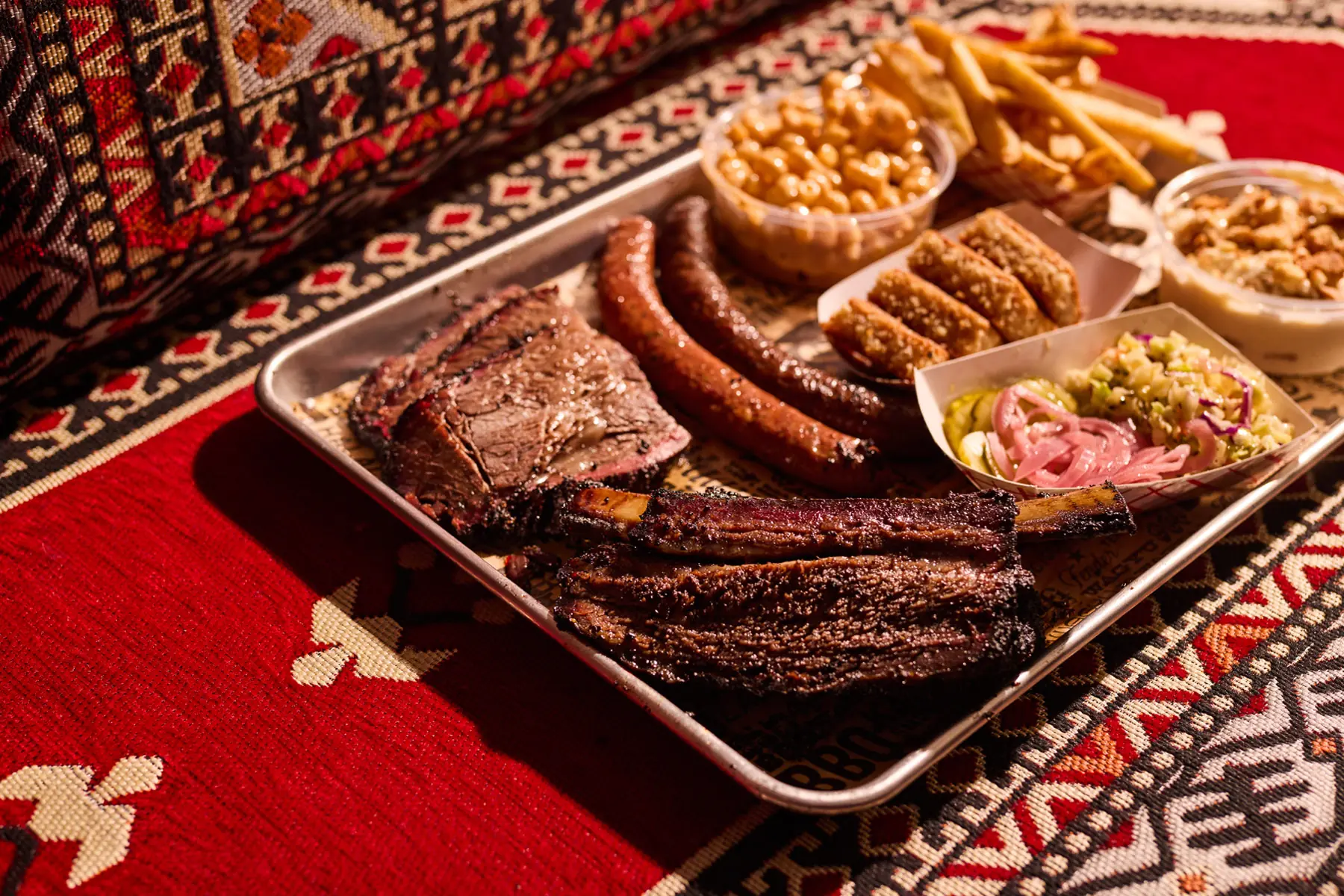
Kafi BBQ gets better with every visit, motivated by the perfectionism of pitmaster Salahodeen Abdul-Kafi. His engineering background predisposed him to enjoy long cooking projects that demand technical skill and patience. But he didn’t really expect to get into the barbecue business. In fact, his start came when a pushy Costco salesman talked him in to buying a Traeger pellet grill. He didn’t know what it was for, but he set it up on his apartment balcony, bought a brisket, and invited some friends over. It was the second time he had ever tasted brisket.
The guy is a fast learner. When Kafi BBQ opened at the start of 2025, his brisket was good. On my most recent visit this fall, it was great. Abdul-Kafi uses top-quality wagyu (and halal) brisket, meaning perfectly rendered fat laced throughout the meat. When the restaurant ran out of plastic knives, I cut my slice with a spoon. Kafi’s beef “dino” ribs are also top-notch, and you shouldn’t miss the all-beef Iraqi sausage, spiced with all the ingredients of a kebab platter, including the chargrilled peppers that come on the side. The rich cup of beans is spiked with burnt ends and beef bacon.
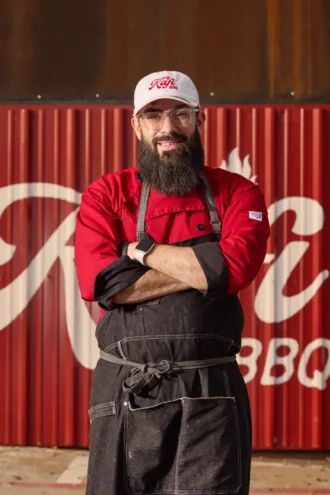
Kafi BBQ pitmaster Salahodeen Abdul-Kafi.
Jersean Golatt
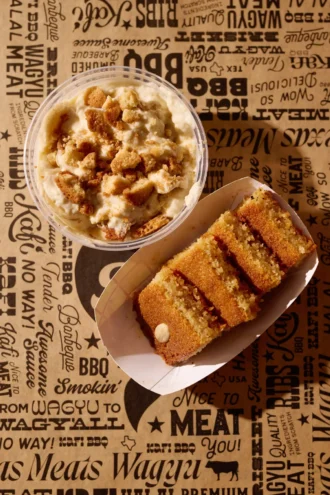
Two desserts at Kafi BBQ: banana pudding and basbousa.
Jersean Golatt
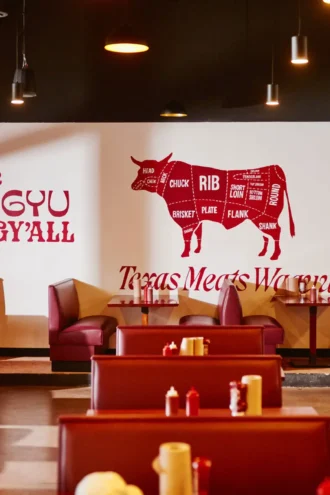
Interiors at Kafi BBQ.
JerSean Golatt
Kafi BBQ has a few quirks. Racks of bones, such as lamb chops, must be ordered by the rack, not singly. Lines tend to form at unusual hours because the halal menu appeals to attendees at a nearby mosque. The strip-mall dining room is not decorated with barbecue’s typical Texana, although there’s a lovely patio. Most restrictively, Kafi is open Friday through Sunday only because of the intensive prep that goes into each service. (The kitchen makes its own French custard base for cardamom banana pudding, sources a fresh-pressed pomegranate juice without preservatives to glaze its burnt ends, and saves all the beef tallow from barbecue trimmings to make dazzling triple-cooked fries.)
But it’s worth embracing those oddities for the exceptional end product, one that is constantly improving. Now I just need to try the smoked rack of lamb. Anybody want to split it with me?
Domodomo Kō
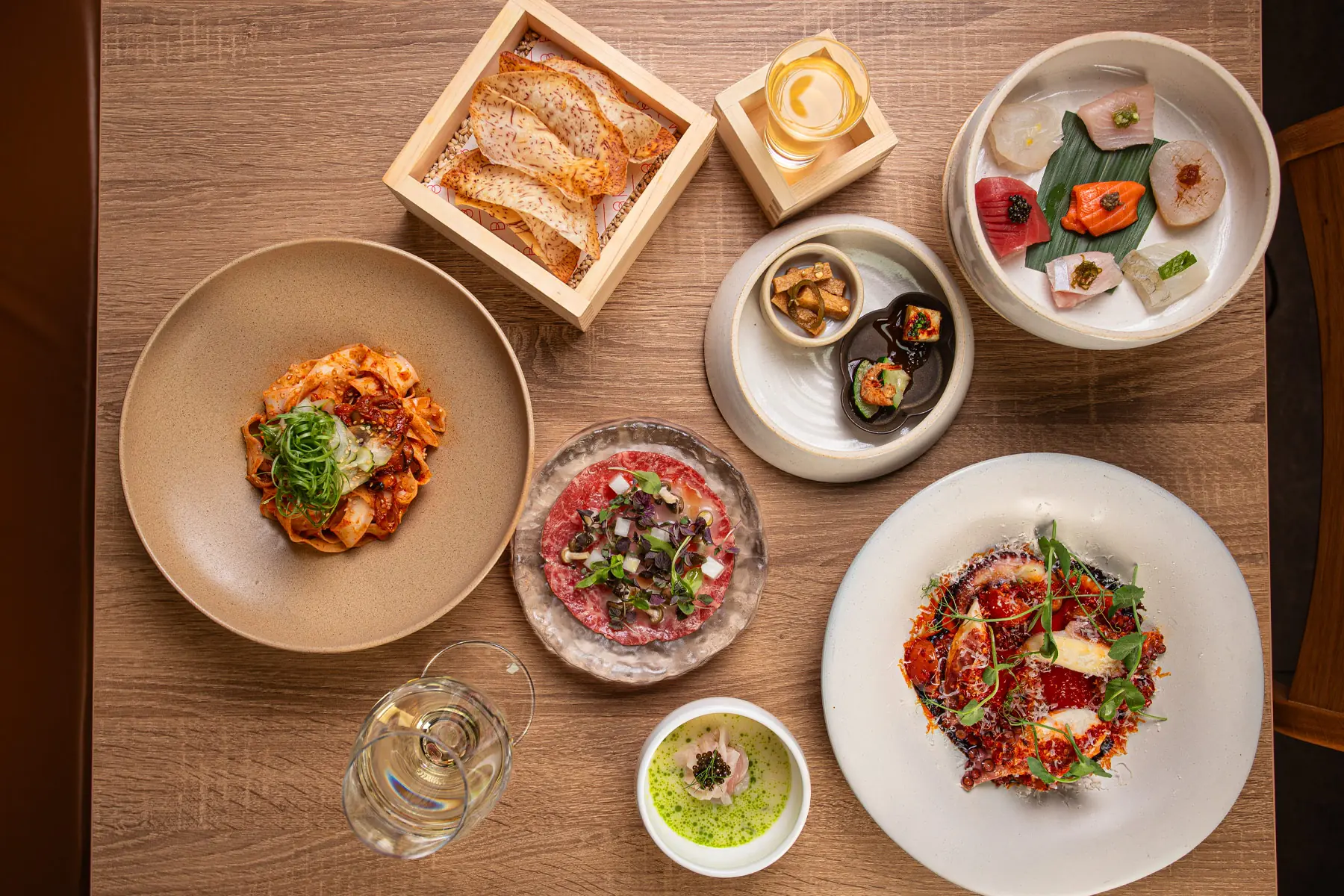
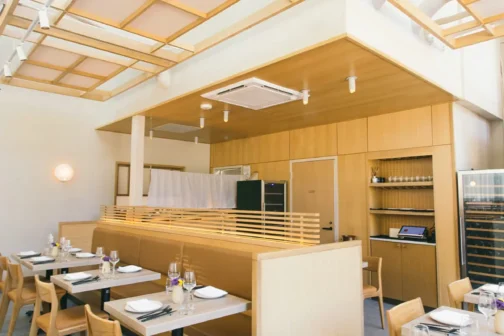
The founders of this upscale Korean restaurant swung for the fences in their first year, telling the Dallas Morning News that their goal was to earn a Michelin star. They didn’t achieve that milestone, but they have succeeded in adding an entirely new perspective to North Texas’ Korean food scene. For the first time, Korean fine dining has arrived in the Dallas area, a major shift from our traditional mom-and-pops and steak-centric grills and barbecue spots.
There are three ways to dine here. One is to come at lunch for generous, skillfully cooked lunch trays, called dosirak, the Korean equivalent of bento. Choose a classic like beef bulgogi, here interspersed with grilled scallions and seasonal veggies, or make a sushi sampler the center of your tray. The banchan around the dosirak’s main feature will change, but when I last visited, my portion came with edamame, miso soup, cabbage salad, rice, and a single fried dumpling.
The second way to navigate the menu is to order à la carte, ranging from Korean fried chicken and kimchi fried rice to more upscale fixtures. Domodomo Kō’s signature dish, hwe dupbap, is an exciting mashup of sashimi sampler, rice bowl, and seasonal veggies, one that invites you to play with your food.
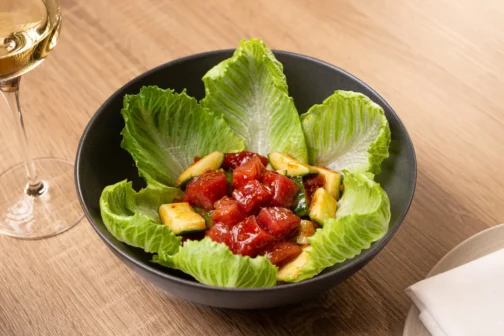
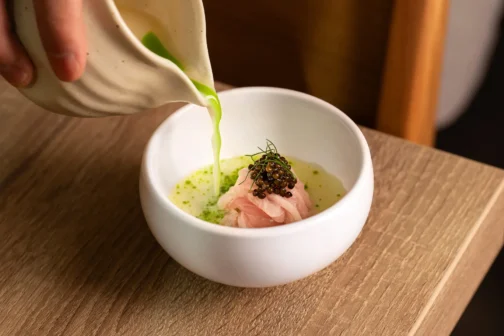
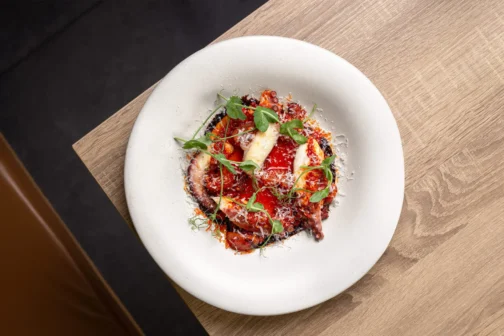
But the kitchen is at its best for dinnertime’s tasting menu, where a little more personality sneaks through. The tasting is especially good for seafood lovers, since it usually features a superb crudo, a perfectly grilled filet of fish with crispy skin facing up, and more sashimi.
One thing to watch: Domodomo Kō began economizing in late summer, cutting back on tasting courses and removing some of the plates’ more flamboyant garnishes. We will return to make sure that overall quality remains consistent. Of course, we’ll also be returning because we like it so much, at all times of day.
Sushi Kozy
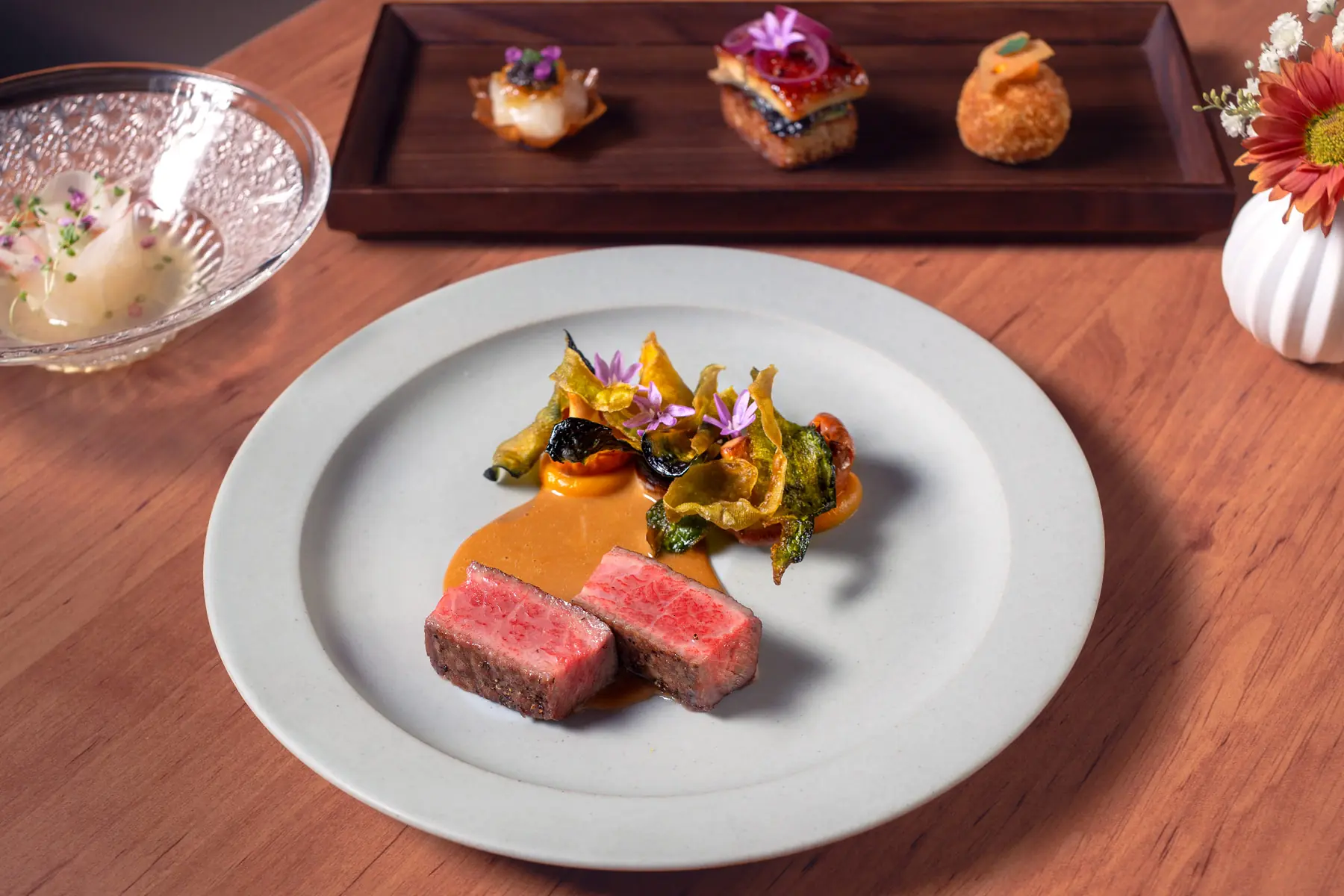
Dallas is just about full up on top-dollar omakase Japanese experiences, including the original at Tei-An, the yakitori-centric feast at Mabō, inventive offerings at Shoyo, and Michelin-starred Tatsu. The only reasons to enter the market now are excellence or novelty. Sushi Kozy, a venture featuring several veterans of Uchi, offers both.
The preexisting restaurant that Sushi Kozy most closely resembles might be Shoyo, but only because of a shared mixture of tradition and creativity. At the newcomer, there’s a clear delineation: the fish is prepared traditionally for sushi courses, with only a handful of thoughtful garnishes. Cooked items before and after your sushi courses are opportunities for the kitchen to show a little more personality, bringing French technique and local ingredients to the party. For the main course, you’ll choose land or sea, and on some courses you’ll have the option to add luxury ingredients. Otherwise, trust in the kitchen and enjoy a succession of delights.
The menu changes with each season, but a particular highlight is the succession of small, cooked savory snacks at the meal’s beginning. The dining room is also probably the most comfortable of the omakase counters in our city, feeling more like a well-appointed home library than a theatrical stage or a monastic cell. Another nice touch: the menu thanks every employee and supplier by name, from chef-owner Paul Ko to the sake distributor. (Update: After this feature appeared in our print edition, but shortly before it published online, Sushi Kozy hired RJ Yoakum as its new chef de cuisine for cooked dishes.)
La Tiki Paisa
About 10 years ago, the founders of The Wild Detectives had a bold idea: what if you could drink alcohol in a bookstore? The result became a community hub, a place where visitors can work, meet the best kinds of strangers, assess a first date, or just curl up in a corner with a good novel and a cocktail.
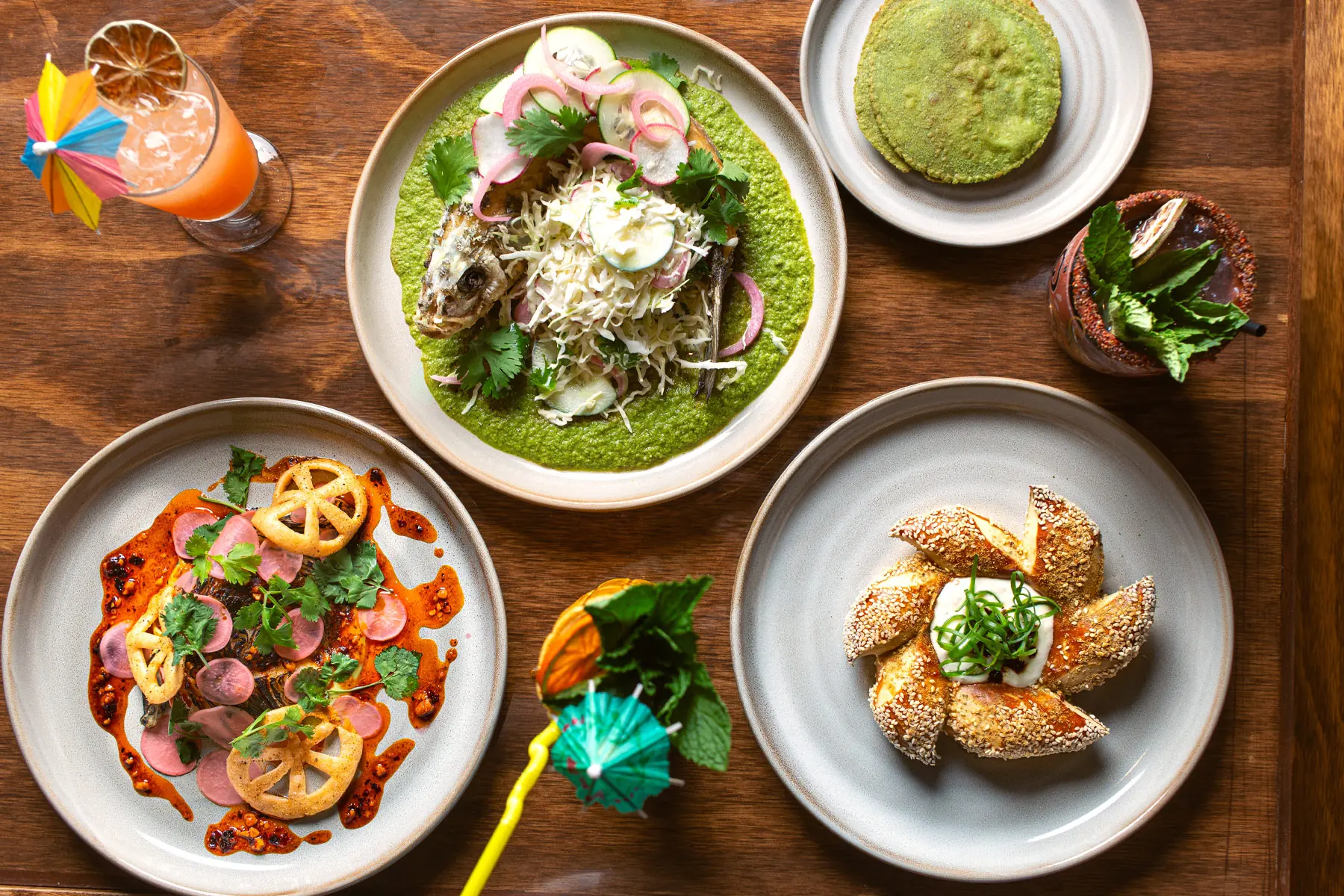
Fast-forward to the present, and Half Price Books’ flagship location has gotten in on the idea. Its daytime coffee shop, La Casita, now transforms into a tiki bar at night called La Tiki Paisa. The drinks are wonderfully balanced, ever refreshing, and occasionally spicy. Many of them star tropical fruit.
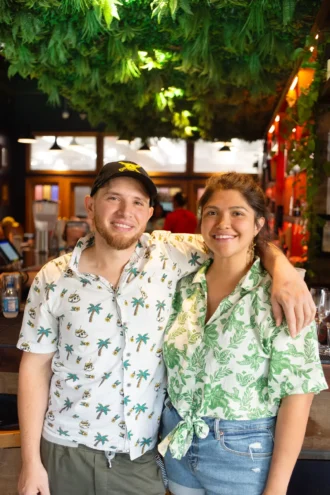
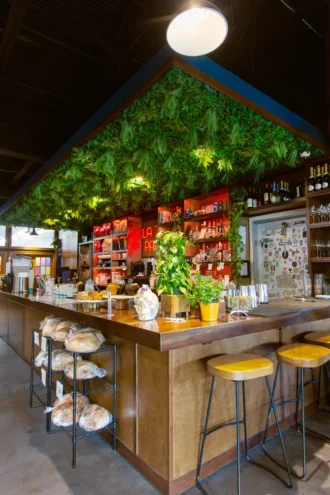

But the kitchen is the real star. In collaboration with La Casita, which doubles as one of the city’s most popular bakeries, La Tiki Paisa serves a menu of food as eclectic as the books at Half Price. When you visit a used bookstore, you learn that the best strategy is not to search for the thing you want but to want the thing you find. La Tiki Paisa rewards that curiosity, too.
Open-minded diners might find themselves tackling lengua bao, with tender beef, thin pickles, and hoisin and Sriracha-inspired sauces. Fish tacos are dramatically presented: the fish is fried whole, then propped up on the plate over a base of slaw and salsa verde. Tortillas, on the side, are infused with flavors of spinach and garlic. Building your own taco is a terrific, and worthwhile, adventure. After dinner, reward yourself with one of La Casita’s pastries. If you eat a little too much and need to walk it off, there are always rows of bookshelves right on the other side of the wall.
Lua Kitchen
First came a reader email, suggesting that Garland might have a new best Vietnamese restaurant. A bold claim, because Garland has something like a hundred Vietnamese restaurants, many of them excellent. I was skeptical, so I did the lazy thing. I sent a trusted friend.
My friend texted a series of photos from his lunch table, followed by his verdict: “probably best Vietnamese in Garland.” That tipped the scales. Instead of sending friends, I started meeting them at Lua over a series of lunches this fall. We haven’t been let down yet.
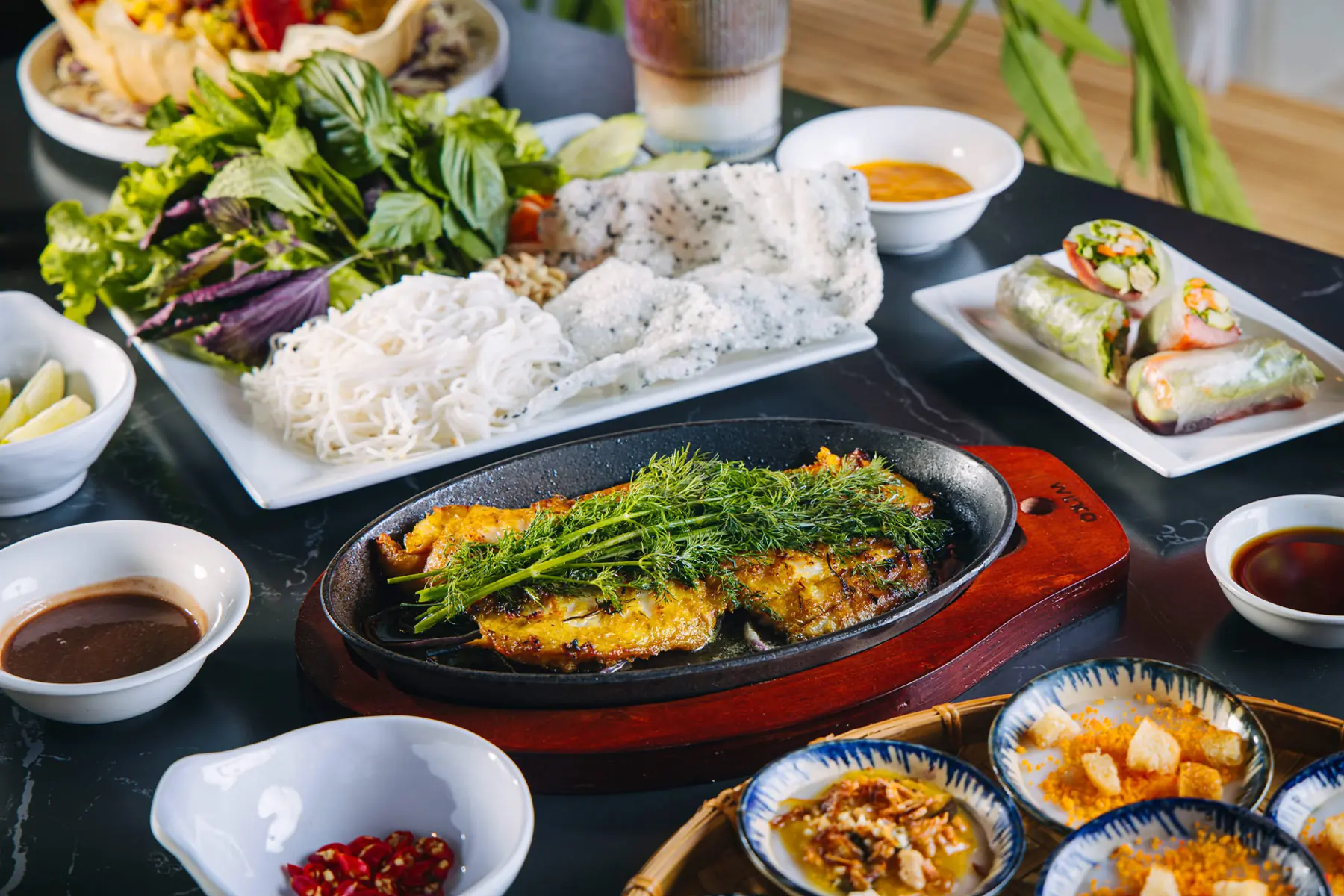
Lua Kitchen is not an Americanized place. If you’re unfamiliar with Vietnamese food beyond pho or grilled pork bánh mì, you may need a few minutes with the menu or to ask for recommendations from the staff. If you’re sharing a dish with friends, you’ll receive small bowls instead of plates, though plates are available on request. The table’s napkin holder dispenses small, square napkins, the kind usually placed under a water glass. If you order fried quail, you’ll need three or four of them.
The napkins may be petite, but Lua spends its money on the important things. We were most impressed, visit after visit, by the quality of the produce on offer. Every leafy green and herb was immaculate.
As for the food: it’s just as good as everyone says. Grilled pork spring rolls have a wonderful balance of fresh herbs and veggies. Fried quail has the sweetness and glowing red color of Chinese char siu pork, the birds perched on a lovely salad of romaine, watercress, herbs, sauteed onions, and fried shallots. Any dish involving grilled meatballs is magical, especially the bun cha Ha Noi, the grill blessing the meat with crisped-up, smoky edges. Is Lua Kitchen “probably best Vietnamese in Garland”? It seems likely. But forget rankings and comparisons. It’s something special all by itself.
Mamani
Mamani opened September 2, and then, on October 28, it received a Michelin star, one of just two in North Texas. In other words, this is the big one.
Such an early coronation does Mamani a disservice, I think. Dallasites will be fixated on Big Questions: is this really the city’s best restaurant? Does it deserve its star? Will it keep the star next year? How does it measure up to the hype? Will it light the way for future Dallas restaurants? Can it continue to grow and evolve under such an intense spotlight?
This kind of metaconversation and debate is the last thing a new restaurant needs while it tries to make its name. The Michelin hubbub has overwhelmed the public conversation about Mamani. Already a dozen people have asked me, “Is it really that good?” I almost think it would be kinder to say no.
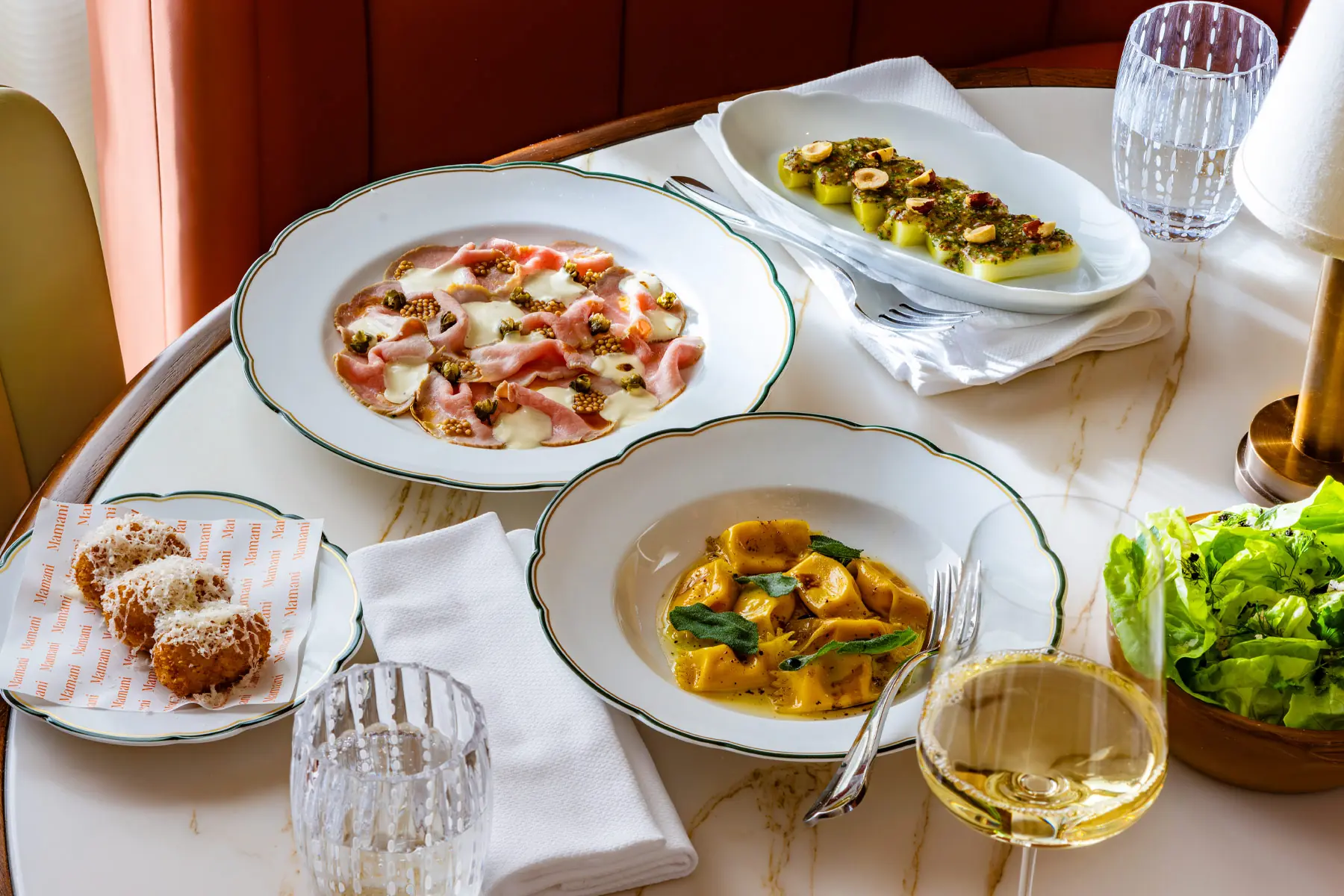
So let’s ditch Michelin’s terms. Forget the tire company and the star. Mamani is a French restaurant with a stylish look, an extraordinary service team assembled from across the country, and a menu of comfort foods ever so slightly dressed up. There is plenty of butter and cheese, because this is France. There’s a pasta section, too, because executive chef Christophe De Lellis won the culinary lottery, born in Paris to a family with Italian roots. The menu may look conservative at first glance—salad, crudo, pasta, roast chicken, steak, all things we’ve seen hundreds of times before—but Mamani’s strategy is to underpromise in a description and overdeliver on the resulting plate. Many dishes bring surprise elements and techniques, while others simply do what everyone else does, but better.
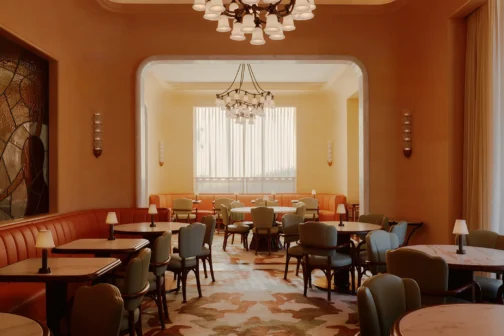
The main dining room at Mamani.
William Jess Laird
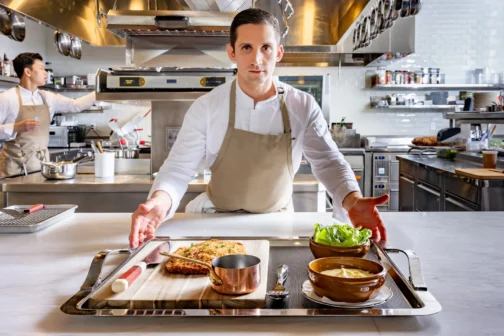
Mamani executive chef Christophe De Lellis says his Michelin-starred interpretation of veal cordon bleu was inspired by childhood memories of the dish at home and in school cafeterias.
Manuel Rodriguez
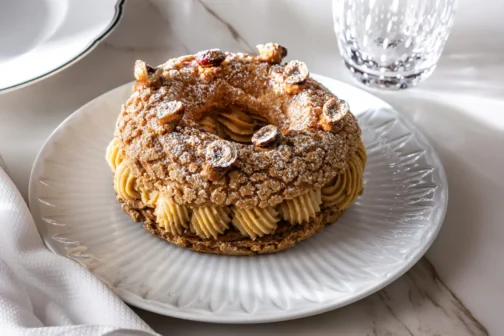
Paris-Brest.
Manuel Rodriguez
Consider a pasta, winter squash agnolotti, that Mamani boasts is a signature. It’s a simple dish, a stuffed pasta with squash filling, brown butter sauce, and fried sage. At least a dozen Dallas restaurants serve this, and groceries carry frozen versions. But none have such a thin, delicate wrapper of dough, so perfectly pleated around the edges. The result is neither innovative nor mind-blowing. It’s just, well, better.
Mamani balances the style Dallas’ moneyed diners want, comfort foods done right, with the trait a certain cadre of international food judges seeks, superior execution. This makes for the best French restaurant we’ve had since the two-year-long run of Bullion. We’ll see what all the Michelin malarkey is worth later. But for now, it would be nice if this well-dressed newcomer spooked its complacent high-end competitors into self-improvement.
Author

Brian Reinhart
Brian Reinhart became D Magazine’s dining critic in early 2022 after six years of reviewing restaurants for the Dallas Observer and the Dallas Morning News.