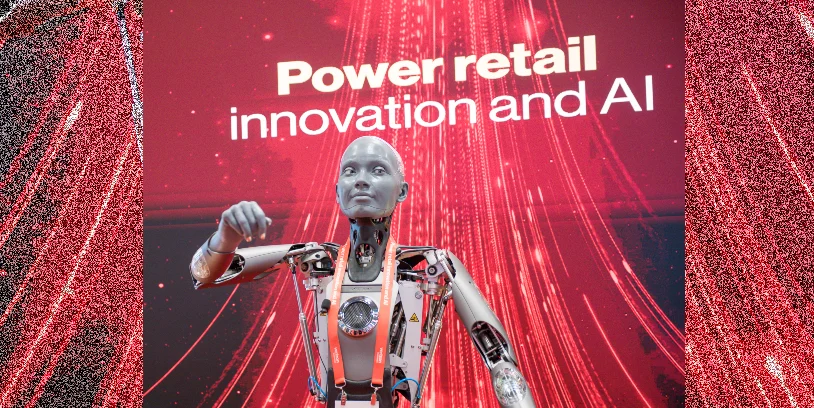
Attendees left the NRF 2026 National Retail Federation Big Show in New York City this month with a clear mandate: lean into AI, the digital store, and data, but keep people, culture, and community at the center of every decision.

The sessions and expo floor at NRF 2026 reinforced that the winning retailers in 2026 will be those turning technology into more human, more culturally relevant shopping experiences.
AI as a Frontline Co-Pilot at NRF 2026
The NRF 2026 Show made it clear that the next wave of AI is “agentic,” referring to systems that don’t just recommend, but actually trigger actions across merchandising, supply chain, and marketing.
For Hispanic food retailers, insights shared at NRF 2026 translate into AI agents that can continuously fine-tune orders for tortillas, fresh produce, pan dulce, and aguas frescas by location, event, and even pay cycle, protecting availability while minimizing waste.
Retail leaders at the NRF 2026 Show also highlighted AI-powered brand agents that bring an associate-like experience into chat and messaging channels—an opportunity for bilingual shopping support that answers product questions, recommends authentic brands from shoppers’ home countries, and builds baskets around family occasions.
Human-Centered, Not Tech-Centered
A strong theme at the NRF 2026 Show was that AI must deepen, not dilute, the human side of retail.
Speakers emphasized using data and automation to free store teams from low-value tasks so they can focus on hospitality, sampling, community events, and fresh presentation—all long-standing strengths of Hispanic food retail.
Investments showcased during the event included workforce platforms that make scheduling more flexible, streamline communication, and support skills training, helping grocers better attract and retain bilingual associates who serve as cultural bridges within local neighborhoods.
Related Article: Food retail strategies for 2026: value, assortment and AI
Smarter Stores, More Relevant Experiences
Across the NRF 2026 Show floor, retailers and technology vendors such as Vusion, Hewlett Packard Enterprise, dunnhumby, and Upshop discussed how to connect all parts of the store so it feels curated in real time.
For Hispanic grocers, the NRF 2026 Show insights pointed to dynamic promotions on staple categories when households are most price sensitive, localized endcaps for specific nationalities, and retail media that highlights authentic brands in-language on digital shelf tags, kiosks, and mobile apps.
Traffic and conversion data shared at the show underscored that experiential stores still win, validating investments in in-store events, tasting stations, and seasonal cultural celebrations amplified by better analytics and attribution.
Hispanic Shoppers: Scale and Specificity
Outside the session rooms at the NRF 2026 Show, data points on Hispanic consumers reinforced both the urgency and nuance of this audience.
Hispanic and Latino shoppers now command close to or above the multi-trillion-dollar range in buying power and are growing faster than the total market, according to Coresight Research, yet still feel underserved by generic “ethnic” strategies.
Research discussed at NRF 2026 highlighted that Latino consumers choose Hispanic grocery stores at a rate about five times that of the general population, but assortments must reflect local country-of-origin mixes rather than a one-size-fits-all Latino set.
The NRF 2026 Takeaway for Hispanic Grocers
For Hispanic food retailers, the NRF 2026 story is not “AI versus tradition,” but how to fuse advanced tools with deeply rooted community retailing.
The practical path forward emerging from the event is to pilot AI and agentic systems where they directly support cultural strengths: smarter replenishment of core Hispanic categories, bilingual brand agents, localized assortments, and workforce tools that elevate front-of-house hospitality.
In a year when mainstream chains are pushing harder into Hispanic foods, the core lesson from the NRF 2026 Show is clear: those who combine data sophistication with authentic, neighborhood-level relevance will own the next chapter of growth.