Pitchers and catchers report in a few days. Spring Training games are less than two weeks away. Actual baseball is right around the corner, which means it’s officially “best shape of his life” season. There will be countless stories around the league about offseason improvements for virtually every player.
These days, those anecdotes are typically punctuated by a reference to Driveline or another facility of its ilk. And they almost always pertain to a flaw from the previous year. A hitter who struggled to make hard contact did swing speed training in the winter. A pitcher who faded in the second half changed his diet to improve endurance.
A trio of starters stand out as needing to make drastic changes heading into the 2026 season. Two of them are well on their way, while the third is more of a question mark. Here’s a quick rundown of each pitcher through the lens of the challenge they face in the upcoming year.
Michael Lorenzen vs. Coors Field
The veteran righty encounters this obstacle of his own volition. It’s one of the most imposing impediments in all of sports. Lorenzen signed a one-year, $8 million deal with the Rockies, which means he’ll call Coors Field home. The venue trumps all others in terms of offensive production. Coors easily tops Statcast’s Park Factors leaderboard, scoring a 113 over the past three seasons. Fenway Park is a distant second at 104. Coors Field is No. 1 in park effect for hits, runs, singles, and OBP from 2023 to 2025.
Fortunately, Lorenzen already has a plan. He intends to lean on an eight-pitch mix to conquer Coors Field. “I feel like I own the shapes (of my pitches) … I just know what I’m trying to do, I know what the feel is I’m looking for and the shape I’m trying to create,” Lorenzen told reporters, including Patrick Saunders of the Denver Post. “But, obviously, being in Colorado is going to have its challenges, so I’ll be making my way up there soon to throw a few bullpens and just see exactly how these shapes are going to move.”
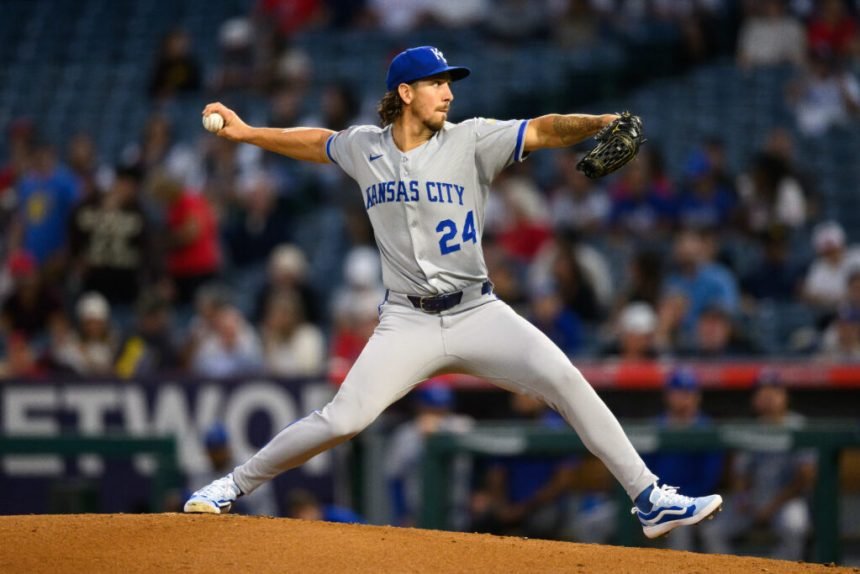
Lorenzen threw seven pitches last season, per Baseball Savant. He only used the sweeper 8.2% of the time, but every other offering was above 10%. Lorenzen’s most common pitch was his four-seamer, though he still only threw it at a 22% clip. The 34-year-old righty scuffled to a 4.64 ERA with Kansas City. He was likely looking at a depth starter/swingman role at other destinations, but signing with Colorado will give him a good chance to slot into a rotation.
“We didn’t have to convince him of anything; he ran toward this challenge,” head of baseball operations Paul DePodesta said. “Michael definitely wanted to pitch here. … I don’t think he’s afraid of anything. This is a challenge that he was actually (eager) to take on.”
Roki Sasaki vs. A Starter’s Arsenal
Maybe Lorenzen can loan Sasaki a couple of pitches. He’ll need them as he transitions back to the rotation. The NPB import struggled in his first taste of the big leagues, posting a 4.46 ERA with 28 strikeouts to 22 walks across eight starts. Sasaki hit the IL in May with a shoulder injury. He returned at the tail end of the season and emerged as the best reliever in the Dodgers’ bullpen. Sasaki allowed just one earned run across 10 2/3 innings in the postseason. He racked up three saves and two holds.
Sasaki’s splitter was as advertised, recording a strong 37.2% whiff rate as his go-to punchout pitch. The rest of the repertoire left much to be desired. Sasaki threw his fastball about half the time. It rarely missed bats (11.1% whiff rate) and was clobbered for a .500 SLG. Sasaki threw a slider 16.3% of the time, but it had a zone rate below 40%.
The plan is for Sasaki to return to the rotation in 2026. Blake Snell’s slow buildup this offseason could make it easier to fit Sasaki. Relying on a fastball/splitter combo isn’t normally a viable approach for a starter, and manager Dave Roberts agrees. “He needs to develop a third pitch,” Roberts told Dylan Hernandez for the New York Post.“It’s going to need to be something that goes left.”
Sasaki is working on a cutter and a two-seamer, per Hernandez. The former would fit the bill as something that moves away from a right-handed hitter. Both pitches could help Sasaki find the zone more frequently. He had a 59.3% strike rate last year, nearly 5% below league average.
Shota Imanaga vs. His Floundering Fastball
Imanaga’s “rising” fastball was the primary driver behind his success in 2024. The pitch, coupled with an elite splitter and a smattering of breaking balls, carried the left-hander to a sub-3.00 ERA with standout control in his rookie season. Imanaga got off to a strong start in 2025, but the wheels came off following a hamstring strain in early May. The veteran scuffled to a 4.14 ERA after returning from the IL. He gave up 24 home runs in 17 starts. The struggles continued in the playoffs, as Imanaga was tagged for six earned runs in 6 2/3 postseason innings, including three more homers.
The fastball was clearly different after the injury. Imanaga’s heater slipped by half a tick in velocity and by 1.6 inches in induced vertical break. The pitch’s Stuff+ went from a strong 112 to an underwhelming 98. (h/t to Carson Wolf on X for digging up those splits)
If Imanaga’s fastball doesn’t have its elite characteristics, the home runs will keep coming. Hitters have put the ball in the air against Imanaga at a hefty 66.1% clip in his two MLB seasons. Those balls were finding the gloves of outfielders when his arsenal was most effective, but they were getting squared up and leaving the yard last year.
Maybe an offseason of rest for the hamstring will be the relief Imanaga needs to get back on track. A tweak here or there could also alleviate the concerns with his primary pitch. Either way, Imanaga will be one to watch closely this spring.
Photo courtesy of William Liang, Imagn Images