SALT LAKE CITY — A group that advocates for more bicycle and pedestrian-friendly streets is raising concerns about a provision of the Utah State Legislature’s annual omnibus transportation bill usurping control of Salt Lake City’s roads.
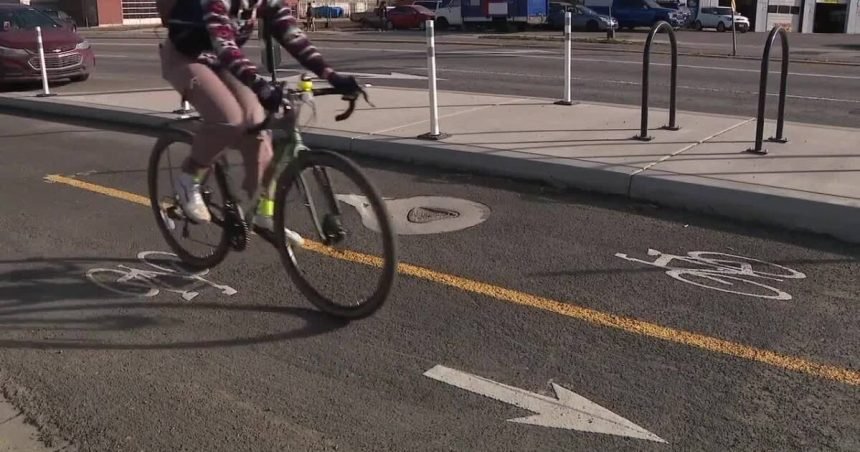
Senate Bill 242, sponsored by Senate Transportation Committee Chair Wayne Harper, R-Taylorsville, does a lot for various transportation issues in Utah. But Sweet Streets said provisions of the bill appear to expand state oversight of city roads and could lead to the removal of new bus and bike lanes within the city.
The group has issued a call to action to its supporters to contact lawmakers to oppose the language in the bill.
“This addendum to the bill doesn’t go after any other city in Utah, it specifically targets Salt Lake City,” said Julian Jurkoic with Sweet Streets. “It’s trying to make us remove infrastructure that we’ve already built, that UDOT has already studied and found there is no noticeable increase in congestion, no negative effects.”
The bill specifically requires efforts to mitigate traffic calming measures and highway reduction strategies for 300 West, 200 South and 400 South.
Speaking to reporters on Wednesday, Senate President J. Stuart Adams, R-Layton, said he’s had difficulty navigating 200 South where Salt Lake City just installed new bus lanes.
“Bus traffic worked great but the car traffic was not working great,” he said.
But Sen. Harper told reporters on Wednesday he was not intending to have bike or bus lanes removed.
“Mitigate can be a lot of factors. We’ve had people come up and say, ‘Hey, the changes that have been done there negatively impacts the access to my business.’ Or we have another group that says, ‘Hey, the signage to come in to the parking lot is not clear anymore,'” he said. “So the request I’ve got is to have Salt Lake City go and take a look at what they’ve done — and they’re amenable to this — look at it and say what negative things they can go through and tweak so safety is enhanced, the biking public can do what they want to do but also make sure businesses can get deliveries.”
Sen. Harper said he has been speaking with Salt Lake City officials who have been receptive to the bill.
“Nothing in here says they have to take it out,” he said. “They just have to make sure it’s not causing an impediment to the pedestrians, the bicyclists or the drivers that would deteriorate safety. The intent is to make sure they go and look at everything.”
In a statement, the Salt Lake City Mayor’s Office said it “actively monitors and engages in the legislative session, focusing on bills and interim proposals that affect city operations, threaten the values of our residents and elected officials, undermine local control, or align with priorities set by the Mayor and City Council. The city strategically collaborates with bill sponsors, community partners, and fellow municipalities as legislation moves through the process.”
Jurkoic said the larger problem exists of Salt Lake City having control over its own roads.
“The concern I think largely is autonomy. We talk about self-governance, local control and the state is trying to take that specifically again from Salt Lake City,” he said.
Last year, a provision in the omnibus transportation bill angered many city residents when it required the city to get approval from the state for many of its projects that disrupted major arterial roads.
The Senate president argued it’s not just about Salt Lake City.
“Not everyone that works in the capital lives in the capital,” he said, noting people come in from other counties.
Senate Minority Whip Karen Kwan, D-Taylorsville, hoped for more negotiation.
“There needs to be the stakeholders at the table and they haven’t yet been there,” she said. “Some of them haven’t yet been there.”