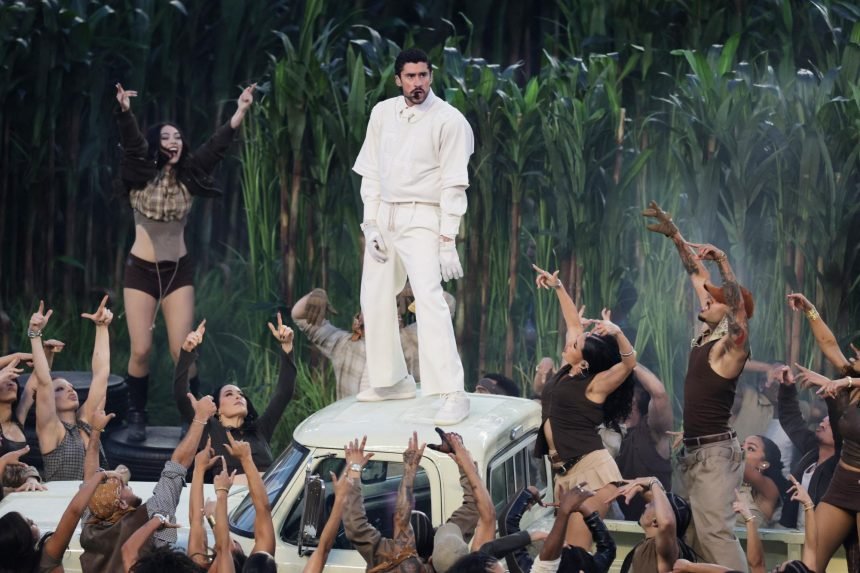
When Bad Bunny headlined the Super Bowl LX halftime show at Levi’s Stadium on Feb. 9, the performance resonated far beyond the stadium lights. As the first solo Latin artist to headline the Super Bowl, his appearance marked a historic milestone. At College of DuPage (COD), students and faculty said the moment felt deeply personal一a celebration of culture, language and identity on one of the largest stages in American entertainment.
Throughout his 12-minute set, Bad Bunny performed almost entirely in Spanish, delivering hits including “Tití Me Preguntó” and “Yo Perreo Sola” while surrounded by imagery honoring Puerto Rican and broader Latin American culture. Sugar cane fields, bodegas, piragua vendors and a vibrant pink casita transformed the football field into a visual tribute to community and heritage.
For Dalisia Bramasco, a second-year student who identifies as Hispanic, the performance was affirming.
“As a Hispanic person, it felt super empowering and welcoming to see someone who understands me and who showed it to the world on such a big stage,” she said. “Spanish feels second nature to me because my parents and grandparents speak the language.”
COD Spanish language instructor Profesora Elizabeth Mares described the performance as both celebratory and symbolic. She said she felt proud and seen watching a Latino artist embrace his culture unapologetically in front of millions. “This was deeply impactful because many Latinos felt seen and valued during this part of Bad Bunny’s performance, me included.”
One of the most discussed moments came at the conclusion of the set, when Bad Bunny held up a football reading: “God Bless America.” Mares interpreted the phrase not as appeasement but as a subtle act of protest.
“The message suggested that America includes all of Latin America – not just the United States,” she said.
Mares also highlighted several moments she viewed as intentional acts of representation: women construction workers featured in choreography, an all-women mariachi ensemble, performers from the LGBTQ+ community and the inclusion of an interpreter for hearing-impaired viewers to ensure accessibility. She said these elements expanded the meaning of the show beyond music.
“It opened people’s perspective and invited them to look into Latin American culture,” Mares said.
The performance also included a live wedding ceremony, symbolizing community celebration and unity. For Bramasco, that scene felt especially relatable.
“If you party with Latinos, you’re going to party all night, no matter who you brought with you,” she said.
She added that the show reflected the importance of togetherness within Latino culture and reminded viewers that they are part of something larger than themselves.
Both Mares and Bramasco said the halftime performance challenged dominant narratives about Latino communities, which are often portrayed negatively in mainstream media. Instead, they saw joy, resistance and unity.
“Is community too cultural? Is love too cultural? I don’t think so,” Mares said.
Mares emphasized the importance of dialogue following moments like this; she encourages student organizations, including Latinos Unidos, to use the performance as a springboard for conversations about identity, representation and inclusion. For Latino students watching, she said, the message was unmistakable: “You matter. You’re valued. I see you, and believe in you.”
As the light dimmed at the Super Bowl, the impact of the performance extended far beyond the field–reaching classrooms and homes where culture, language and pride took center stage.