Building a workforce system that expands opportunity requires more than new tools; it requires alignment across people, programs, and pathways.
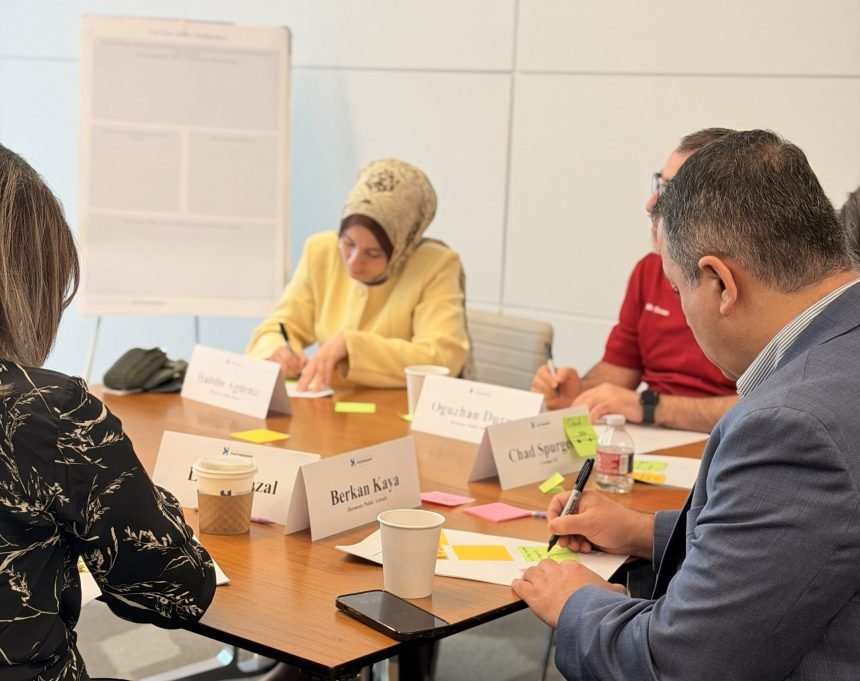
That belief has guided the Greater Houston Partnership work to co-design the Connectivity Platform alongside stakeholders in Houston’s talent ecosystem. Beginning in 2025 and continuing today, the Partnership has worked with educators, employers, workforce organizations, and community partners to better understand where systems fall short, how decisions are made, and what support students and workers need to navigate opportunity.
This process has not been about creating a static solution. Instead, it has focused on building shared understanding and momentum around why stronger connectivity matters, and how a platform designed with Houston can help close workforce gaps over time.
Why Co-Design?
Career navigation, economic mobility, and workforce alignment are deeply local challenges shaped by lived experience, trust, and access.
For that reason, co-design is an essential, continuous approach. Through ongoing engagement, the Partnership is validating challenges, testing ideas, and refining assumptions to ensure the platform fits where it’s meant to serve: Houston. This work has surfaced barriers that data alone can’t fully capture, such as fragmentation, overload, and access gaps that affect both individuals and institutions.
Community Feedback
To date, the co-design process has included eight community workshops, engagement with nearly 150 participants, more than 200 survey responses, and ongoing conversations through working groups and individual interviews. Participants represent leaders from K–12, postsecondary education, workforce organizations, employers, community partners, and Houston residents – and their message has been consistent:
Houston’s challenge isn’t a lack of effort or innovation; it’s a lack of shared infrastructure.
Participants described an ecosystem relying on informal networks. When relationships exist, systems work; without them, opportunities stall, leading to duplication, gaps, and inequitable access.
Stakeholders continue to emphasize the need for a platform that makes pathways, programs, and partnerships visible and easier to navigate, calling for a system that streamlines information, reduces duplication, and helps users connect with opportunity more efficiently.
Technology Must Support, Not Replace
Another strong theme has been cautioning against technology-first solutions.
Educators, counselors, and community organizations stressed that trust, guidance, and follow-through are essential, especially in K–12 and underserved communities. The platform must support, not replace, human interaction and support.
Ongoing co-design allows the Partnership to test this balance in real time and anchor technology decisions in day-to-day operations.
Rethinking Career Navigation
Career guidance emerged as a consistent pressure point.
Participants viewed traditional career tools as static, generic, and disconnected from Houston’s labor market. Many default to four-year college pathways while under-communicating options like certifications, two-year degrees, apprenticeships, and skills-based careers.
In one user test, a recent college graduate completed an AI-powered prototype assessment. The recommendations closely aligned with her real interests and strengths, offering career paths such as Data Scientist and Management Consultant. When asked what her high school career test suggested, she laughed: “Ballerina.”
That contrast resonated across co-design sessions. Participants saw value in guidance that can adapt, ask better questions, and reflect nuance, more like a mentor conversation than a checklist. Importantly, this wasn’t framed as replacing counselors or teachers, but as a way to scale personalized, equitable guidance, so every learner and worker has access to the same quality of insight, regardless of capacity constraints.
Visibility That Leads to Action
Participants also emphasized the importance of helping people see opportunity before committing to it.
Experiences like job shadows, internships, site visits, and professional conversations help confirm interests, build confidence, and avoid costly mistakes. When paired with clear steps, they build social capital, especially for those without support networks.
Prioritizing Trust and Equity
Trust continues to be central to adoption. Participants across groups raised important questions about where data comes from, how recommendations are generated, and whether AI-driven tools can be trusted to guide high-stakes decisions in education and careers. Students and adults voiced skepticism about “black box” recommendations, while educators and administrators raised questions about data governance, privacy, and accountability.
Equally important was the need for deep testing and validation through an equity lens. Stakeholders have been clear that the platform must be proven to work for under-resourced communities and not inadvertently reinforce existing inequities.
Pairing generative AI technology with trusted workforce and job forecast data sources provides balance, blending trusted data sources with the power of personalized communication. Clear documentation of data sources and the reasons for providing recommendations allows transparency and user management. Additionally, we have outlined a robust approach to testing and validation to ensure that information and recommendations are equitable and align with success and opportunity for every individual.
Moving Forward
The co-design work underway has clarified why leaders across Houston see the need for a Connectivity Platform, and what it must do to earn trust. Leaders identified that the platform could help fill workforce gaps by providing streamlined access to opportunities, increasing visibility of pathways, simplifying navigation, and facilitating stronger partnerships across sectors.
This ongoing feedback lets the Partnership balance near-term decisions with long-term vision, focusing on what matters most today while preparing for future growth. The roadmap is shaped by Houston’s lived and practical realities.
Get Involved
The Connectivity Platform is actively in the design and development phase, and co-design remains central to the work ahead. Over the next year, the Partnership will invite stakeholders to:
- Participate in co-design workshops
- Test and provide feedback on early prototypes
- Participate in pilot programs
- Help shape a system that works for students, employers, and communities alike
Learn More About the Connectivity Platform and How to Get Involved