Over his 30-year career, Joe Sirek (Executive MBA ’17) has become familiar with organizational change and challenging situations. He built a strong foundation of business knowledge through experience, then sharpened and enhanced his skills with the Executive MBA program at ASU’s W. P. Carey School of Business.
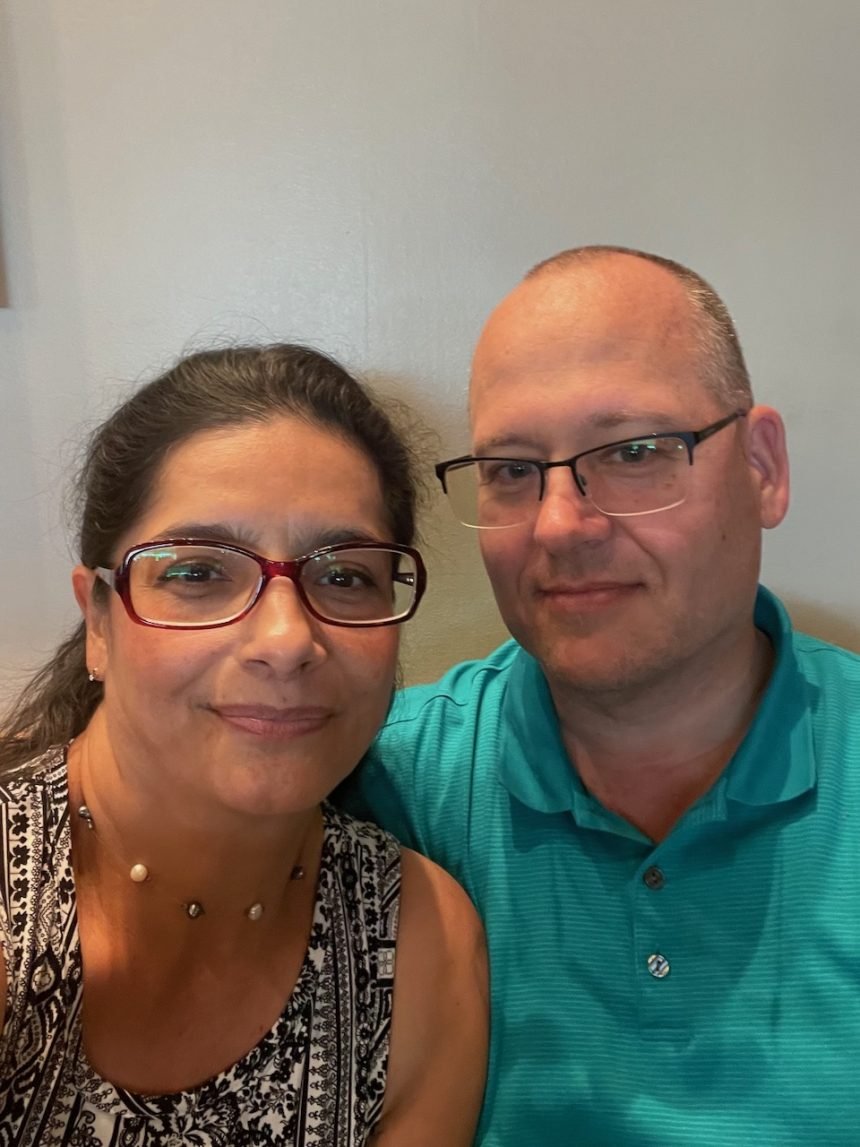
Executive MBA alum Joe Sirek with his wife, Olivia
Over his 30-year career, Joe Sirek (Executive MBA ’17) has become familiar with organizational change and challenging situations. As chief operating officer at Teufel Landscape in Oregon, he is constantly facing unique challenges that each require their own approach.
What he’s learned over the years is that having a strong foundation of business knowledge and strategy, along with the right mindset, is key to successfully navigating any issue an organization may face. Sirek built his foundation through experience, then sharpened and enhanced his skills with the Executive MBA program at ASU’s W. P. Carey School of Business.
“It’s a foundation to facilitate continuous improvement,” he says. “It was really to enhance those areas that undergrad didn’t touch on much and provide additional horsepower after having some visibility into business.”
Nearly a decade later, Sirek applies these lessons every day in his role as a leader. “It helps how you think, how you plan, how you strategize, and how you team build,” he says.
Why W. P. Carey?

Coming to W. P. Carey to pursue his MBA was both practical and purposeful for Sirek. He was based in Phoenix at the time, so it was a convenient choice, and the program’s schedule meant not having to put his career on pause.
He became familiar with the program through a friend who was also an alum, and he felt drawn towards the structure and the way information was presented to students. The emphasis on in-depth discussions with peers and professors during class was a particular highlight.
Those interactions meant that Sirek was able to form deeper connections with both his classmates and professors, many of which have lasted long after graduation. “I still keep in contact with a few faculty members who were especially meaningful,” he says.
Sirek adds, “That’s really appealing in a professor, their ease of doing business with each other and with us as a group. That was what really drew me to them. I thought Steve Hillegeist and other faculty were very approachable.”
Beyond the classroom, the experience of the program’s international practicum also made a lasting impression on Sirek. For him, it was a culmination of everything learned throughout the program and a great chance to gain insights into international business workings.
“I think the opportunity to travel abroad is great because it gets you outside of your comfort zone, and I enjoy that,” says Sirek, who adds that the experience gave him more exposure to seeing situations through different perspectives.
Why an MBA?
More technical EMBA courses in subjects like accounting and finance were very valuable to Sirek’s MBA experience, but the biggest impact of the program is how it reshaped his thinking.
As a longtime manager and leader, being able to approach problem-solving in a more strategic and thoughtful manner has been invaluable, as well as the experience of collaborating with different groups of people with diverse backgrounds.
“When you start working in groups of three, four, or five people, especially on strategy and problem solving, it helps you get better at thinking in a different way,” says Sirek. “One thing the program really facilitates is helping you take off some blinders.”
In the time since he first began the Executive MBA, Sirek has seen himself grow as a leader, which he credits to both the skills developed in the program and his own desire and determination to improve.
“The EMBA is a great toolset, but the individual drive has to be there,” he says. “Having the desire to be brutally honest with oneself is vital in stewardship within a position. It can be painful reflecting on personal weaknesses. However, that is where meaningful improvements are made in the journey of making informed and sustainable decisions.”
What’s next?

The skills and lessons from the Executive MBA have stayed with Sirek as he’s advanced to the level of COO. Much of his work has been focused on change management, guiding organizations through various situations from financial issues to reorganization.
The core skills of strategizing, relationship building, and critical thinking that he developed and sharpened through the EMBA experience have been essential in every situation he’s faced.
“Each business situation is fluid, but there’s a baseline of what is needed, the foundation to identify and solve core problems,” he says. “The Executive MBA curriculum and experience continue to be a reference in business and non-business situations.”
Because of the breadth of knowledge it provides, Sirek highly recommends the Executive MBA to anyone who is able to dedicate the time and has a clear goal in mind.
“There’s going to be a change in schedule for the program,” he says. “It’s important to reflect on what you want to get out of the EMBA and the application of skill sets learned”.
Ready to learn more about the ASU MBA?
Request information directly from our graduate recruiting team. We can’t wait to meet you!