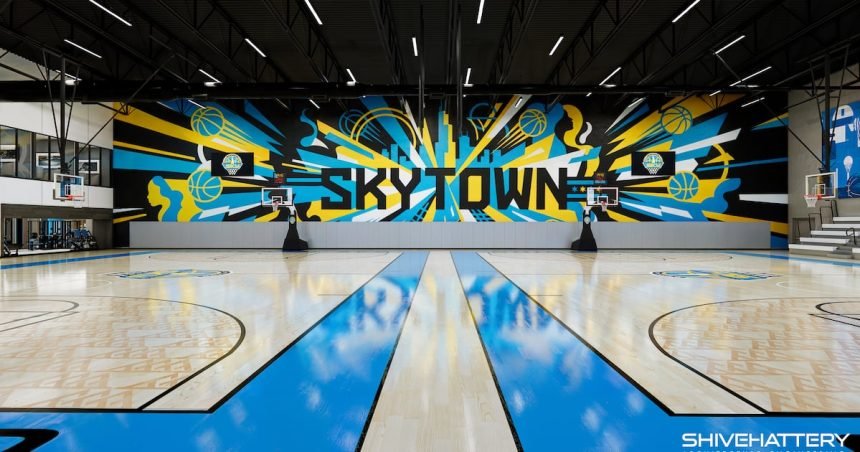
When the Chicago Sky’s practice facility opens in late spring (Chicago’s idea of spring, to be clear), it’ll measure roughly 80,000 square feet, a significant increase over the original plan’s 52,000, making it the largest in the WNBA for at least a year until the Indiana Fever’s opens in 2027.
The project’s ballooned scope extended the timeline from the original target, December, into this year but will be well worth it to the Sky’s ownership.
“This now, especially for the WNBA, is table stakes,” said Nadia Rawlinson, co-owner and operating chairman of the Sky. “What once was sufficient has now become ho-hum, so let’s figure out how we can stay ahead of the curve for the benefit of players. That was the predicate for expanding these conversations; what else can we add, how do we make this even better than what we initially imagined?”
The project cost has grown to $60 million (the original price was closer to $40 million). Much of that is being paid by the village of Bedford Park as part of a deal that saw the Sky sign a 30-year ground lease to exclusively use the facility. The village plans to build more community athletic facilities around the Sky’s basketball training hub.
That planning was underway when Bedford Park approached the Sky with the training facility prospect, which led to the team’s later desire to further fine tune the design. Some of the changes were simple, like putting the practice courts side-by-side instead of end-to-end.
“We joined a project already in process, and as we had more time to think about what we really needed, we realized we needed to substantially rethink and redesign it,” said Michael Alter, the Sky’s majority owner.
The facility includes private secured parking, two full-sized courts, a weight room, performance and recovery rooms (including hot and cold tubs), a sauna and an infrared room. It also includes a doctor’s office; wellness, massage, and meditation rooms; and a mother’s room and family room. There is a players’ lounge, a kitchen with a full-time chef, a content creation studio and glam stations amid a spa-like setting in the team’s locker room.
“As a league, we want to be on the forefront of supporting everything that is needed for women to be excellent at their craft,” Rawlinson said.
Alpa (hired by the village) designed the shell of the practice facility, while Shive Hattery (hired by the team) designed everything within.
The Bedford Park location, near Midway Airport and about 15 minutes from Sky’s home court at Wintrust Arena, works well for the team. And the village provides easy access to the South and West Sides of Chicago, where the team focuses its Chicago Sky Foundation work.
Bedford Park contributing to the project financially, a rarity for a pro women’s sports team, and presenting the Sky with an opportunity already in motion helped the team shave 10 to 12 months off the project timeline.
“They’ve been a fantastic partner, for sure,” he said. “They’ve rolled out the red carpet, so to speak, to make it happen.”
In addition to Chicago, the Fire and Thorns’ shared training facility also opens this year in Portland, joining Las Vegas, Seattle, Phoenix, and Golden State with women-focused training sites. Additional ones are under construction in Brooklyn, Indianapolis, and L.A., though Dallas’ city-funded effort for the Wings appears stalled, at least temporarily.