From Left to right: Stephanie Cunningham, Anahi Parral-Acevedo and Jenaya Modeste
For Afro-Latin students, it’s never about identifying with one side more than the other; it’s about embracing the fullness of who they are in spaces that don’t always understand both at once.
As Black History Month unfolds, students like fourth-year Jenaya Modeste are using the month not only to celebrate Black History but also to highlight an often-overlooked community and the stories of Afro-Latinos.
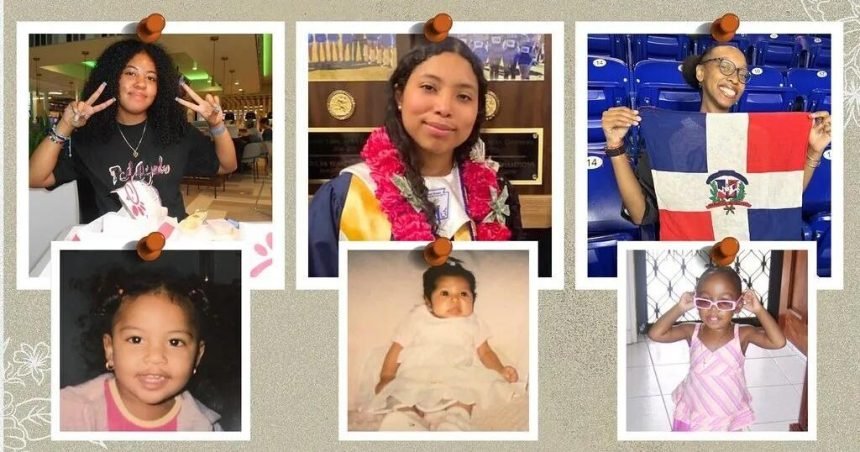
Modeste shares that being Afro-Latina is like navigating two “vibrant worlds” while trying to honor both her African heritage and her Dominican roots without feeling pressured to choose between them.
But it’s not just students like Modeste who have felt that Afro-Latin culture gets lost in the cracks during heritage months such as Black History or Hispanic Heritage Month.
Fourth-year students Stephenie Cunningham and Anahi Parral-Acevedo share that they, too, have navigated the complexities of growing up as Afro-Latinas, especially in communities where they felt their full identities weren’t being embraced.
Living at an intersection
Modeste recognizes that being Afro-Latina places her in both the African and Latin American worlds at the same time.
“Embracing my roots to the fullest allows me to honor and celebrate the fullness of both heritages rather than choosing one over the other,” Modeste said.
Afro-Latinos/as make up about 6 million people within the U.S. population. This rising statistic and term acts as an umbrella for those who have descendants in various countries such as Cuba, the Dominican Republic, Nicaragua, Brazil, Panama and Puerto Rico.
While these are just some of the countries with a rich Afro-Latin culture, several others in the Caribbean and Central America are home to its people.
Modeste thinks it has sometimes been a challenge to affirm her place in both worlds. While she is a Latina, she feels disconnected at times, as she knows her Black identity is undeniable.
“I’ve always been aware of my Black identity,” Modeste said, recalling how her hair texture made her different from a young age.
She noticed her curls were “much curlier” than the rest of her family’s and remembers how differently she was treated when she wore her hair naturally versus straightened.
Comments from stylists labeling her hair as “thick” or “hard to do” served as early lessons in how society views Blackness, Modeste shared.
While growing up, Modeste felt her Black identity was always visible and strong, but as she has gotten older, reconnecting with her Dominican roots has been more of a challenge.
Her mother chose not to teach her how speak Spanish out of concerns for academic struggles. Despite this, Modeste has worked on her own to learn the language and mend the gap that was made.
“When I tell people I am Dominican but don’t speak Spanish fluently, they sometimes claim that makes me ‘less Dominican.’ I don’t let that discourage me, though; I view learning the language as a way to ‘level up’ my connection to my distant relatives,” Modeste said.
‘I feel 100% both’
For Cunningham, she has always welcomed both of her backgrounds
Growing up, she was immersed in two different cultures through music, dance and languages, which never made her shy away from either background.
As a kid, Cunningham said she loved it. The late nights with family, watching them dance to reggaeton with the sound of conversations in the background, made for unforgettable memories.
But as she grew older, she became more aware of how others saw her. Some people assumed she was adopted, and others doubted she was Mexican because of her darker skin tone.
“There was always this sense that I had to do a little bit extra to show my identity,” Cunningham said. “People would ask me, ‘Do you feel more Black or more Mexican?'”
The question felt limiting to Cunningham.
“I feel 100% of both,” Cunningham said. “I don’t think other people get asked that the same way.”
Cunningham shared that she feels people from other backgrounds don’t get questioned about which part of their ethnic makeup they feel “most of.”
She admitted that there were moments when she struggled internally, feeling “not really enough” of the other.
At times, she felt that people only saw her as Black and ignored her Mexican heritage. Other times, acknowledging one side seemed to erase the other.
Cunningham has made it her mission to preserve both sides of her family’s history as much as possible.
During Black History Month, she is reminded of stories that she heard about segregation and the differences in opportunities that some of her family members had in comparison to her.
“I’m always carrying that history with me, and, I’m just very prideful of how far we’ve come,” Cunningham said. “Being in college when not a lot of people had this opportunity [is a big deal] I feel like being in higher education is a form of resistance and a form of protest because I’m getting as much knowledge as I can from so many different sources and making sure that nobody takes advantage of that and nobody can deny me of my history.”
Finding identity
Parral-Acevedo said she actually didn’t fully understand her Afro-Latina identity until high school. Her father, who is from a small town near Acapulco, Mexico, a community of roughly 500 people that sits about three hours from a major city, took her on a trip to visit.
During the two-week visit, she discovered a local Afro-Latino museum that detailed the history of Africans brought to Mexico during the transatlantic slave trade between the 1500s and 1700s.
Despite that history, Parral-Acevedo said she frequently has to explain and defend her identity.
“When I tell people I’m Afro-Latina, they’ll say, ‘That’s not a thing,'” she said. “So sometimes I just say I’m Latina because nobody really knows that that’s [being Afro-Latina] a thing.”
The disbelief from others can make it hard to feel seen. On campus, Parral-Acevedo has said that she’s met a few students who share Hispanic backgrounds but struggle to find Afro-Latinos/as to relate to.
That sense of invisibility extends beyond campus, as the three said that the Afro-Latin identity is often overlooked in broader conversations about race and ethnicity.
“I feel it is often overlooked due to a lack of representation in the media,” Modeste said. “Growing up, I noticed that many Black-appearing Afro-Latinas wouldn’t disclose their heritage until years into their careers. Without that ‘base set’ of visible role models, it’s hard for young people to make those connections.”
Modeste said that even when the Afro-Latin heritage is acknowledged, the discussion can miss the point.
“When the heritage is discussed, the conversation often gets derailed by debates over whether the person is ‘Latino or not,’ rather than focusing on their place within Black history,” Modeste said. “We are still unlearning the old cultural norm that you have to pick just one racial affiliation.”
As Black History Month continues, Modeste, Cunningham and Parral-Acevedo hope that their stories remind others that identity does not have to exist in fractions.