The Tennessee judge who paved the way for Vanderbilt quarterback Diego Pavia to play college football this season denied a request Thursday for a preliminary injunction to a group of athletes who are challenging the NCAA’s redshirt rules with a lawsuit seeking a fifth year of eligibility.
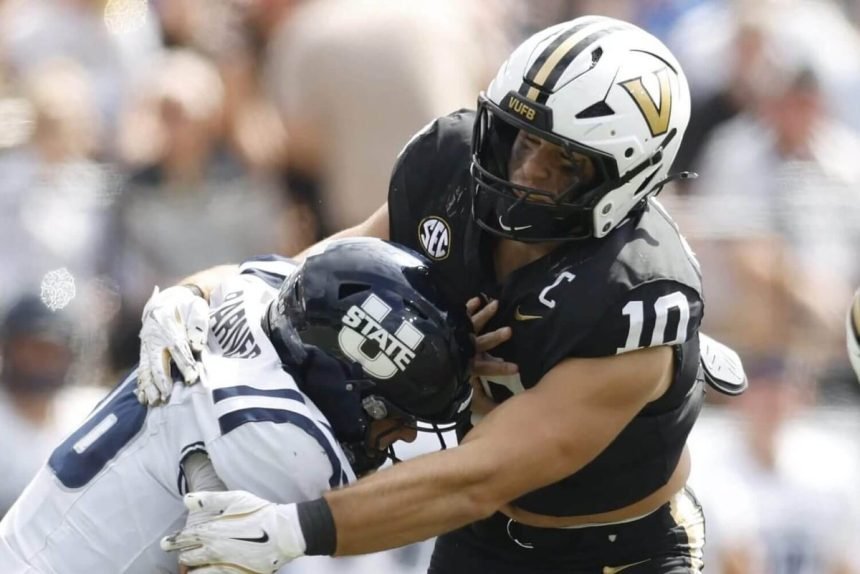
U.S. District Judge William L. Campbell’s ruling means 19 plaintiffs, including Vanderbilt linebacker Langston Patterson, remain without eligibility to compete at NCAA schools in 2026-27. The four plaintiffs who joined Patterson in seeking a preliminary injunction were kicker Nathanial Vakos (Wisconsin), long snapper Nick Levy (Wisconsin), tight end Lance Mason (Wisconsin) and long snapper Kevin Gallic (Nebraska).
The case will move forward, but it seems unlikely that it can be resolved in enough time for the athletes to compete next season.
“The NCAA is thankful for the judge’s decision today, which demonstrates the court’s consideration of future generations of student-athletes,” the NCAA said in a statement. “We will continue to defend the NCAA’s eligibility rules against repeated attempts to rob high school students of the opportunity to compete in college and experience the life-changing opportunities only college sports can create. The NCAA and its member schools are making changes to deliver more benefits to student-athletes, but the patchwork of state laws and inconsistent, conflicting court decisions make partnering with Congress essential to provide stability for all college athletes.”
Pavia’s lawsuit, which challenged rules that count seasons of junior college competition against an athlete’s NCAA eligibility clock, was filed in November 2024. Campbell granted Pavia’s request for an injunction about a month later, which allowed him to play a second season at Vanderbilt after spending two seasons at a junior college and two at New Mexico State.
Ryan Downton, Pavia’s attorney, filed the lawsuit in September, challenging the NCAA’s redshirt rules and seeking five years of participation for all athletes. With college athletes now permitted to be paid for use of their name, image and likeness, including a new revenue-sharing system that allows direct payments from schools to athletes, the redshirt rules amount to a violation of antitrust law, according to the lawsuit.
“We are disappointed that our Plaintiffs are unlikely to play next season, but we understand why the Court did not want to require such a major rule change on a limited judicial record,” Downton said in a statement. “We remain confident the NCAA has no legitimate reason to make athletes sit out most (or all) of one of their five seasons of eligibility.”
The NCAA currently allows athletes to compete for four seasons over five years. Athletes can practice and train with their teams and compete in a limited number of games — four is the cut-off for football — in one year while still maintaining four years of eligibility.
The preliminary injunction would not have extended beyond the named plaintiffs in the case.
The NCAA informed its member schools last month that it did not plan to issue a blanket waiver that would potentially grant current athletes a fifth year of eligibility for next school year, regardless of whether the athlete has already taken a redshirt year. Such a waiver would have opened the door to thousands of athletes potentially returning next school year who are otherwise ineligible.
The idea of changing NCAA rules and increasing athlete eligibility to five years has been discussed in the past. However, with college sports between wide-ranging changes to how athletes can be compensated, formal discussions about revamping eligibility rules have been shelved. This week at the annual American Football Coaches Association conference, coaches recommended allowing players to appear in up to nine games (regular season or postseason) instead of four, and to utilize their redshirt. The recommendation is not an official NCAA proposal but will be a topic for the NCAA committees.
NCAA eligibility rules have been in the crosshairs for the past year, starting with Pavia’s lawsuit.
Campbell, the chief judge of Tennessee’s middle district in Nashville — where Vanderbilt is located — granted Pavia a preliminary injunction in December 2024. The narrow ruling allowed Pavia to play this season, and the 23-year-old went on to lead Vanderbilt to a 10-3 record and finished second in the Heisman Trophy voting to Indiana’s Fernando Mendoza.
After Campbell’s ruling in the Pavia case, the NCAA approved a blanket waiver that gave an additional year of eligibility in 2025-26 to former junior college athletes with similar circumstances to Pavia.
A preliminary injunction provides immediate relief in cases where a plaintiff would be harmed by waiting for a lawsuit to play out in court. A trial date has not yet been set in the Pavia case. He has said he is done with college football and plans to pursue an NFL career after two years in juco, two more at New Mexico State and two at Vanderbilt.
Since Pavia’s lawsuit, about 30 more have followed, challenging various aspects of NCAA eligibility. And they’ve produced a variety of rulings, many in favor of the NCAA.
Twenty-six preliminary injunctions have been denied, 10 injunctions have been granted (six in state court) and five eligibility lawsuits are still pending in the lower courts.
None has sought to strike down all eligibility rules, but every case chips away at the NCAA’s authority and creates uncertainty about who can compete.
Several recent rulings by the NCAA, allowing basketball players with professional experience outside the NBA to join college rosters, have been sharply criticized by coaches — though NCAA rules have long allowed some leeway for former pros to compete in college.
Most notably, Baylor men’s basketball added James Nnaji, who was selected 31st in the 2023 NBA Draft but hasn’t played in a regular-season game.
Meanwhile, the NCAA denied Ole Miss’ waiver request to extend the eligibility of quarterback Trinidad Chambliss to cover a sixth year. Chambliss spent four years at Division II Ferris State before transferring to the SEC school in 2025, when he became an unlikely star of a College Football Playoff team.
Chambliss did not play in either of his first two seasons at Ferris State before playing 25 games over the final two. Ole Miss said the 2022 season should be treated as a medical redshirt. The school has appealed, and Chambliss’ lawyers are expected to file a lawsuit to challenge the rules in Mississippi court.