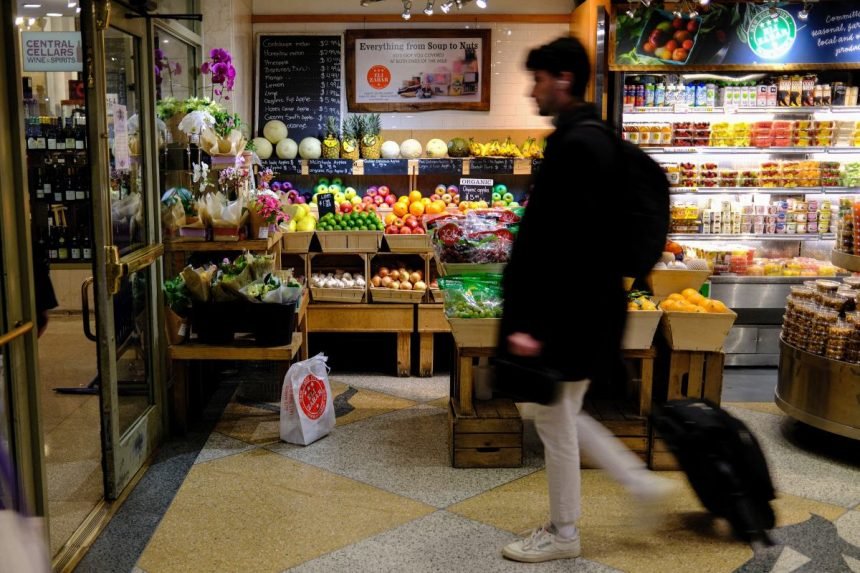
Polymarket, a prediction market website, announced it signed a lease and would be opening the first free grocery store in New York City starting on February 12.
New York City Mayor Zohran Mamdani has a goal of opening at least one city-run grocery store in each borough in an effort to make grocery prices more affordable. His plan would have the city cover rent and operating costs, and the store would offer groceries at wholesale prices.
Polymarket’s grocery store, aptly named “The Polymarket,” takes affordability a step further, offering free groceries. There are limited details available about the store, except that the grand opening will be on February 12. Polymarket added that the store is open to “all New Yorkers” and is “built for the people who power New York.”
“We love you New York City,” Polymarket’s announcement read.
Users on social media questioned the validity of the post, but Polymarket confirmed it was real in a subsequent post on X, formerly Twitter.
“It’s real. We broke ground with construction last month, and the grand opening is next week,” Polymarket wrote.
William LeGate, Polymarket’s vice president of global growth, posted on x that he couldn’t “be more proud of being part of this initiative.” He said it started as a “crazy idea” in November and has now become a reality.
Zohran Mamdani’s City-Run Grocery Store Plan
Mamdani’s proposal for city‑run grocery stores is one of the most ambitious and controversial pillars of his affordability agenda. He frames the initiative as a public option for groceries, designed to counter rising food prices and persistent food deserts across New York City. Under the plan, the city would open at least one municipal grocery store in every borough, prioritizing neighborhoods with limited access to full‑service supermarkets.
His campaign estimates the program’s cost at $60 million, funded largely by redirecting existing subsidies New York already provides to private supermarket operators. Additional revenue, Mamdani argues, would come from tax increases on corporations and high‑income earners: an 11.5 percent corporate tax rate and a 2 percent flat tax on individuals earning $1 million or more. The stores would rely on centralized warehousing and distribution and collaborate with local communities to determine product selection, aiming to “meet need, not squeeze profit.”
The concept is inspired in part by public grocery systems, such as the Department of Defense commissaries, which can offer prices 15–25 percent below those in commercial markets. Experts note that removing overhead like rent and property taxes could shave 5–10 percent off retail food costs in New York City. But they also warn that city‑run grocery stores often require continuous subsidies, pointing to mixed results in cities like Kansas City, where a publicly backed store eventually closed, and Baltimore, where a public‑supported grocery has shown early success.
Despite a March 2025 survey showing two‑thirds of likely NYC voters support municipal grocery stores, Mamdani faces intense pushback from supermarket operators, bodega associations and business‑aligned critics who argue the system is unrealistic or ideologically driven. Billionaire grocer John Catsimatidis, for example, has publicly threatened to shutter his Gristedes chain if the plan moves forward, calling city‑run markets a government intrusion that would undermine private businesses. Supporters counter that the private market has already abandoned many neighborhoods and that a stable, publicly run network could restore basic food access where profit‑driven operators have retreated.
Kalshi Gives Away Free Groceries
Polymarket’s announcement comes the same day Kalshi, a competing prediction market website, gave away free groceries worth up to $50 at West Side Market on Third Avenue.
Starting at noon, anyone who lined up at the store could walk out with up to $50 worth of free groceries with no sign‑ups or strings attached. The activation—promoted on social media with the tagline “F it. Free groceries for everyone”—quickly drew crowds, forming long lines outside the 24‑hour neighborhood staple.
Kalshi, which allows users to trade on the outcomes of real‑world events ranging from economic indicators to government policy decisions, billed the stunt as a way to give New Yorkers a break as monthly food bills continue to squeeze households across the city.
While the offer was straightforward, the details were sparse. Organizers did not say how long the giveaway would run, how many people could participate, or whether certain items would be excluded. Shoppers steadily filtered through, filling baskets with produce, pantry staples and everyday essentials before checking out at Kalshi’s expense.
The promotional event comes amid persistent concerns about grocery inflation and arrives as prediction‑market platforms increasingly look for mainstream visibility. For Kalshi, the move doubled as both a public‑facing goodwill effort and a high‑impact branding moment—putting the platform directly in front of consumers who may have never interacted with or even heard of a prediction market before.
The East Village giveaway follows similar consumer‑targeted stunts by upstart prediction‑market companies working to broaden awareness beyond finance and politics. And with grocery prices remaining elevated, the timing ensured no shortage of interest.
How Will Polymarket’s Free Grocery Store Work?
It’s unclear exactly how Polymarket’s store will work. The company wrote in a post on X that the store was open to “all New Yorkers” and there was no purchase required.
“A real, physical investment in our community,” Polymarket posted on X.
Founder and the chief investment officer at MN Fund, Michael van de Poppe, posted on X that it’s a “phenomenal initiative” that gives back to people.
Former Representative George Santos pushed back on criticism that the grocery store was socialist. He said it’s a “corporation giving back” and praised the move by Polymarket.
“I think this is awesome,” Santos said.
In a polarized era, the center is dismissed as bland. At Newsweek, ours is different: The Courageous Center—it’s not “both sides,” it’s sharp, challenging and alive with ideas. We follow facts, not factions. If that sounds like the kind of journalism you want to see thrive, we need you.
When you become a Newsweek Member, you support a mission to keep the center strong and vibrant. Members enjoy: Ad-free browsing, exclusive content and editor conversations. Help keep the center courageous. Join today.