Denver’s Italian American community is rallying for a historic district in North Denver to preserve Italian heritage and protect nearly 50 historic sites.
DENVER — A community effort is underway to establish a “Little Italy Historic District” in North Denver, seeking to formally recognize and preserve the legacy of Italian immigrants who helped shape Colorado’s history dating back to the 1850s.
The proposed thematic historic district would span a corridor along West 38th Avenue to West 32nd Avenue, between Zuni Street and Lipan Street. This area has served as a cultural anchor for Denver’s Italian American community for generations. Organizers said they have identified nearly 50 properties that may be eligible for inclusion in the district.
Crystal Peccia, a member of the “Little Italy of Denver” committee driving the effort, said the designation would provide lasting protections for the neighborhood’s historic buildings.
“It will help preserve the buildings that are designated within that district,” Peccia said. “And then hopefully going forward if that thematic district can help with how things get built, how they look in the area — that’s just frosting on the cake.”
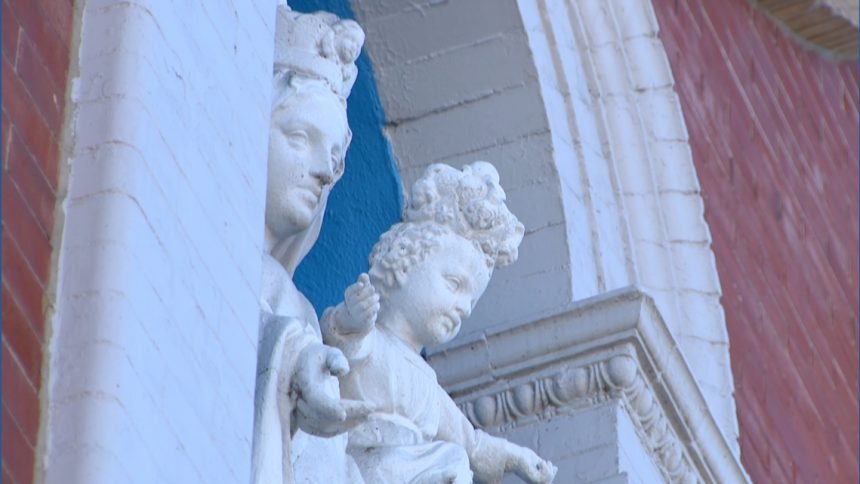
For Peccia, the effort is deeply personal. She described attending Mass at Our Lady of Mt. Carmel Church — built in 1904 and one of the neighborhood’s anchors — since the age of seven and visiting her grandmother nearby for Sunday dinners.
“It’s part of who I am — mia famiglia — my family. That’s what Denver and the Italian heritage mean to me,” she said.
Peccia said the preservation push is urgent, warning that cultural identity is gradually disappearing. “That’s kind of melting away piece by piece, so it’s really important to get this thematic district pushed through and get it established so we have that historical piece,” she said.
Among the locations under consideration for designation are Gaetano’s Restaurant and the Potenza Lodge, which committee member Dominic Ursetta said his family helped build. Founded in 1899, the lodge required members to have roots in Potenza or the Basilicata region of Italy.
“This is on our list to get designated as a national historic landmark, especially since it’s been around since 1899 — almost like it needs to happen,” Ursetta said.
Ursetta, whose great-grandfather helped construct the Potenza Lodge building, said the district would give the community long-overdue recognition.
“I’d say it’s a step forward — a step forward for recognition and the ability to be like, ‘Hey wow, this is in our city, we have this,'” he said.
According to the committee’s website, Italian immigrants began arriving in Colorado as early as the 1850s to work in mines, build railroads, farm the land and establish businesses. By the early 1920s, one in five Coloradans claimed Italian heritage. In North Denver, the church, mutual aid societies, businesses and family homes formed the foundation of daily life in what became known as “Little Italy.”
Unlike a traditional historic district, a thematic historic district allows for larger boundaries and does not require contiguity among selected properties, enabling more sites connected by a common cultural or architectural significance to be included.
The committee is currently asking for community assistance in identifying additional historic properties, contributing research and writing letters of support. Organizers said personal stories carry particular weight in the designation process.
Denver’s Landmark Preservation program, established by the City Council in 1967, oversees the designation of structures and areas of historical, architectural, cultural and geographical significance. The office can be reached at landmark@denvergov.org or 720-865-2709.