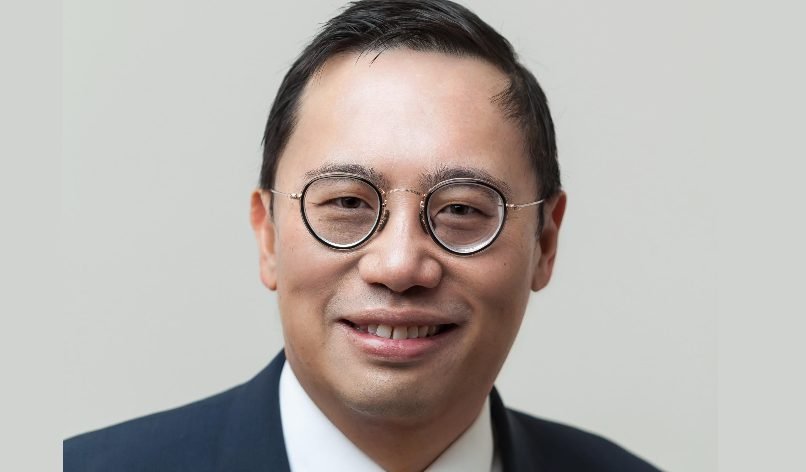
Timothy Lam, Executive Director at The International School of Hospitality
Timothy M. Lam knows service starts with relationships, having spent his career building business-sustaining bonds on the Las Vegas Strip, at Caesars Palace, and in Washington, D.C., working for a Swiss plastics company. Now, as executive director and founding member of The International School of Hospitality, a Las Vegas-based hospitality training school, he teaches other people these skills.
Lam joined several University of Nevada, Las Vegas professors and Strip hospitality industry experts to start the school, which has Accrediting Council for Continuing Education & Training accreditation. He said he saw a need for practical, short-term training programs to help established workers advance and aspiring workers enter and succeed in the field.
Lam is a certified professional in guest experience and wedding industry operations and has co-authored numerous articles on education and hospitality.
Lam, who has a master’s degree in hotel administration from the University of Nevada, Las Vegas, a Master of International Business Management degree from the University of South Carolina and a Bachelor of Science in business management from Wake Forest University, has made inroads for hospitality employers, giving them a way to shape the curriculum for their future workforce. He’s also made inroads for students; the school’s diploma graduates have an 85% job placement rate.
Lam, who is fluent in Chinese, works locally and thinks globally. The school’s international student outreach brought students from Iceland, Indonesia, Mongolia, Spain, Nigeria, the Bahamas and Panama.
As he helped other people achieve, Lam achieved himself. He won the National Association for Catering and Events’ 2013 Legacy Spotlight Member, the 2008 and 2011 Spirit of NACE Award, Las Vegas chapter; and the 2011 and 2012 Volunteer Excellence Award. He also made the group’s President’s List in 2011.
You’ve touted the executive diploma program. What is an executive diploma and what weight does it carry in the professional marketplace?
The Executive Diploma in Hospitality Operations our school offers is a specialized program designed for experienced professionals. It provides business education and practical skills in areas such as leadership, revenue management, human resources, and marketing. This diploma is particularly valuable because it formalizes on-the-job expertise and equips professionals with strategic knowledge often found in master of business administration programs.
The online description says this program benefits leaders in professions beyond hospitality. What hospitality principles will particularly apply to other professions?
The principles the Executive Diploma in Hospitality Operations program teaches, such as leadership, human resource management, marketing, and data-driven decision-making, are highly transferable, especially to adjacent industries such as event planning, retail management, health care administration, and any field requiring customer service excellence, operational efficiency and strategic decision-making. Revenue management and analytics, for example, can benefit financial planning roles. Leadership and human resources skills are essential in any team-oriented environment.

Do the credits people earn from this course transfer to any of Nevada’s colleges? Do you see it as a viable route to an advanced degree in finance or business administration?
Although the program itself is not explicitly positioned as a pathway to an MBA or finance degree, the skills and knowledge gained could serve as a strong foundation for further studies. For specific credit transferability, each college’s admissions offices makes its own determination. This program is accredited by the Accrediting Council for Continuing Education & Training, a U.S. Education Department-recognized authority that ensures the quality and integrity of educational programs through rigorous evaluation and accreditation standards.
What’s the hardest thing people in this program face?
One of the most challenging aspects of the Executive Diploma in Hospitality Operations program is mastering data-driven decision-making. This involves interpreting complex data, analyzing Smith Travel Accommodations Reports, and applying revenue optimization strategies. (These benchmarking reports, also called STR or STAR reports, evaluate hotels’ performance against their peers by tracking occupancy and average room rates.) These skills require a strategic mindset and the ability to synthesize information for practical application.
Does someone in hospitality need all the skills the program promises for every job?
Not every hospitality role requires all the skills taught in this executive diploma program. However, the program’s comprehensiveness ensures that graduates are experientially well-rounded and prepared for a variety of roles. Leadership and human resources skills, for example, are essential for managerial roles; revenue management and analytics are critical for financial and operational roles.
How have careers or lives changed for students who completed this program?
The program’s business plan project is a cornerstone of its value, offering students a practical, important way to apply their learning to real-world scenarios. These projects are guided by seasoned industry professionals and crafted to be both innovative and realistic. Graduates have leveraged the program to secure promotions, transition into leadership roles, or explore new areas within the field. Some work for large hospitality companies; others work for their family operations or smaller businesses.
Let’s discuss the Certified Professional in Guest Experience program next. How does it boost someone’s professional flexibility?
The Certified Professional in Guest Experience program focuses on communication, empathy and trust-building, which helps students navigate complex workplace dynamics and more easily manage up and handle office politics. By fostering a guest-first mindset, participants learn to anticipate needs, resolve conflicts and build stronger relationships with colleagues and supervisors.
This program’s online description sounds a little like sales; both requires persuasion. Is this an apt parallel?
Yes, Both the Certified Professional in Guest Experience program and sales rely on understanding people’s needs and emotions to create meaningful connections. The program emphasizes principles such as personalization, authentic engagement and creating memorable experiences, which align closely with the persuasive techniques used in sales to build trust and loyalty.
Branding is a marketing skill (and marketing is adjacent to sales). How would this course help someone who wants to pursue marketing?
The Certified Professional in Guest Experience program helps aspiring marketers by teaching them how to create consistent and memorable guest experiences that align with a brand’s identity. Principles such as personalization and authentic engagement teach students to foster positive brand associations and loyalty. These skills are directly transferable to marketing, where understanding customer needs and crafting compelling narratives are essential for building and maintaining a strong brand presence.