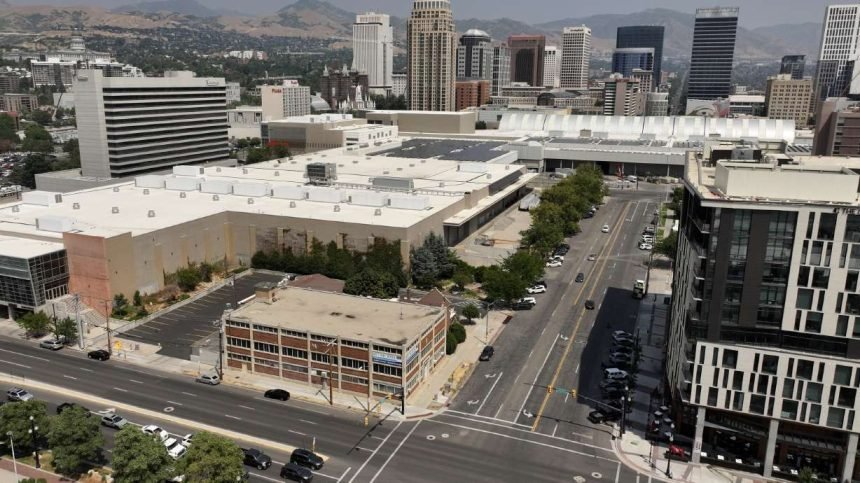
SALT LAKE CITY — The second phase in design planning for the Salt Palace Convention Center is now underway, with a pair of construction teams entering the project.
Jacobsen Construction and AECOM Hunt will carry out the massive overhaul that is still on track to be completed by 2031, Salt Lake County officials announced Friday. Jacobsen, based in Salt Lake City, has overseen some recent projects in the city, including having a hand in the major renovation of the Salt Lake Temple, while the Indiana-based AECOM Hunt has worked on several convention centers and public assembly venues across the country.
Both companies were selected through a bidding process, after the architectural firms MHTN Architects and Populous were hired last year to map out the project design. Some other firms are assisting with other elements of the project, including the renovation of Abravanel Hall’s back-of-house areas and the rebuild of the Utah Museum of Contemporary Art.
“The creation of the Sports, Entertainment, Culture and Convention District is a generational opportunity to reinvent a vital section of our state’s capital city. With strong support from our community partners and world-class project team, we are confident this investment will result in a fundamentally reimagined section of downtown serving local residents, area business as well as visitors to downtown Salt Lake,” said Salt Lake County Mayor Jenny Wilson, in a statement.
Funding for the project has been secured, and initial renderings are expected to be released in the coming months, Salt Lake City Mayor Erin Mendenhall told KSL. She said she was updated on the project during a meeting with Wilson on Thursday.
“We’re so excited that it’s happening. It’s locked in and the (project) teams are going to be there,” Mendenhall said.
County leaders previously estimated that the project would begin in 2027, which is when their sale of a piece of the Salt Palace is expected to be finalized. The county agreed to sell 6.5 acres of land toward the western end of the massive building to Smith Entertainment Group for $55.4 million last year, making way for a new pedestrian plaza and other elements east of the Delta Center in downtown Salt Lake City.
The Utah Department of Transportation is overseeing efforts that include moving a segment of 300 West underneath the structure.
Salt Lake County’s plans for the Salt Palace haven’t changed. It wants to build a second convention center ballroom, which it estimates would be able to provide the same square footage as the existing convention center.
The venue already generates about $300 million in revenue every year, but the county estimates that adding an extra ballroom will generate $105 million in additional revenue annually. That’s because it allows multiple conventions or organizations to host events in the city at the same time — something that Salt Lake County struggled to do with the building’s current layout.
“When conventions thrive, our community thrives,” said Kaitlin Eskelson, president and CEO of Visit Salt Lake, the county’s tourism arm, noting that the economic impact of tourism in the county has grown to $6.1 billion.
Friday’s update comes almost exactly a year after the Housing and Transit Reinvestment Zone Committee approved a $1.8 billion “reinvestment zone” for the project. Salt Lake City approved a public infrastructure district at the Delta Center around the same time, all of which directs funding sources for arena renovations and projects east of it.
Smith Entertainment Group can collect up to $900 million from a 30-year 0.5% sales tax the city approved in 2024, which accounts for some of those sources. The Utah Legislature also passed a few bills this year that cleared up language to get the project moving.
“This modernization of our convention center improves our ability to better serve residents and visitors by offering a more seamless and connected experience in the area,” Eskelson added. “It will also generate more hotel stays, more restaurant traffic and more tax revenue to reinvest in the county.”
The Key Takeaways for this article were generated with the assistance of large language models and reviewed by our editorial team. The article, itself, is solely human-written.