TEXARKANA, Ark. — Members of the local Hispanic community will continue the Christmas season with the celebration of a traditional holiday this week.
Dia de Reyes, Three Kings Day or Epiphany as it is called in the United States is the feast day celebrating the arrival of the Magi to the stable where Jesus was born in Bethlehem.
Families in Hispanic culture use Three Kings day, Jan. 6, as a way to give their children gifts, rather than Dec. 25. This tradition follows the ending of Posada season, Dec. 24, which celebrates the birth of Jesus.
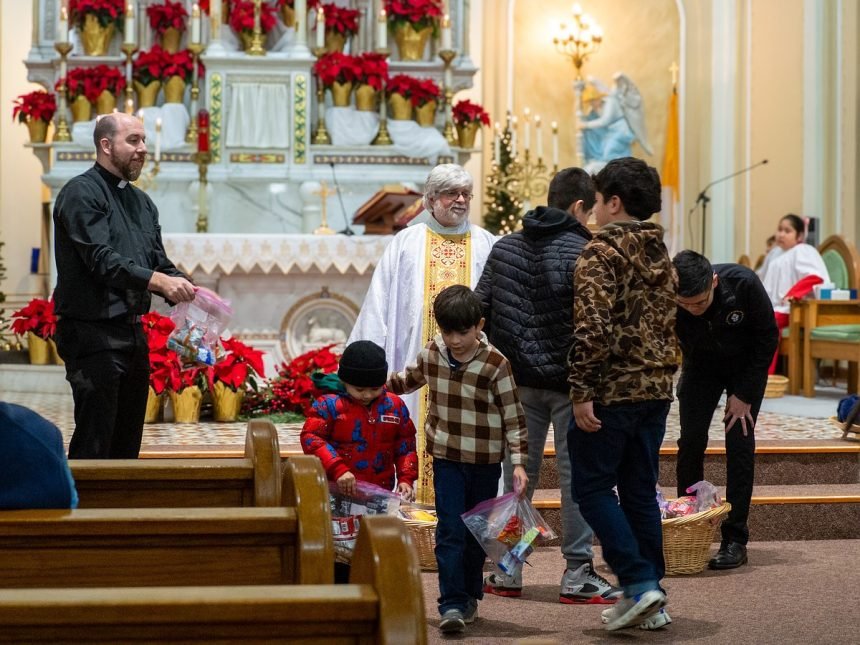
“In Scripture, it talks about the three kings coming from a different country. And it shows that it was not just a small event, but Jesus’ birthday was for the whole world,” Father William Burmester, pastor at Saint Edwards Catholic Church explained. “That’s why we celebrate it in a big way.”
The three wise men, also known as the Magi or the three kings, Melchior, Caspar and Balthazar, believed to arrive from Europe, Asia and Africa, followed the Star of Bethlehem to the stable where Jesus was born.
“In the Hispanic culture, they talk a lot about the three wise men bringing the gifts to people, not so much Santa Claus,” Father William explained. “Since they brought gold, frankincense and myrrh to Jesus, the families tend to share that tradition with their own kids, and so as a little bit more religious tone to the gift giving.”
Each of the three wise men arrived with a gift for the baby; Melchoir arrived with gold, Caspar arrived with frankincense and Balthazar arrived with myrrh. On the morning of Three Kings Day, children wake up to find gifts near, or on, the nativity that is set up, as well as a traditional Rosca de Reyes.
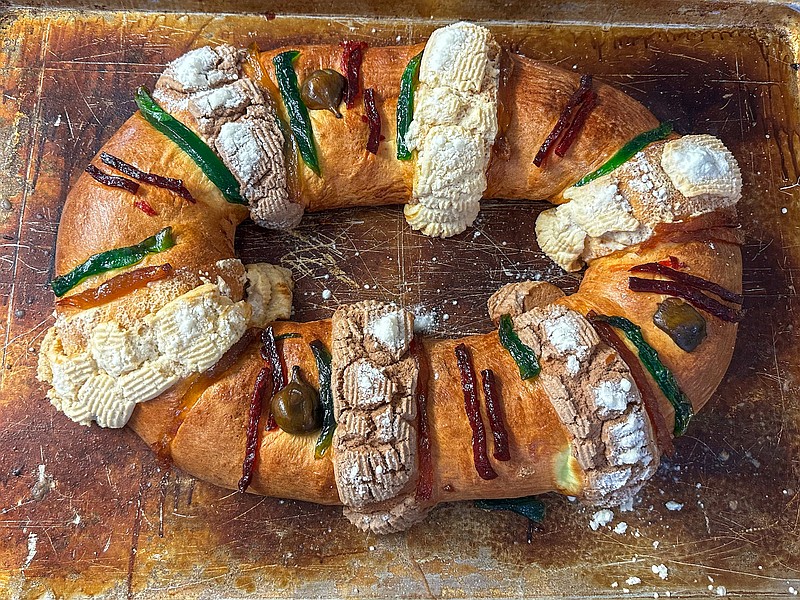
“The rosca is bread with acitrones, candied figs and a kind of paste with sugar on top,” explained Alejandro Velázquez, a bread maker at Panaderia San Antonio on New Boston Road. “[The rosca] is then cut and, as far as I understand, the tradition is that whoever finds the little doll has to make the tamales, or whatever else they decide, but the tradition is tamales.”
The little doll refers to a very small figure of baby Jesus that is added to the rosca after it has been baked and cooled. Typically, a rosca will have anywhere between three and 12 figures depending on the size and the job of making tamales is divided among the people who got the figure. The tamales are made for Feb. 2, Candlemas Day, which celebrates the presentation of Jesus in the Temple and marks the end of the Christmas season.