

As small business owners look ahead to 2026, one thing is becoming increasingly clear: the rules of growth are changing. Bigger is no longer automatically better. Speed without strategy is risky. And visibility without trust is ineffective.
The businesses most likely to succeed in 2026 are not necessarily the largest or the loudest—but the ones that are lean in operations, rooted in their local communities, and smart about digital-first execution. After years of economic pressure, shifting consumer behavior, and rapid technological change, the market is rewarding discipline, authenticity, and adaptability.
For small businesses, this shift represents not a threat—but a powerful opportunity.
The End of “Growth at All Costs”
For years, many businesses chased expansion as quickly as possible—more locations, more staff, more spending. By 2025, that mindset began to show cracks. Rising costs, tighter access to capital, and unpredictable demand exposed the risks of overextension.
Heading into 2026, successful small businesses are embracing a leaner approach:
- Smaller, more efficient teams
- Tighter control over expenses
- Clear focus on profitable services and products
Lean operations allow businesses to respond faster to change, protect cash flow, and reduce risk. Instead of stretching resources thin, owners are concentrating on what actually drives value.
In an uncertain economy, flexibility beats size.
Why Lean Businesses Are More Resilient
Lean small businesses are better positioned to survive and adapt because they:
- Make decisions faster
- Carry less financial overhead
- Adjust pricing and offerings more easily
Rather than reacting late to market shifts, lean businesses can pivot early. In 2026, this agility will matter more than ambitious expansion plans.
Efficiency is no longer about cutting corners—it’s about intentional focus.

Local Businesses Are Regaining Their Advantage
Despite the dominance of global platforms and online marketplaces, consumer behavior over the past year has revealed something important: local trust still matters.
Shoppers are increasingly selective about where they spend money. They want transparency, accountability, and connection—qualities that local businesses are uniquely positioned to offer.
In 2026, local businesses benefit from:
- Community loyalty
- Word-of-mouth referrals
- Perceived authenticity and accountability
Customers are more likely to support businesses that feel real, accessible, and invested in the community.
Local Doesn’t Mean Offline Anymore
Being local in 2026 doesn’t mean relying only on foot traffic. It means combining local identity with strong digital visibility.
Successful small businesses are:
- Optimizing for local search
- Maintaining accurate online profiles
- Publishing content that reflects community relevance
This is where digital intelligence platforms like Confe.io help businesses understand how they appear online, how their content performs, and where visibility gaps exist—especially at the local level.
When local credibility meets digital clarity, businesses earn trust faster.
Digital-First Is Now the Default
By 2026, digital-first is no longer a trend—it’s the baseline. Customers expect to research, compare, and validate a business online before engaging, even if the purchase happens in person.
Digital-first small businesses:
- Are easier to find
- Appear more credible
- Communicate more consistently
This doesn’t mean every business needs complex technology. It means digital presence must be intentional, accurate, and strategic.
Content and Visibility Drive Modern Trust
Consumers no longer rely solely on ads. They look for content—blogs, guides, media mentions, and clear messaging—to decide whether a business is trustworthy.
This is where the combination of Confe.io and Confemedia.com becomes valuable for small businesses. While Confe.io supports performance insights, content evaluation, and digital clarity, Confemedia.com helps businesses strengthen their presence through professional media positioning, content distribution, and brand visibility.
Together, they support a digital-first approach that focuses on:
- Authority, not hype
- Consistency, not noise
- Trust, not just traffic
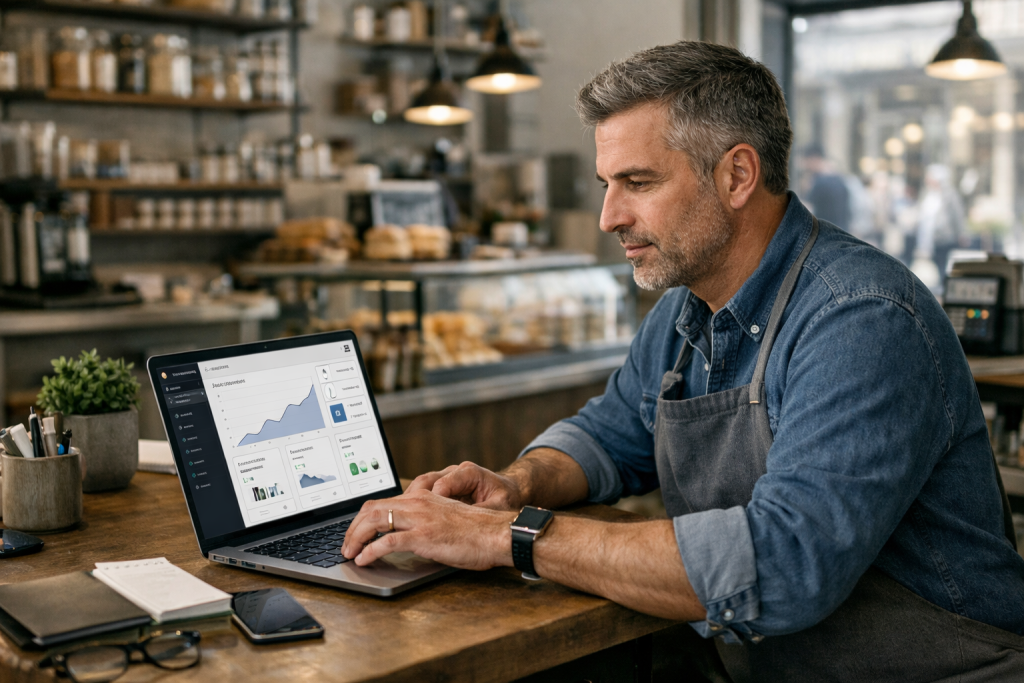
Why Digital-First Businesses Convert Better
Digital-first businesses don’t just attract attention—they convert it into action.
They benefit from:
- Clear messaging across platforms
- Consistent brand signals
- Measurable performance insights
Instead of guessing what works, these businesses rely on data and visibility analysis to refine strategy. In 2026, informed decision-making will separate sustainable businesses from struggling ones.
Lean + Local + Digital Creates a Powerful Advantage
Individually, lean operations, local focus, and digital presence are valuable. Combined, they create a competitive edge that larger, slower organizations struggle to match.
A lean structure allows faster execution.
A local presence builds trust.
A digital-first strategy amplifies reach and credibility.
This combination allows small businesses to:
- Compete with larger brands without matching budgets
- Build loyal audiences instead of chasing clicks
- Grow sustainably instead of unpredictably
Why Big Businesses Struggle to Adapt as Fast
Large organizations often face challenges small businesses don’t:
- Slower decision-making
- Higher operational costs
- Less personal customer relationships
In contrast, small businesses entering 2026 can test ideas quickly, refine messaging faster, and respond directly to customer feedback. When supported by digital insight and media visibility, that speed becomes a serious advantage.
The Role of Data in Smarter Growth
The businesses that succeed in 2026 will not rely on intuition alone. They will rely on clarity.
Data-driven platforms help small businesses understand:
- Which content builds authority
- How users engage with their brand
- Where visibility can be improved
Confe.io enables this level of insight by turning digital performance into actionable intelligence, while Confemedia.com helps translate that insight into stronger positioning and broader reach.
The result is growth guided by evidence—not assumptions.
What This Means for Small Business Owners
For owners planning 2026 strategies, the message is clear:
- You don’t need to do everything
- You need to do the right things well
That means:
- Staying lean instead of overextending
- Investing in local trust instead of generic reach
- Prioritizing digital clarity over constant promotion
Success will come from alignment—not scale.
Looking Ahead to 2026
The coming year will not necessarily be easier—but it will be fairer. Businesses that operate with discipline, transparency, and digital intelligence will outperform those relying on outdated playbooks.
Lean, local, and digital-first is not a limitation. It is a strategic advantage.
Final Thoughts
2026 will reward small business that know who they are, who they serve, and how they present themselves digitally. The future belongs to businesses that combine efficient operations with local credibility and modern visibility.
By using the right tools, building trust-driven content, and staying focused on sustainable growth, small business can thrive in a landscape that increasingly values clarity over scale.
In 2026, smart will beat big—and focused will beat fast.