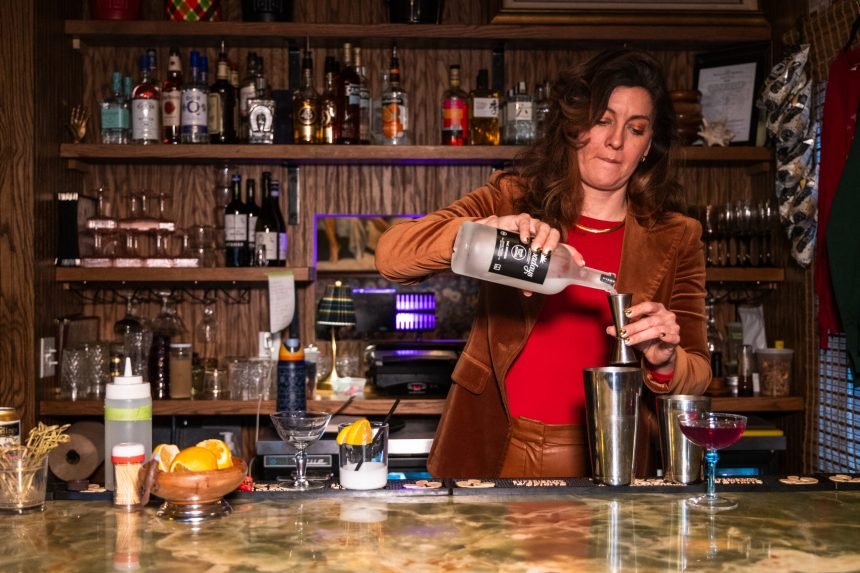
Samantha Nieman began visiting the cannabis store Plant’d Farma and its next-door cocktail lounge, The Garden, after gravitating away from alcohol. She still wanted to enjoy the social scene and events she often found centered on drinking.
Here, at a sleek bar counter in Omaha’s Old Market, she can pick from a rotating menu of handcrafted, photo-worthy drinks that echo classic bar staples, like margaritas or old fashioneds, but ones made with non-alcoholic, THC-infused spirits instead of alcohol.
These THC-infused cocktails are one of many options Nieman can get at Plant’d Farma, which also offers other hemp-derived cannabis products like vapes, gummies and colorful prepackaged drinks.
“I don’t want to miss out on experiences, but the bars and stuff that do offer an alternative, like Plant’d Farma, that keeps me on those goals,” Nieman said.
Nebraska doesn’t allow sales of marijuana for recreational use and has no state-licensed dispensaries, although its voters overwhelmingly approved legalizing medical cannabis in 2024. The state’s slow rollout of a medical cannabis program has faced criticism for its restrictive nature and frequent delays.
At the same time, more and more Nebraska businesses are selling hemp-derived cannabis products — often with THC levels that can produce the same psychoactive, intoxicating effects as marijuana.
THC-infused beverages in particular have become mainstream in Nebraska restaurants, bars and stores — including in major retail chains like Total Wine & More — where seltzers, lemonades, sodas and flavored waters come with a THC option.
A pivotal piece of the 2018 farm bill reclassified hemp and legalized it on a federal level — making the THC drinks now served across Nebraska permissible if derived from hemp even though marijuana is illegal. But that may change later this year with a federal ban of intoxicating hemp products set to take effect in November.
The Platypus and Tiny House Bars, sister spots in Omaha’s Little Bohemia neighborhood, began selling THC drinks around six months ago in response to the high demand, managing partner Megan Malone said.
With eclectic wallpaper and cozy lighting, both bars offer an extensive selection of THC-infused products such as craft cocktails, canned beverages and gummies.
“Nebraska’s youth really is looking for alternatives to alcohol and just wants to feel some sort of progress,” Malone said.
This trend is not unique to Nebraska. Sales of THC-infused beverages topped $1 billion nationwide in 2024, with that market expected to balloon to more than $5 billion by 2035, according to estimates by Whitney Economics, a cannabis and hemp business consulting and research firm.
It comes at a time when cannabis use in the U.S. is growing rapidly, outpacing daily or near daily alcohol-consumption, while the number of people in the U.S. who reported drinking alcohol hit a record low last year.

Jeff Dingman, the technical sales manager at SC Labs, a cannabis- and hemp-testing company, has heard firsthand how brewers have been saved by incorporating hemp beverages into their businesses.
In the past year, he said, the number of brewers he works with has grown from a dozen to around 100.
“The largest portion of our hemp business is beverages at this point,” Dingman said.
Christopher Lackner, who founded the Hemp Beverage Alliance around three years ago, said his group has since expanded from eight to 375 members.
Hemp comes from the same cannabis plant species as marijuana. The 2018 farm bill defined hemp as separate from marijuana if it contains no more than 0.3% delta-9 THC on a dry weight basis. Anything above that is considered marijuana.
Delta-9 THC is one of the most abundant and well known of the hundreds of compounds that naturally exist in cannabis.
THC works by binding to receptors throughout a person’s brain and central nervous system, so the “high” feeling impacts everyone differently — the euphoric effects some people experience could easily cause an anxious or negative response in someone else.
Nieman said the THC drinks tend to make her feel light and relaxed.
Malone said customers who drink THC beverages tend to become mellow, while higher use may make people tired. In her experience using the beverages, she has found them to be easier than other THC products in terms of controlling the dosage.
Andrea Holmes, a professor at Doane University who holds a doctorate in organic chemistry, said any beverage product tends to be more efficiently absorbed into the body than edibles. Holmes is also a partner at Kind Life Dispensary in Lincoln.


A sampling of the THC beverages sold at the Total Wine & More at 72nd and Pacific in Omaha. Photos by Bob Glissmann/Flatwater Free Press
This means THC beverages are processed more quickly and often affect a person faster than edibles, but their effects likely won’t last as long as edibles’ effects. Smokable THC products tend to have a quicker onset and duration than both.
Even though the 2018 Farm Bill legalized the hemp plant — which is regulated by the Department of Agriculture during production — there is no federal framework for end products like THC drinks, Lackner said.
“If you could, imagine that flour is completely legal but the (Food and Drug Administration) hasn’t ruled on what to do with bread,” he said. “You know, that’s the challenge.”
These regulatory gaps have drawn national scrutiny in recent years over consumer safety concerns. A little-noticed provision included in the bill passed last year to end the longest federal government shutdown in history would essentially redefine hemp and ban all intoxicating hemp products currently on the market.
This would mean the THC products lining the aisles at places like Total Wine & More and drinks served at Nebraska bars and restaurants would suddenly become illegal come November.
But it’s possible the landscape will change before then. An amendment introduced to Congress in January would delay the ban by two years — giving the industry time to push federal regulations for these products rather than a full stop.

Some states have already adopted their own regulations around hemp products, including bans, age restrictions and labeling and testing requirements.
In Nebraska, state lawmakers have introduced bills to either ban or regulate intoxicating hemp products. None have passed, meaning there are few requirements to ensure product safety or age-based restrictions beyond what the businesses themselves establish.
Malone said she has received zero guidance or regulations for rolling out her bars’ THC products, but that a ban seems like a step backward.
She said she finds it strange that offering these alternatives in bars is viewed negatively, especially with all the known adverse health effects and risks of alcohol consumption. Many of her customers seem disappointed at the possibility of these options disappearing, she said.
Most states have no permit process licensing people to sell hemp-derived THC beverages, said Marshall Custer, a Denver-based partner in the Husch Blackwell law firm who co-leads the firm’s cannabis practice.
Beyond the federal definition of hemp, “there’s almost nothing out there. It’s really just ‘best practices’ that guides what you’re supposed to and should not sell,” Custer said. “There is absolutely increased liability for selling these products … it’s still an intoxicating product, not dissimilar from anything that you would buy at a state-regulated marijuana dispensary.”
Hemp beverages are generally made in large-scale batches without sampling or testing protocols, which creates huge potential for variations across products, said Dingman from the cannabis- and hemp-testing lab service.
And in most states, testing standards for hemp beverages are left to the manufacturers or brewers themselves, Dingman said, who can choose whether to test them for things like solvents, pesticides, contaminants or other byproducts.
“There’s a lot of potential to have heavy metals or pesticides still show up at that end product,” said Nate Decker, the co-owner and co-founder of Plant’d Farma.
To verify a product’s safety before sale, Decker said he checks whether vendors are providing legitimate certificates demonstrating that the products have been properly tested, or they test the products themselves.
Last year, Nebraska Attorney General Mike Hilgers sent cease-and-desist letters to companies and stores across Nebraska in an effort to combat the sale of THC products.
Suzanne Gage, the director of communications for the Nebraska Attorney General’s Office, said in a statement that Hilgers “is concerned about any consumable products that contain THC” as these products have not been approved by the FDA, and that anyone selling these products “operates at their own risk.”
The legal backing of these cease-and-desist letters remains unclear without state-specific legislation governing hemp products.
In late January, Gov. Jim Pillen issued an executive order targeting the sale of THC products, calling on state agencies to review any regulatory authority to restrict them.
Laura Strimple, Pillen’s spokesperson, said in an email, “this Executive Order accounts for all THC products being sold for human consumption.”
Decker, however, said in an email that he doesn’t think Pillen’s order will directly affect his business because the order specifically references synthetic THC products, which Plant’d Farma doesn’t sell. But if the November ban goes into place, or if future state or federal regulations were enacted, it “would require us to either shut down or pivot entirely into a different business model.”