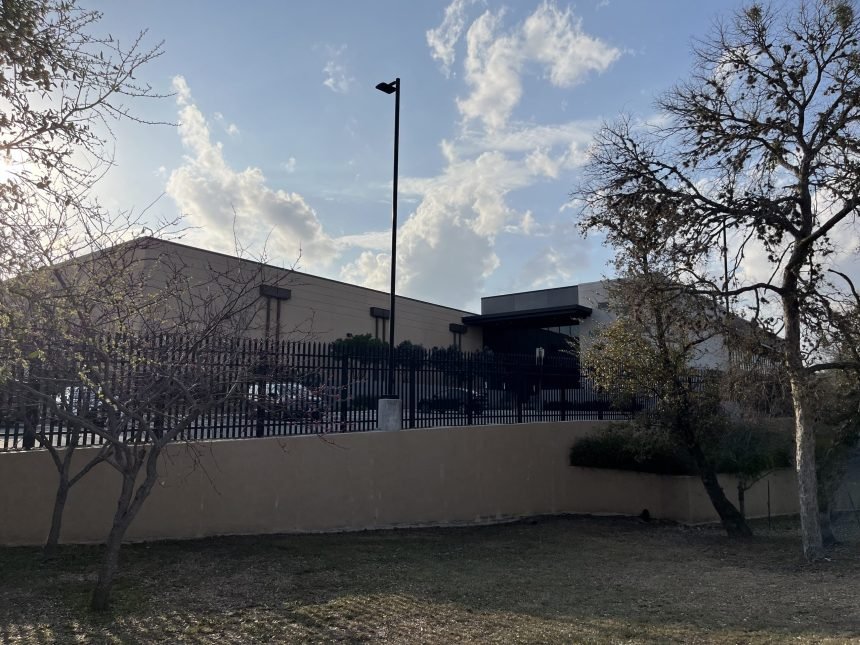
San Antonio leaders are open to more data centers, but say they want new rules for the companies that build them.
San Antonio City Council members say there needs to be new zoning regulations and discussions with local utilities around resources and infrastructure availability — particularly for recycled water.
The discussion, which took up much of a Wednesday City Council B Session, came after Councilman Ric Galvan (D6) filed a request to look at data center development and resource use in San Antonio.
“[I’m] very thankful to all the residents in District 6 who have shared their input on this topic, who have shared their personal feedback in living near the highest concentration of data centers in our city,” Galvan said.
Council member ideas ranged from community benefit agreements with data centers to encouraging them to bring tech jobs to asking data center developers to share backup power with local neighborhoods during power outages.
Galvan focused on the idea of updating San Antonio’s Unified Development Code, or UDC, and categorizing data centers as general industrial. Amin Tohmaz, the city’s development services director, said current zoning law does not have any rules specifically for data centers.
The UDC is typically amended every five years. The next update is scheduled for 2027, but Galvan and multiple council members, including Mayor Gina Ortiz Jones, pushed for earlier amendments for data centers. But Councilwoman Phyllis Viagran (D3) wanted to hold off on amendments until 2027.
Councilman Marc Whyte (D10) focused on potential for data centers bringing jobs and more money in property taxes to the area.
“The companies that are putting these data centers all across the country will foot the bill to be here. They’re willing to pay much of the infrastructure cost to get established,” he said, adding that there should be buffers between data centers and neighborhoods.
Tohmaz said updating the UDC could allow the city to order data centers to be at least 1,000 feet from residences, parks or other land uses the city deems incompatible.
‘Large load’ customers are expected to grow
“We see the data centers in San Antonio as both a risk and an opportunity,” said Donovan Burton, senior vice president of water resources and governmental relations for San Antonio Water System.
Officials at the publicly owned utility systems acknowledged that while data centers rely on a significant amount of water and electricity, they can also drive revenues to help fund the systems used by San Antonio residents.
Local utilities are legally required to work with data centers if they are paying customers, said CPS Energy’s Chief Strategy Officer Elaina Ball.
The utility currently provides power to 21 data centers in the area, she said. These contracts generate $110 million in revenue.
These contracts are written so that they are paid enough to recover the cost of providing electricity to those data center customers, Ball added. Included clawback clauses can also help recover money up to a decade after construction.
Ball reported that there are 59 future projects in various stages of planning. Not all of those are guaranteed to be built and those that are built won’t be built for a while, she said, but CPS Energy projects the energy needs of those projects to be around 26,000 megawatts. One megawatt powers around 250 homes.
Ball says CPS Energy is starting a pilot program that would let data centers develop on-site power generation, but requires a tariff be paid on that power.
The electricity provider’s president and CEO, Rudy Garza, said CPS Energy might need to acquire more power sources, but is in a position to meet data center demand over the next few years.
Data centers, particularly those used for artificial intelligence, require a massive amount of resources. But water use is trending in a more sustainable direction.
Burton said many data centers are using newer liquid cooling, which are more water efficient than evaporative cooling methods that rely on releasing water into the air.
SAWS officials say they are encouraging data centers to use recycled water. In 2023, Burton said, 48% of data center water usage was recycled water. In 2025, that number was up to 75%. Today, data centers use around 0.1% of SAWS’ drinking water.
Those numbers could increase in the future. New data centers are planning to request about 600 acre-feet of drinking water and 3,000 acre-feet of recycled water. One acre-foot is enough water for roughly three houses in a year, Burton said.
That’s where SAWS starts to run into a ceiling. The recycled water system can move around 30,000 acre-feet of water. Last year, the utility provided almost 20,000 acre-feet of water to customers, leaving it with capacity for only around 10,000 more acre-feet of water before it needs upgrades.
Some of those upgrades, like a plan to connect its Leon Creek and Steven M. Clouse water recycling facilities, are in progress, Burton said, but SAWS is not looking to expand its system until next year.
Officials from both utilities pointed out that data centers aren’t the only large users of local resources.
CPS Energy calls any customer that uses more than 40 megawatts of electricity — enough to power roughly 10,000 homes — a large load user. That includes other industrial customers and large retail or grocery facilities.
Those large load customers make up 9% of CPS Energy’s sales today, but the utility expects that to grow to 19% in the next five years.