Back in December, Chicago was hit with a rash of plant-based restaurants announcing that they were shutting down, leaving customers disappointed and leading to a search for an explanation, from a wider availability of vegan food to claims that plant-based eating is falling out of style.
But despite the closures, veterans of the plant-based food business pushed back against prophecies of doom and, in one case, argued that, such closures notwithstanding, plant-based eating is only growing.
Kitchen 17 in Avondale was the first Chicago vegan establishment to close on Nov. 25, 2025. Native Foods in the Loop followed on Nov. 28, Chicago Raw in Streeterville on Nov. 30, and then The Chicago Diner announced the closure of its Logan Square location on Dec. 1.
That was four vegetarian or vegan restaurants closing in a mere eight days.
CBS
Since then, Bloom Plant Based Kitchen and Cinnaholic, both in Wicker Park, announced their closings. Meanwhile, Liberation Kitchen in West Town closed back in June after 12 years, and Lynn’s Chicago Pizza in Woodlawn switched to catering only.
The trend was not limited to Chicago. Articles have documented waves of all-vegan restaurant closures in New York City, Los Angeles, and London, which have rattled customer bases and left some wondering what was going on.
Many analysts noted the restaurant industry as a whole has been struggling, particularly since the height of the COVID pandemic. Alice & Friends’ Vegan Kitchen — which remains open in Edgewater and Oak Park — said costly ingredients and food made from scratch make for high costs and low profit margins, and vegan restaurants attract a niche audience.
Other analysts also pointed out that fewer people are seeking out eateries that offer strictly plant-based fare now that vegetarian or vegan options are on the menu at many mainstream restaurants. Others argued that vegan restaurants have stagnated, failing to market themselves on any selling point other than the fact that they were vegan, which made them lose their appeal, particularly given the prices.
“Recently went somewhere and it was basically a rice bowl, with some steamed veggies, a drizzle of soy-based sauce = $30,” a Chicago Vegan subreddit user wrote. “The whole time I’m thinking, ‘this is tasty, but I could make it at home.'”
Writing about the U.K., The Guardian said there seemed to be “two popular theories” about why vegan restaurants were closing: one being challenges in the restaurant business as a whole, the other concluding that consumers were turning away from veganism.
“Given the volume of chatter about the carnivore diet and the myriad myths concerning plant-based eating — that it is impossible to build muscle as a vegan, that plant milk is always bad for you, that kids should never be fed a vegan diet — the idea that people are forsaking veganism is understandable,” Isabel Lewis wrote for The Guardian in September 2025.
Pioneers say the plant-based eating business has come a long way
Speaking to CBS News Chicago in February, Chicago restaurateurs and other local experts agreed with some of those points, not with the claim that plant-based eating is going out of style. Kay Stepkin, an icon in the Chicago vegan world, said just the opposite is the case.
For many years, Stepkin owned the natural foods store The Bread Shop, at 3400 N. Halsted St. in the heart of the Northalsted LGBTQ+ nightlife district. Its successor, the Beantix vintage shop, is far from new these days, but a visitor familiar with The Bread Shop might still recognize the hardwood floor and imagine the smell of wheat germ permeating the space rather than leather.
Kay Stepkin 
Kay Stepkin 
The Bread Shop was in business from 1971 until 1996. Stepkin noted that when she first opened, she had thought The Bread Shop was the first vegetarian business in Chicago, though she later learned there had been others dating back to the turn of the last century before the trend fell out of favor.
Stepkin also said that when The Bread Shop opened, many did not take her business seriously.
“Back in the 1970s, I actually had one newspaper article — I believe it was in the Sun-Times — about The Bread Shop that actually laughed at us. I don’t remember exactly what she said, but she actually was making fun of what we were doing,” she said. “You never see that today. You do not see that. And I think that even people who aren’t vegan and aren’t vegetarian, there’s a certain respect for what we’re doing that you did not see in the past.”
Kay Stepkin 
Kay Stepkin 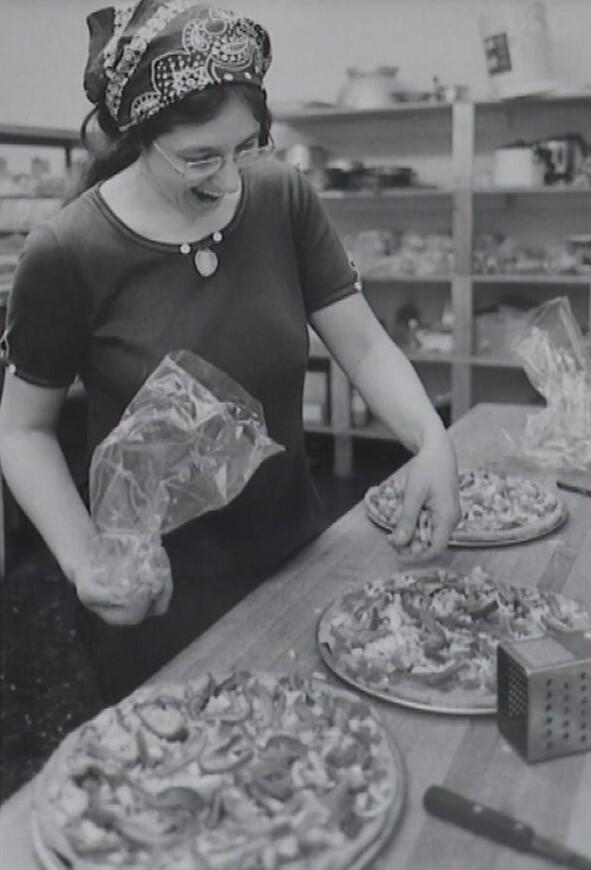
Stepkin said around 20 years after The Bread Shop opened, there were 40 vegan restaurants in Chicago, and today there are 80.
David Lipschutz, a former employee of The Bread Shop, owns the lacto-ovo-vegetarian restaurant Blind Faith Café in Evanston, which he opened with two business partners in 1979. He said back when the Blind Faith opened, and for some time afterward, plant-based eaters had limited options.
Adam Harrington/CBS 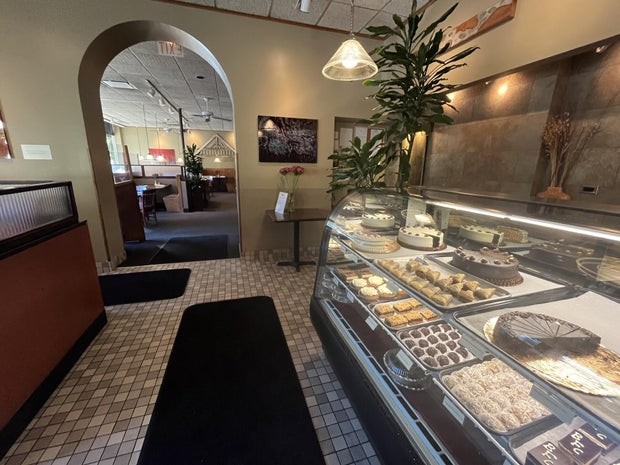
“You know, 40 years ago if you were vegetarian, you could get a pasta primavera,” he said. “That was your option at the restaurant.”
Michael Hornick is president and partner at The Chicago Diner, which has been operating for 42 years at its original location on North Halsted Street. It was founded in 1983 by Hornick’s aunt and uncle, Jo Kaucher and Mickey Hornick, both of whom had worked across the street at The Bread Shop. The Chicago Diner took over a space where Stepkin had briefly operated a second business, the Bread Shop Café.
Michael Hornick said that when he started working at the diner in 1991, omnivores were inclined to reject the very idea of eating at a plant-based restaurant.
“The challenge was that you could have four people dining out, three of them may be vegetarian, and it was the one person that wasn’t that would veto it — ‘Nope, can’t go to Chicago Diner. There’s nothing for me to eat there,’ which always kind of made me laugh,” he said. “At that time, I was already eating that way, and I was like, what do you mean there’s nothing for you to eat? You can eat anything there. It’s everybody else that you’re dining with that’s going to have a challenge somewhere else.”
Today, Hornick said, The Chicago Diner appeals broadly to omnivores, vegetarians, and vegans alike.
“When I was cooking, you know, back in the ’90s, I could easily say that 20% were omnivorous,” he said, “and nowadays, I could easily say that 20% are probably vegan. You know, 40% are probably vegetarian, but we see a much bigger group that just comes in for great food.”
More than meets the eye in closures
But if that’s the case, why did The Chicago Diner have to close one of its locations? Hornick attributed it to changes in the restaurant industry and problems related to the location, as sidewalks along Milwaukee Avenue have been ripped up and parking has become difficult to find.
“Logan Square was a fantastic place. We met a lot of fantastic people. We have amazing people who have worked with us for, I mean, some people for well longer than that restaurant existed. We brought as many people as we could, but obviously, one restaurant needs fewer people,” he said. “And it was hard. It was really, really hard, I mean, to go ahead and have to see something that did thrive as well as it did before the pandemic, to just never recover like that.”
But Hornick did agree that focusing only on being a vegan restaurant is not a recipe for success, particularly if it comes across as preachy. He emphasized being inclusive toward all diners, rather than invoking moral authority at the table.
“If I go ahead and keep on slamming — ‘We’re vegan! We’re vegan! We’re vegan! You’re not! You’re wrong!’ — who wants to dine like that, right? You know? I mean, we’re coming in here to have a good time with our friends. We’re coming in here to have a good time with our family. We’re having a good time to escape all the nonsense outside of these four walls,” he said. “So, yeah, why are we bombarded with what we’re doing isn’t right, as a guest? So my thought process was, we serve great food. We have great service. We’re here for everyone.”
CBS 
Hornick said the restaurant does emphasize that its food is plant-based and is proud to do so, but that doesn’t mean being confrontational.
“We don’t preach at the tables,” he said. “It’s a safe space for everyone.”
Meanwhile, Lipschultz said that if his restaurant had been a strictly vegan restaurant that primarily identified as such, it would not still be around after 47 years in business. He said the Blind Faith Café has succeeded with its ability to find a specific niche — not only as a vegetarian restaurant that serves dishes with eggs and dairy products, but features a menu that is about 50% vegan — but also as a “polished casual concept” featuring a menu with something for everyone.
“We don’t have to be Middle Eastern or Thai or Latin or anything,” he said. “We can offer it all, which I do. We have a very eclectic menu. It’s all over the world.”
Hornick also emphasized the value of broad appeal.
“We’re not trying to be a Thai place. We’re not trying to be an Indian restaurant. We’re not trying to be purely Mexican or Venezuelan or French,” he said. “It’s something that’s really kind of fun as a diner, because that is part of the conversation, and with so many different cultures and people from around the world, living in Chicago and visiting, we get to go ahead and do things that would appease them.”
Lipschutz also pointed out that plant-based restaurants don’t typically have the luxury of having large-scale funds like Chicago’s biggest restaurant groups, and are dependent on the passion of both the owners and the customers. For this reason, he said, it might sting a little bit more — and capture headlines a little bit more easily — when a beloved plant-based restaurant goes out of business.
“When you find that place that your favorite food is, your favorite servers are at, and you feel safe eating there, it changes something,” Hornick said. “And when they tell you that they’re going to close in there, and it’s as if you went ahead and found out that your grandma’s not going to cook a holiday meal anymore.”
Stepkin went further to say the closure of a few vegan restaurants might not be strictly bad news in the big picture, as more competition means a higher bar for quality and success.
“I think that our movement is really exploding. It’s getting stronger and stronger, and back 40 years ago, 50 years ago, if you opened a vegetarian restaurant, it would most likely succeed, because all the vegetarians from all over the city would come to it,” she said. “Nowadays, not only because we have gone from one to 80 vegan restaurants, vegetarian restaurants rather in Chicago, you’d better be good to succeed.”
A strong tie to culture for some plant-based restaurants
While The Chicago Diner and Blind Faith feature eclectic menus not tied to one specific culture, some of the longest-standing vegan and vegetarian restaurants are deeply rooted in culture.
Annapurna Simply Vegetarian, 2600 W. Devon Ave., has brought South Indian cuisine to Little India since 1982. The restaurant’s goal, according to its website, was not only to “deliver exceptional food but also popularize vegetarian cuisine.”
Meanwhile, Soul Veg City, 203 E. 75th St., is a staple in Chatham known for its vegan soul food. It is also one of the oldest Black-owned vegan soul food restaurants in the entire country.
In 2022, co-owner Lori Seay told CBS News Chicago’s Audrina Sinclair that Soul Veg City was created to “have a place to feed and provide the community with healthy food… to help with some of the diseases — diabetes, high blood pressure, hypertension — just plaguing us over the years.”
CBS 
In 2024, Soul Veg City even expanded, opening Vegan Now 2 Go at 1536 E. 75th St. in South Shore, just under two miles east of the original Soul Veg City location. As the name implies, Vegan Now 2 Go is mostly carryout.
Both Annapurna and Soul Veg City direct their focus on their food being fresh and healthy, rather than just emphasizing their vegan options. Indian, Ethiopian, Thai, and Lebanese are just some of the cultural cuisines that serve many vegetarian dishes, or diets that traditionally center on vegetables.
A 2016 Pew Research Center study found that as of that time, Black Americans were the fastest-growing group of vegans and vegetarians in the country. The survey, which is now a decade old, found that 8% of Black Americans identified as strict vegan or vegetarian, as compared to 3% of Americans overall.
Researchers at the University of South Florida investigated the lived experiences of Black vegans. The 2022 study found that Black Veganism is more than just a subset of mainstream veganism, but also a “new social movement” rooted in Black culture, history, strengthening community and reconnection with African heritage.
Meanwhile, a 2024 UIC study found that Black women were more than twice as likely as white men to consider “animal rights, anti-racism and environmental protection” as reasons to embrace veganism. The author noted that these findings could be helpful for vegan organizations and support the argument against the perception that veganism is for white, affluent women.
A 2023 Gallup poll found that low-income adults were actually twice as likely to follow a vegetarian diet.
The road ahead for vegan restaurants and plant-based eating
On the prospects for an entrepreneur looking to open a new vegan restaurant, Lipschutz was less than sanguine.
“I would have said a year or two ago that I was more hopeful,” he said.
Lipschutz said a large part of the issue has to do with the marketplace for restaurants as a whole, which has been battered by the pandemic and inflation. Plant-based restaurants, given their niche market, face additional hurdles.
“I think, honestly, that places that are vegetarian or are vegan, they’re going to be niche concepts in very specific markets where there’s enough interest and desire and resources to support them,” Lipschutz said. “I think any restaurant opening today has got a lot of challenges, they really do, you know? They’re opening into a headwind. But I think location is probably the key. It has to be someplace where people will respect and put their money on the table for it. And so I think it can’t just be any concept anywhere.”
Hornick said a plant-based restaurant won’t work without passion and a tough work ethic to go with it. He also said a restaurant owner needs to be realistic about financial realities — something that fans of The Chicago Diner don’t always understand.
“I mean, and this is a big thing that a lot of people are always asking, ‘Why don’t you expand? Why don’t you come to Milwaukee? Why don’t you come to St. Louis? You do awesome in L.A. Dallas needs somewhere like you. Nashville is needing a place that’s completely vegan. Nobody has a diner doing what you’re doing,'” he said. “And it’s financial backing. It gets really tough.”
CBS 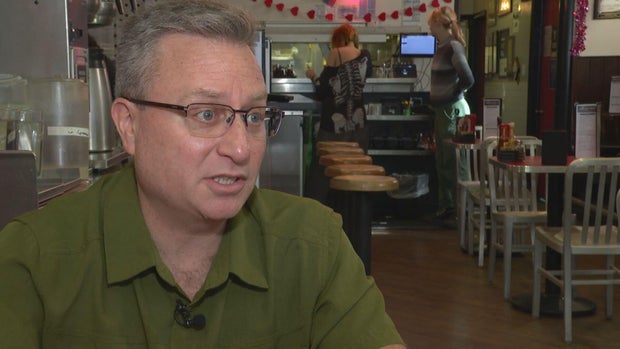
But Stepkin encouraged thinking outside the box when it comes to measuring the success of the plant-based eating movement, rather than limiting it to restaurants. One effort she pointed out was the Taste of Vegan meetup, organized by Jeff and Pam Olichwier. The group seeks out events at restaurants that will provide vegan and raw options for them, and encourages mainstream restaurants that serve animal products to incorporate plant-based items onto their menus.
Stepkin said the effort is working.
“That’s one of the reasons why you find so many vegan and vegetarian options in meat restaurants,” she said, “and so I think that’s also helping growth.”
Supplied by Kay Stepkin 
One issue right now, Stepkin said, is a gender imbalance in the plant-based eating movement, with more than half of the people attending vegan events usually being women. But she said there were some reasons why the movement has taken off with women more easily than men.
“Our movement definitely has more women than men, and I just always wondered about that. Why is that? Why is that? My mind would just go back to it every once in a while. And one day, out of the blue, it occurred to me — it’s because we have been in charge of the food for the past 200,000 years,” she said. “So I believe that our instincts are just tuned in to the value of food, and so we have to bring more men along to it.”
Stepkin also had some specific ideas for how someone opening a new plant-based restaurant could take health-conscious eating to the next level.
CBS 
“One thing that none of them are doing yet — so I would suggest this for any new restaurant — is having all…whole-grain options. So even going into a vegetarian or vegan restaurant today, you’re going to find that every one of them has white pasta. Some of them, a couple of them — two that I know of — serve brown rice as well as white rice. The others, as far as I know, have all white rice,” she said. “So to me, that would be a very good thing is to focus on whole foods.”
Stepkin said it was the emergence of Whole Foods — the grocery store — that made her decide to close The Bread Shop in the 1990s. But while businesses may come and go, Stepkin said the cultural shift toward plant-based eating isn’t slowing down.
“Just the fact that a standard restaurant would work with the Taste of Vegan people, and agree to have some vegan foods, is a cultural shift, and that some of them keep vegan items on their menu after that is a cultural shift, and that meat eaters go into these restaurants and see a V for vegan or vegetarian — it just opens them up,” she said. “It’s like things are changing all around us.”