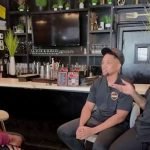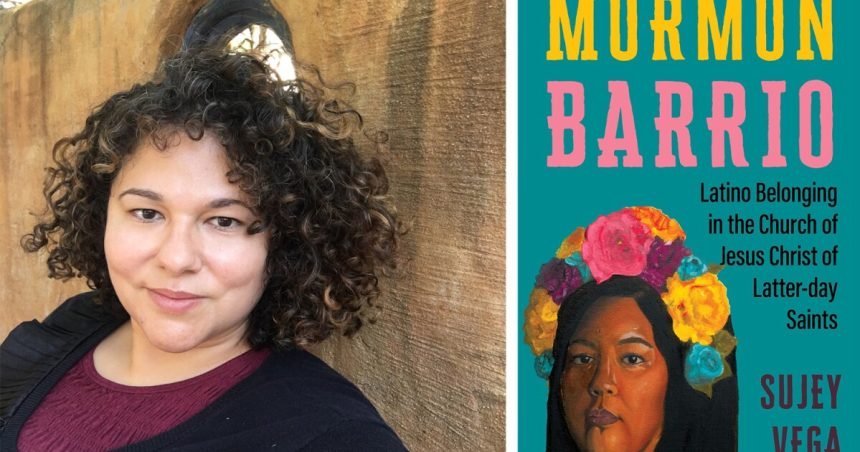
You might not realize it, but Latinos make up the second largest demographic group in the Church of Jesus Christ of Latter-day Saints. In fact, the Mormon temple in Mesa was the first ever to offer religious rites in Spanish.
And, in ASU professor Sujey Vega’s new book, “Mormon Barrio,” she tracks the history of it back more than a century.
Vega herself is not LDS. In fact, she was raised Catholic, though she’s no longer practicing — but, as she told me, her research with Latino LDS communities kept reminding her of her own Catholic grandmother.
Full conversation
SUJEY VEGA: I kept seeing, because I was interviewing a lot of older women for the initial part of it, which was the history of Mesa, Mesa’s LDS Latino population. And I was sitting across these women as they were telling their histories. And I was just at some point looking at their hands. And they reminded me of my grandmother’s hands when she was praying the rosary.
Now, rosaries aren’t used in LDS faith, but I just, I don’t know. I felt like I was sitting across from my grandmother. And she had passed away. And so there was this connection to her faith.
And I remember going to mass with her in Mexico, and just the good memories, the memories of community that I always connected with — that sense of commitment to a faith, to a higher power.
LAUREN GILGER: Yeah. So you’re approaching this research in this book as obviously an academic, but also as someone with this kind of deep religious background and roots. I want to ask about some of the history here, because I think people will be surprised to learn that the second largest population within the LDS Church are Latinos. How far back does this go?
VEGA: Let’s see. In Arizona itself, the first Latino or Spanish-speaking ward in Arizona was in 1918. So well over 100 years ago. I want to say the first Mexican convert was in the 1880s. And it was in Sonora. So it’s just south of where we are today.
GILGER: But you talk about the fact that even though this history goes back a long time, and even though lots of the people who are Latino and LDS are not like new converts because of that, they still tend to talk about a sense of otherness or separate from the predominantly white leadership of the church, right?
VEGA: Yeah, and I think that that’s one thing that I do question. And I try to thread that needle between respecting the community, respecting those people that spoke to me — both members and ex-members — whilst also finding moments of important critique here and there.
So that the leadership of the church is still very much a white male leadership. You have some international men that have been accepted into it. But what I make reference to in the book is it’s not just based on race in terms of the exclusion from leadership, but also class.
And that to me is a bigger issue because a large population of the LDS community that has been converting — whether they be Latinos or from other nations — are not necessarily business owners or lawyers or medical doctors. But that’s who you tend to have in the leadership.
GILGER: Interesting. Class is a difference there as well. But there is a history of sort of almost like a racial caste system within the LDS Church, where for a long time Black or even any darker-skinned people were considered inferior until, what, the 1970s?
VEGA: Yeah, so, and that’s an interesting point because you have LDS Latino members joining the church before that change was made where Black men were finally able to get the priesthood, right? But LDS Latinos didn’t really engage with that conversation when they were talking about their history. So it was separate and apart.
However, when you have millennials or the children of converts, they often talked about that and how that was a moment of concern for them in their faith. They would find out these moments and try to navigate what they actually felt and what they actually believed in, very similar to my experience with the Catholic Church. How do you reconcile your faith with the organization of the church or the practices of the church that you don’t agree with?
GILGER: Right. So along those lines, you talk about the kind of push-pull factors that have, over 100 years of history, attracted Latinos to this church. Talk about what those are and maybe the similarities, right?
Like I think we would assume most people who are Latino are Catholic. Maybe historically they are, but that’s definitely not the case anymore. There is an incredible diversity of religion within this community.
VEGA: Absolutely. And I think that that’s something to keep in mind, that folks converted to the LDS Church both because they were either Catholic, they were non-practicing, and/or Protestant.
Typically the LDS Church will cite the notion of the family and the importance of the family for Latino converts and why LDS faith works for them. What I found to be the case is that yes it does. Obviously having a faith that prioritizes family in the same way that you have culturally forever prioritized a family makes sense to them.
But by and large, the reason for conversion was a journey of oneself, right? The ability to read, the ability to have a conversation with, in this case, missionaries that would come to your home and talk about faith in a way that you may have never had a chance to before in a typical, whether it’s a Protestant church or a Catholic church, right?
You’re just kind of given the liturgy. This idea that they could come to a personal attachment, they can reflect on what they feel and what their faith is, they can have a personal connection to God was something the interviews kept coming back to.
GILGER: That’s fascinating. So before I let you go, we have to talk about the title of the book, right? These Mormon barrios, these communities that Latino members have formed. Talk about what they’re like, what the people told you there. How did you see their culture and faith intersect in these communities?
VEGA: Well, first and foremost, you mentioned this earlier, that not all Latinos are immigrants. But for immigrant communities that form, they go into specific wards, Spanish-speaking wards — or in Spanish, they’re called barrios.
And when immigrant communities go into these wards where they feel connected, where they don’t have to explain their culture, where their conversations about such a deep topic like faith, they do that in their own language and fully embrace what they’re feeling, that’s a level of support that I don’t necessarily see happening in English dominant churches.
And in part because though you have generations of LDS members who have great-grandfathers who converted to the church. And so they are just like me when I was Catholic, expected to follow the faith.
But for LDS barrios or Latino wards, there is a sense of community. There is a sense of joviality, so like laughter, fun, silliness during events. There is, especially for some of these members who have given up their own biological family because the biological family did not convert. And so they still want that sense of family. And you get that in these wards.
And then the other cool thing about it is the wards have a mix of different Latino ethnicities. So again, you have Peruvians, you have Chileans, you have Mexicans, you have El Salvadorians, you have Guatemalans, right? And so you have an interesting moment of collective identity, but also the acceptance of variety, right? So you get to try pupusas as well as you get to try tamales, or maybe tamales for different regions.
GILGER: So very diverse, but connected by this faith. It sounds like fun.
VEGA: Yeah, no, I mean, it was. It was a fun time to go sometimes to these events. And I went to I think it was a Father’s Day or Mother’s Day. And it was just the funniest, funniest just to see that people were performing, the moms had a dance, the dads had something that they did as well. There was food, there was children running around. It just felt home.
And I think that that’s where in the book, I really wanted to make sure that was evident, that there is this importance of home in these Latino wards that needs to be not just recognized but also protected. I would not want these wards to close in the future as had been done in the past.
GILGER: Yeah, all right. We’ll leave it there for now. That is Sujey Vega, an ASU associate professor in the School of Social Transformation there, as well as the author of the new book, “Mormon Barrio, Latino Belonging in the Church of Jesus Christ of Latter-day Saints.” Sujey, thank you so much for coming on. Congratulations on the book.
VEGA: Thank you. It was a pleasure.
KJZZ’s The Show transcripts are created on deadline. This text is edited for length and clarity, and may not be in its final form. The authoritative record of KJZZ’s programming is the audio record.
-
In a new book, journalist Caroline Tracey explores the treks through the American West and all over the world, exploring the unique cultural and ecological history of salt lakes — from the Great Salt Lake to the Salton Sea in the United States to the Aral Sea in Central Asia.
-
A new collection of essays looks at the tortured relationship between the United States and its workers. It’s called “Capturing Labor,” and it’s co-edited by Texas State University professors Jessica Pliley and John Mckiernan-González.
-
Earlier this year, the Washington Post announced the end of its books section, Book World. The announcement has prompted a series of follow-up articles about the state of criticism.
-
Corey Seemiller, Ph.D., travels the world speaking at conferences and events. She’s a Tucson-based life coach and corporate consultant, specializing in leadership.
-
More than 300 authors will be presenting at this year’s Tucson Festival of Books. Catch up with the authors during signings and panels, and brush up on their work in these recent conversations from The Show.