Before Oregon could rebound to its pre-pandemic international tourism levels, the state experienced another setback in 2025 that is persisting into this year.
Shifts in the political climate and global trade tensions under the Trump administration are impacting people’s decision to come to the United States, according to travel experts, and that also includes Oregon. The impact is especially noticeable among Canadian visitors, who were the state’s largest international tourist group in 2024.
The Beaver State falls behind national averages in many areas, but its tourism industry is an area that excels, bringing in $14 billion to Oregon and employing more than 120,000 people. In 2024, international visits and spending to Oregon outpaced the U.S. average, according to a Travel Oregon report prepared by Oxford company Tourism Economics.
Canada accounted for 29% of international visitor spending in Oregon in 2024, spending the most out of any other foreign group at $211 million that year — making it Oregon’s most important international tourist market, according to the Tourism Economics report. Tourists from China were Oregon’s second largest international spenders, accounting for 8% of international spending in the state, followed by visitors from the United Kingdom, India and Germany.
But fewer international tourists, particularly Canadians, are choosing to visit Oregon.
U.S. tensions with Canada have escalated as President Donald Trump has repeatedly called for making Canada the 51st state, threatened to impose tariffs on it as high as 100%, and suggested blocking a bridge connecting the Canadian province of Ontario to Michigan.
“We received emails from Canadian visitors that shared with us a very strong desire to come to Oregon,” said Todd Davidson, the Travel Oregon executive director. “Some had been to Oregon before. Some were planning their first trip to Oregon, but they just didn’t feel they could at this time.”
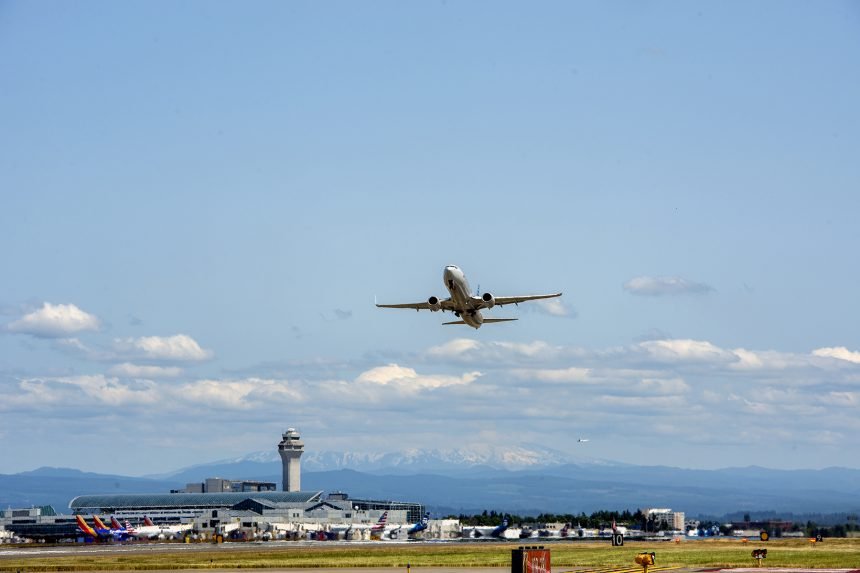
Air travel into Oregon’s only international airport reflects that downturn. International arrivals through the Portland International Airport fell from 65,500 in 2024 to nearly 58,000 in 2025 — a 21% decrease — according to U.S. Customs and Border Protection.
That includes about 32% fewer Canadians who flew into the Portland airport last year in comparison to 2024.
Portland, Oregon Coast getting hit disproportionately, travel experts say
The decline in international tourism was felt most strongly in Portland, Davidson said, because it acts as a hub for international travel because of the airport and access to the Interstate 5 corridor that connects to Canada.
Historically, many Canadians drive through Portland first to experience the city’s dining scene and to shop without sales tax, according to Jason Brandt, president and CEO of the Oregon Restaurant and Lodging Association.
But small businesses, particularly in the hospitality industry, are immediately seeing the impact firsthand, he said.
“It’s tough when you’re so closely located to the Canadian border, and you have one of Oregon’s largest private sector industries — the hospitality industry — ready and willing to welcome Canadians with open arms and show them how much we have to offer here in Oregon… but have this roadblock, if you will, based on political tensions that are much bigger than just the state of Oregon itself,” Brandt said.
The Oregon Coast, another popular tourist spot because of its publicly accessible coastline, is also feeling the impact of fewer foreign tourists.
“A lack of Canadian visitors was noticed immediately after the political issue,” said Wayne Patterson, the executive director of the Greater Newport Chamber of Commerce.
Newport is home to the Oregon Coast Aquarium, Yaquina Head Lighthouse and known as the Dungeness Crab capital of the world. It’s a popular destination for travelers and it sits 13 miles south of Depoe Bay, a popular hub for whale watching.
It took longer to feel the loss of international visitors because many tourists book flights, hotels, and activities in advance, Patterson said. However, Canadians with more flexible plans to drive to the Oregon Coast were able to cancel their bookings immediately.
A bright spot
Other economic factors contributing to the international tourism decline include inflation and the strength of the U.S. dollar, which made the U.S. a more expensive travel destination, Davidson said.
Additionally, Oregon doesn’t have direct flights to Asia. Prior to the pandemic, when there was a direct flight, China and Japan were Oregon’s top overseas markets for tourism. Those markets have since been slower to recover than European markets, Davidson said.
However, there is a bright spot ahead, in the upcoming FIFA World Cup, and eventually during the summer 2028 Olympics Games in Los Angeles, Brandt said.
With the World Cup hosting games in Seattle, San Francisco and Los Angeles, Oregon should expect international travelers driving up and down the I-5 corridor this summer, he said.
International tourism in Oregon reached its peak in 2019 when it had more than 700,000 visitors. In 2024, the state fell just 12% below that level. Despite current declines in international tourism, Travel Oregon estimates international visits will fully recover by 2030.
Travel Oregon will release its 2025 Economic Impact Report later this spring with updated international tourist information.
Independent Journalism For All
As a nonprofit newsroom, our articles are free for everyone to access. Readers like you make that possible. Can you help sustain our watchdog reporting today?